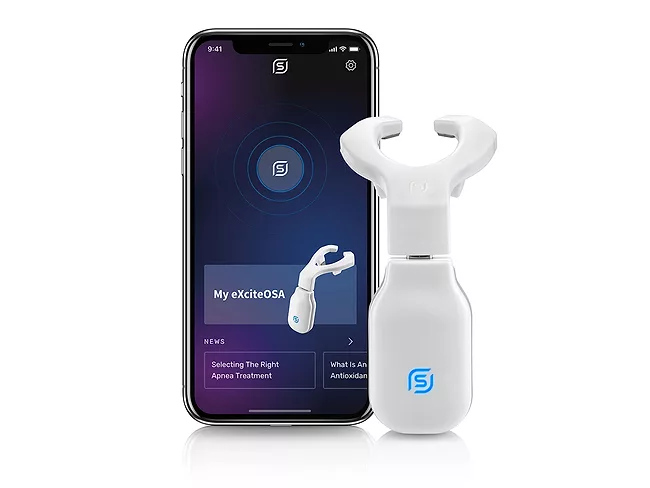
The U.S. FDA granted de novo authorization for Signifier Medical Technologies LLC’s ExciteOSA, the first treatment for mild obstructive sleep apnea and snoring designed for daytime use. Used for 20 minutes a day, the device improves the function of the tongue muscle to prevent airway obstruction while sleeping. ExciteOSA, previously called Snoozeal, already has a CE mark.
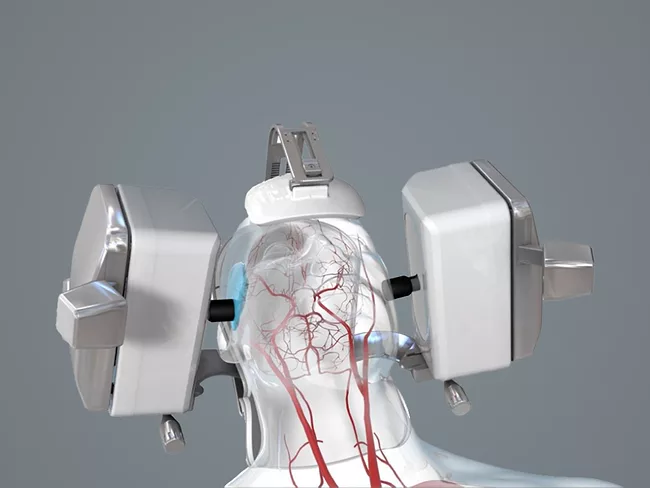
Novasignal Corp. has a launched a cloud-based app to provide alerts to clinicians directly from its cerebral ultrasound device. The new app allows physicians to get instant notifications from the company’s Novaguide device, a transcranial doppler ultrasound technology that allows for real-time assessment of blood flow in the brain by combining robotics and artificial intelligence (AI).
Keeping you up to date on recent developments in neurology, including: Smartwatch sensors enable remote monitoring, treatment guidance for Parkinson’s patients; Imaging of a living brain can help differentiate dementia; Morphine itch comes from neurons, not mast cells.
A definitive diagnosis of Alzheimer’s disease often isn’t arrived at until after a patient dies, when their brain is examined during autopsy. Neurovision Imaging Inc. is hoping to change that with reliable, affordable biomarker tests that can detect Alzheimer’s and other forms of dementia and neurodegenerative disorders before symptoms appear.
Medtronic plc said Monday that it has expanded its limited site release of its new radial artery access portfolio. Acquired from Rist Neurovascular Inc. last year, the portfolio includes the Rist 079 Radial Access guide catheter and Rist Radial Access selective catheter. Dublin-based Medtronic completed its acquisition of privately held Rist Neurovascular in August 2020 for an undisclosed sum – the eighth in a series of tuck-in deals the med-tech behemoth has undertaken since January 2020.
Keeping you up to date on recent developments in neurology, including: Genetic analysis of symptoms yields new insights into PTSD; AI used to predict schizophrenia in relatives of patients; Growth factors linked to lysosomes, Parkinson’s risk; Study links ALS gene to tumor suppressor, transcription changes.
IBM Research and Boston Scientific Corp. are harnessing artificial intelligence (AI) to create an objective pain measurement tool that could someday replace standard patient-reported pain scales in the assessment of chronic pain.
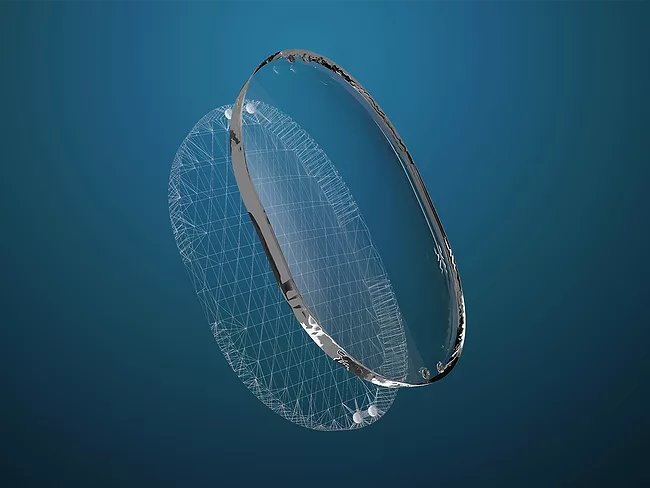
Longeviti Neuro Solutions LLC has received the U.S. FDA’s nod for use of its Clearfit cranial implant with postoperative ultrasound imaging. The expanded 510(k) clearance could help in reducing radiation exposure linked to other post-neurosurgical imaging modalities. Research has shown that current methods of post-neurosurgical imaging put patients at risk of radiation exposure, and that an estimated 29,000 future cancers could be linked to CT scan used in the U.S. each year. Comprised of polymethyl-methacrylate (PMMA), Clearfit is a neuro-reconstructive implant that surgeons use to reconstruct a patient’s cranium following brain surgery.
Theranica Bioelectronics Ltd. has snagged an expanded clearance from the U.S. FDA for use of its smartphone-controlled Nerivio device to treat migraines in adolescents. The new indication, for acute treatment of episodic or chronic migraine in people 12 years and older, is supported by a study published last month in the journal Headache.
Brain Scientific Inc., a neurology-focused device and software company, is seeking to combine a miniaturized electroencephalogram (EEG) with subcutaneous graphene electrodes to produce a minimally invasive brain monitoring device that could provide continuous data on patients with neurological conditions. The device, which the New York-based company is calling the Brain E-Tattoo, would monitor brain wave activity outside the clinical setting, allowing for long-term continuous data collection without interrupting daily life.
 RSS
RSS