Digital therapeutics startup Akili Interactive Inc. has secured $160 million in a combined equity and debt financing to accelerate commercialization of its Endeavorrx platform for cognitive disorders. The company won FDA clearance and the CE mark in June 2020 for its video game-based treatment, Endeavorrx ALK-T01, for children with attention deficit hyperactivity disorder (ADHD).
With the support of the NIH’s National Institute of Child Health and Human Development and the National Institute of Mental Health, researchers at Duke University’s Center for Autism and Brain Development have developed a mobile app that can quickly screen toddlers for autism spectrum disorder without the need for specialized skills.
LONDON – Wise Srl has received CE marking for its cortical strip electrode, validating the underlying flexible electronics technology and opening the door to the development of implantable devices for long-term neurostimulation.
Dariohealth Corp. agreed to acquire Psyinnovations Inc. (dba Wayforward), a behavioral health digital platform, for $30 million. The deal represents Dario's second of 2021, following the acquisition of the digital musculoskeletal company Upright Technologies Ltd. in January. The Wayforward transaction calls for $25 million at closing, with $6 million of that in cash and $19 million in shares of Dario common stock valued at $21.09 per share. In addition, Wayforward will receive another $5 million, if behavioral health revenues exceed a certain threshold in 2022.
Collectively, lysosomal storage disorders (LSDs) are caused by malfunctions in metabolic enzymes in the lysosome system. Depending on which enzyme is missing, toxic metabolites accumulate. While the LSDs are highly heterogenous – even within one disease, presentation can vary widely – neurodegeneration is a common feature in these disorders.
While the founder of Woebot Health says that the app is not intended to replace human therapists, for the majority of the world who cannot locate an available psychologist or afford one once found, Woebot aims to offer a “radically accessible” option for mental health care.
PERTH, Australia – The launch of Australia’s first medical device development and manufacturing facility in Melbourne is set to fast-track new treatments for people with conditions such as epilepsy, Parkinson’s disease, hearing loss, stroke and diabetes.
In the last decade, responsive neurostimulation (RNS) has become a mainstay of treatment for refractory focal epilepsy, but challenges with the technology remain. Researchers at Columbia University in New York appear to have overcome some of the major limitations through development of a compact, flexible, high performance implantable device that permits reading and manipulation of brain circuits.
Across the world, rates of depression have reached alarming new heights as a result of the grief, uncertainty and isolation experienced through the pandemic. Despite the high prevalence of depression, its treatment remains a hit-or-miss affair. Up to two-thirds of patients fail to respond to the first antidepressant prescribed and many of them never return to try another. Tel Aviv-based Taliaz Ltd. has developed an artificial intelligence-driven tool to help psychiatrists and other prescribers get it right the first time.
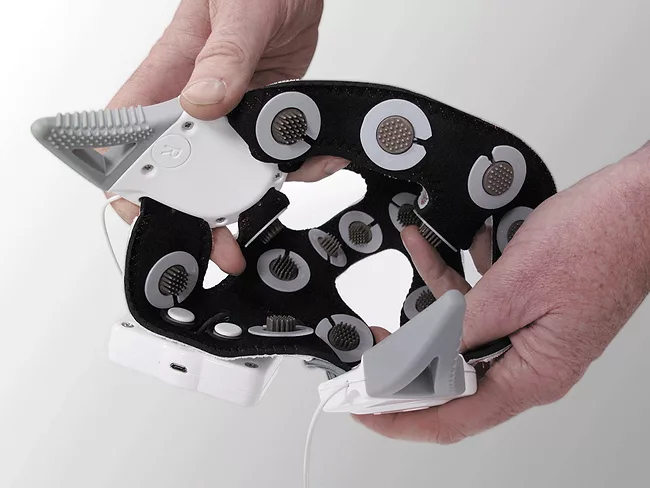
LONDON – Cumulus Neuroscience Ltd. has raised £6 million (US$8.3 million) to advance development of its home use wearable headset for tracking response to treatment in clinical trials in psychiatric disorders and neurodegenerative diseases, including Alzheimer’s.
 RSS
RSS