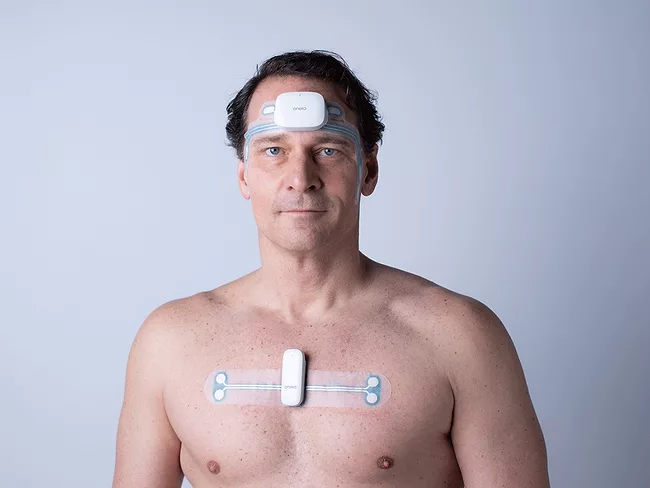
TORONTO – Western New York Imaging Group, a one-hour drive across the U.S.-Canadian border, will soon be the site for a hard launch of Champ, a system developed by Voxneuro Inc. that evaluates suspected cognitive brain disorder or symptoms such as fatigue, memory loss or brain fog. This comes after Voxneuro won FDA registration of the cognitive platform as a class II exempt medical license, followed last month by Health Canada approval of the system for help diagnosing concussion, traumatic brain injury and dementia.
A less controversial option than aducanumab may be available soon to help individuals with mild to moderate Alzheimer’s disease-related dementia. Researchers at the Medical University of Vienna and the University of Toronto have developed a technique using ultrasound that reverses cognitive decline and they say it could be available for clinical use shortly.
PERTH, Australia – Bioinformatic and cell technology company Genieus Genomics Ltd. is using the power of the human genome to build a platform for neurodegenerative diseases to develop diagnostic tests for personalized medicines.
The digital therapeutics market has seen an explosion of innovative products and interested investors. Regulators, too, have acknowledged their potential to improve outcomes in patients with chronic or debilitating conditions – often at lower cost and with less side effects than traditional drug therapies. To that end, the FDA has granted breakthrough device designation to Swing Therapeutics Inc. for its prescription digital therapeutic for the management of fibromyalgia.
The FDA has given the green light to Spintech Inc. for its STAGE (strategically acquired gradient echo) magnetic resonance imaging device. The post-processing software platform allows MRI technicians to capture higher-quality brain images in significantly less time than standard approaches.
Zoll Medical Corp. has released its Remedē EL-X system for the treatment of central sleep apnea in adults, following the receipt of FDA approval. The next-generation implantable neurostimulation device will be rolled out in a phased launch in implanting centers in the U.S.
Researchers from The Hong Kong University of Science and Technology (HKUST) have developed a blood test to detect Alzheimer’s disease (AD) early. They said the test has an accuracy level of over 96% and can also monitor disease progression. This is a new approach to detecting AD compared to the commonly used cognitive tests and invasive methods that detect changes in the brain caused by AD.
Brain-wide genome editing via a single systemic dose of modified adeno-associated virus variants that cross the blood-brain barrier may represent a promising new approach for the development of disease-modifying treatments for familial Alzheimer's disease. This strategy could also be applicable to other central nervous system (CNS) disorders, according to a proof-of-concept (PoC) study led by researchers at The Hong Kong University of Science and Technology (HKUST).
Post-traumatic stress disorder (PTSD) affects about 8 million Americans a year, disrupting lives with nightmares, memory loss, feelings of isolation and other negative effects. Treatment typically involves psychotherapy, but many patients do not find relief. To that end, the FDA has granted breakthrough device designation to Evren Technologies Inc. for its noninvasive Phoenix earbud device for treating PTSD.
 RSS
RSS