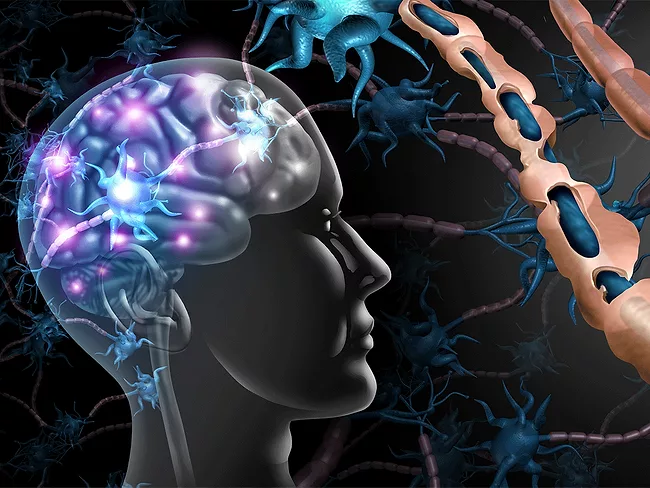
In multiple sclerosis (MS), a demyelinating disorder, autoimmunity is generally considered the primary underlying pathophysiological cause. Therefore, developing treatments for MS has traditionally focused on modulating the immune system. However, an alternative hypothesis explains MS as a primarily or initially neurodegenerative disorder, in which neuronal death releases myelin, triggering a secondary autoimmune reaction.
Longboard Pharmaceuticals Inc.’s positive – and then some – phase Ib/IIa top-line data with 5-HT2C receptor superagonist bexicaserin (LP-352) in developmental and epileptic encephalopathies (DEEs) sparked Wall Street speculation about competitive odds as well as the shape of the firm’s upcoming phase III effort.
Nearly two years after Novartis AG signed a $1.7 billion deal for options to Voyager Therapeutics Inc.’s adeno-associated virus capsids for central nervous system disorders, the Basel, Switzerland-based company secured rights to develop gene therapies for Huntington’s disease and spinal muscular atrophy in a licensing agreement potentially worth $1.3 billion.
Voyager Therapeutics Inc. has entered into a strategic collaboration and capsid license agreement with Novartis Pharma AG, a subsidiary of Novartis AG, to advance potential gene therapies for Huntington’s disease and spinal muscular atrophy (SMA).
Saniona AB has selected its proprietary GABA-A α5 negative allosteric modulator lead compound, SAN-2465, as a clinical candidate for major depressive disorder following encouraging results in a rodent model.
Echoing trends seen last year, the med-tech industry concluded 2023 with a continued surge in deal value juxtaposed against a more substantial decline in M&A value. Deal value for the year, including licensings, collaborations and joint ventures, reached $10.63 billion from 1,656 deals, the highest annual value in BioWorld’s records.
Enveric Biosciences Inc. has named EB-003 as its lead drug candidate from the company’s next-generation EVM301 series. EB-003 was selected based on data analyses suggesting the molecule’s potential to be a first-in-class approach to addressing difficult-to-treat mental health disorders by promoting neuroplasticity without inducing hallucinations.
In July, Leqembi (lecanemab, Biogen Inc./Eisai Co. Ltd.) became the first amyloid-targeting drug to win traditional approval from the U.S. FDA, after getting accelerated approval in January based on the surrogate endpoint of plaque removal.
Novel non-addicting analgetic therapies are urgently needed to reduce the use of opiates as painkillers. With the recent discovery that nicotinic acetylcholine receptors (nAChRs) in the immune system can be stimulated to decrease the release of pro-inflammatory cytokines, the cholinergic anti-inflammatory systems (CAS) have generated significant interest in treating pain associated with inflammation.
 RSS
RSS