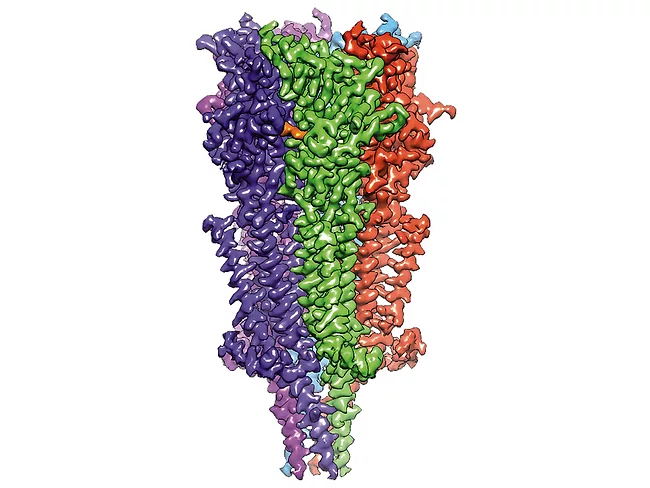
Novel non-addicting analgetic therapies are urgently needed to reduce the use of opiates as painkillers. With the recent discovery that nicotinic acetylcholine receptors (nAChRs) in the immune system can be stimulated to decrease the release of pro-inflammatory cytokines, the cholinergic anti-inflammatory systems (CAS) have generated significant interest in treating pain associated with inflammation.
Eli Lilly & Co. has patented new cyclic GMP-AMP synthase (MB21D1; cGAS) inhibitors reported to be useful for the treatment of Aicardi-Goutieres syndrome, dermatomyositis, systemic lupus erythematosus and lupus nephritis.
Aeovian Pharmaceuticals Inc. has disclosed new ADP-ribosyl cyclase/cyclic ADP-ribose hydrolase 1 (CD38) inhibitors reported to be useful for the treatment of neurodegenerative diseases.
Saniona AB has reported that it has selected SAN-2355 as the first clinical candidate from its Kv7 epilepsy program and is poised to advance it into preclinical development.
A new self-injectable therapy for polyneuropathy of hereditary transthyretin-mediated amyloidosis (hATTR-PN) will be available in January 2024 now that the U.S. FDA has approved Ionis Pharmaceuticals Inc.’s Wainua (eplontersen), a ligand-conjugated antisense oligonucleotide.
Adam Lenkowsky, chief commercial officer for Bristol Myers Squibb Co. (BMS), said his firm plans to launch Karxt (xanomeline-trospium) in the U.S. as soon as it’s approved by the U.S. FDA, and “expect[s] to accumulate sales in early 2025.” BMS tied a bow on the year by disclosing its plan to pay $330 per share to take over Karuna Therapeutics Inc. in a deal valued at $14 billion to bring aboard Karxt, which acts as a dual M1/M4 muscarinic acetylcholine receptor agonist. The FDA has assigned Sept. 26, 2024, as the PDUFA date for Karxt as a new treatment for schizophrenia in adults.
Axxam SpA has signed a partnership agreement with Lundbeck A/S aimed at supporting Lundbeck on early-stage drug discovery programs related to CNS indications.
Researchers from Cybin Inc. presented preclinical data for the potent and selective long-acting serotonin 5-HT2A receptor agonist, CYB-210010, as potential therapeutic candidate for the treatment of neurological disorders.
Irlab Therapeutics AB has completed all preclinical studies and development work with IRL-757 prior to entry to the clinic. IRL-757 is being developed as a once-daily oral treatment for apathy in Parkinson’s disease and other neurological disorders.
 RSS
RSS