Shanghai SIMR Biotech Co. Ltd. has prepared and tested new GABA-A receptor subunit α5 (GABRA5) inverse agonists. They are reported to be useful for the treatment of pain, stroke and Alzheimer’s disease.
Nonprofit Finding Hope for Frizzle (FRRS1L) and Apertura Gene Therapy have signed a license agreement for the development of a gene therapy for FRRS1L disease, also known as early infantile epileptic encephalopathy type 37, using Apertura’s CNS-targeting TfR1 CapX AAV capsid.
Researchers from University College London and collaborating institutions have recently published results from their study aiming to optimize gene therapy for CLN5 disease.
Korsana Biosciences Inc. has emerged from stealth, with its development of therapeutics to treat neurodegenerative diseases initially focused on Alzheimer’s disease.
Chronic migraine is a neurological disorder characterized by recurrent headache episodes. Recent findings have implicated microglia in the trigeminal nucleus caudalis in chronic migraine-related central sensitization. Activated microglial cells release inflammatory and neurotrophic factors that interact with the neurons involved in the process.
Building on the foundation laid in 2020, researchers at the University of California, San Francisco (UCSF) have now shown that targeting the GPI-anchored vascular enzyme TNAP can reproduce the cognitive benefits previously attributed to the liver-derived exercise factor GLPD1.
Med-tech companies with an AI component in their solutions will certainly find investors willing to back them. AI after all, is being used to develop more effective, smarter technologies. However, investors will only deploy capital into innovations that address genuine clinical needs. The aging population is driving interest in devices targeting cardiovascular and musculoskeletal disorders, and other solutions geared toward neurological conditions, women’s health and diagnostics are also attracting investor attention.
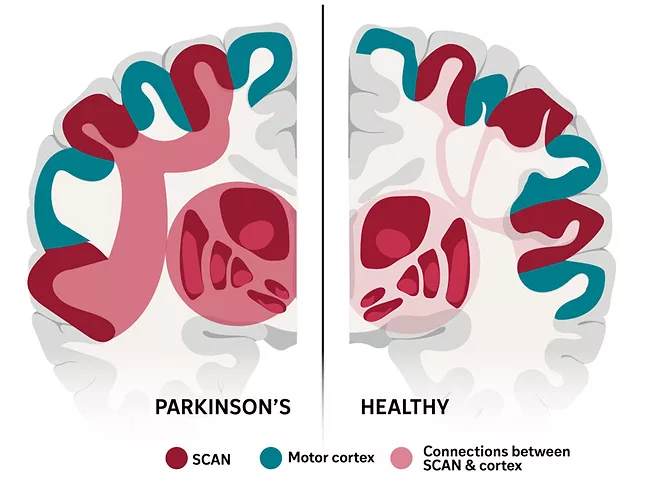
Parkinson’s disease is a neurodegenerative disorder that affects movement, and tremor is one of its signatures. But it is a much more wide-ranging disorder, and patients experience problems with cognitive and emotional processes as well. SCAN, the somato-cognitive action network identified in 2023, could reshape the definition of PD. Treating this circuit can improve outcomes.
The University of California has reported new azocino[4,5,6-cd]indoles acting as 5-HT2A receptor agonists and thus potentially useful for the treatment of neurological and psychiatric disorders.
Nektar Therapeutics Inc. has established an academic research collaboration with the University of California, San Francisco (UCSF) to explore the role of tumor necrosis factor receptor 2 (TNFR2) agonism in models of multiple sclerosis (MS) with the aim of supporting progression of NKTR-0165, Nektar’s first-in-class TNFR2 agonist antibody.

 RSS
RSS