Is there a link between cellular senescence and multiple sclerosis (MS) progression? Several presentations at this year’s European Committee for Treatment and Research in Multiple Sclerosis 2025 (ECTRIMS 2025) conference, which ends today in Barcelona, addressed this question.
Neushen Therapeutics Inc. has patented NLRP3 inflammasome inhibitors reported to be useful for the treatment of Alzheimer’s disease, Parkinson’s disease, multiple sclerosis, amyotrophic lateral sclerosis and Huntington’s disease.
The FDA has awarded orphan drug designation to Cure Rare Disease’s CRD-003 for the treatment of limb-girdle muscular dystrophy type R9 (LGMD2i/R9), a congenital muscular dystrophy caused by biallelic mutations in the FKRP gene.
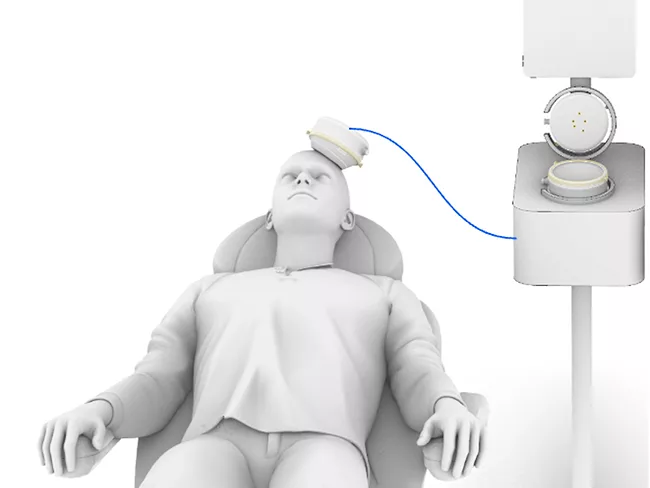
Sonomind SAS raised €3 million (US$ 3.5 million) in financing for its transcranial neuromodulation system, which targets deep regions within the brain non-invasively. The funds will go towards accelerating the development of the platform, which has already proven to be safe and effective in treating patients suffering from drug-resistant depression, after only five days of treatment.
Uniqure NV rang the bell with a best-case scenario in the pivotal phase I/II study with AMT-130 for the treatment of Huntington’s disease, and shares of the Amsterdam-based firm (NASDAQ:QURE) closed Sept. 24 at $47.50, up $33.84, or 248%. The study met its prespecified primary endpoint, with high-dose AMT-130 turning up a statistically significant slowing of disease progression as measured by the composite Unified Huntington’s Disease Rating Scale at 36 months compared to a propensity score-matched external control.
Amyotrophic lateral sclerosis (ALS), formerly known as Lou Gehrig’s disease, is a progressive and fatal neurodegenerative disorder with no known cure. While three therapies have gained U.S. FDA approvals to date, including Rilutek (riluzole), Radicava/Radicava ORS (edaravone) and tofersen (BIIB-067, the lack of a disease-modifying drug has spurred the continual search for novel therapies.
The first new U.S. FDA-approved therapeutic option for PTSD in more than 20 years will have to wait. A supplemental NDA seeking approval of Rexulti (brexpiprazole) combined with sertraline, filed by one of Japan’s biggest pharmas, Otsuka Pharmaceutical Co. Ltd., received a complete response letter (CRL) from the agency.
Breaking with its long-held, oft-recited mantra that observational studies are great for generating hypotheses but not as evidence for approval, the U.S. FDA is initiating the approval of leucovorin calcium tablets for patients with cerebral folate deficiency, a neurological condition that affects folate transfer into the brain.
Experts agree that the earlier Alzheimer's disease is detected, the sooner action can be taken. And so, the key to preventing deterioration is identifying the most effective early biomarkers, those that can spot the disorder and help halt its progression. Recent advances in the field have pushed a new era of early detection through blood-based biomarkers and personalized medicine strategies based on each patient’s genetic, immunological and clinical profile.
 RSS
RSS