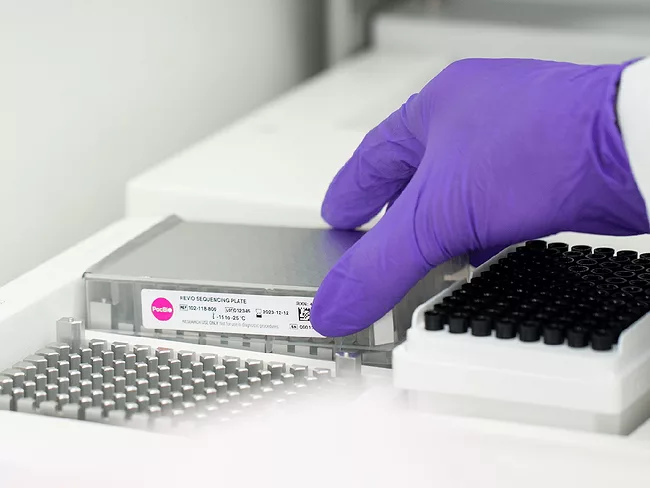
Up to 71% of people carry at least one pathogenic variant that could contribute to development of a heritable disorder in offspring, but until now, prospective parents often had to undergo multiple tests to understand their risks. Pacific Biosciences of California Inc. (Pacbio)’s expanded Puretarget portfolio provides a quicker and more streamlined solution as it covers all challenging tier 3 genes identified in the American College of Medical Genetics technical standard.
Anaphylaxis rates caused Larimar Therapeutics Inc.’s stock (NASDAQ:LRMR) to take a hit on the latest data from an open-label study with nomlabofusp in the neuromuscular disease Friedreich’s ataxia (FA), but the company is targeting a BLA submission to seek accelerated approval in the second quarter of next year.
Is there a link between cellular senescence and multiple sclerosis (MS) progression? Several presentations at this year’s European Committee for Treatment and Research in Multiple Sclerosis 2025 (ECTRIMS 2025) conference, in Barcelona, which ended Sept. 26, addressed this question
Hager Biosciences LLC has identified orexin receptor and/or κ-opioid receptor dual antagonists reported to be useful for the treatment of cancer, psychiatric, neurological and cardiovascular disorders.
Researchers from Novartis AG reported preclinical efficacy data on VHB-937, an agonist human monoclonal antibody targeting TREM2 in models of neuroinflammation.
Is there a link between cellular senescence and multiple sclerosis (MS) progression? Several presentations at this year’s European Committee for Treatment and Research in Multiple Sclerosis 2025 (ECTRIMS 2025) conference, which ends today in Barcelona, addressed this question.
Neushen Therapeutics Inc. has patented NLRP3 inflammasome inhibitors reported to be useful for the treatment of Alzheimer’s disease, Parkinson’s disease, multiple sclerosis, amyotrophic lateral sclerosis and Huntington’s disease.
The FDA has awarded orphan drug designation to Cure Rare Disease’s CRD-003 for the treatment of limb-girdle muscular dystrophy type R9 (LGMD2i/R9), a congenital muscular dystrophy caused by biallelic mutations in the FKRP gene.
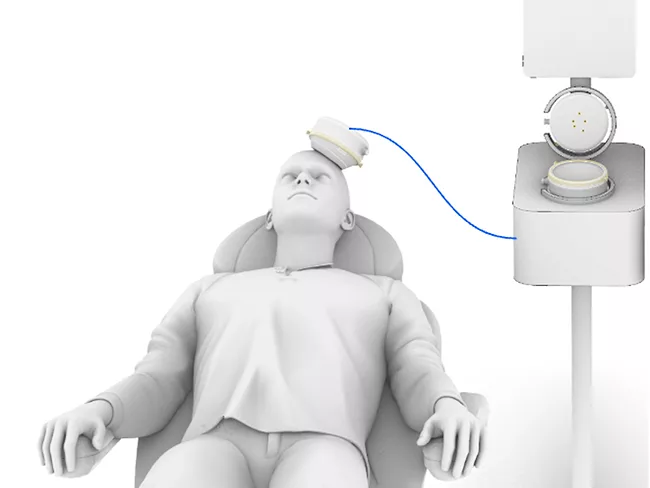
Sonomind SAS raised €3 million (US$ 3.5 million) in financing for its transcranial neuromodulation system, which targets deep regions within the brain non-invasively. The funds will go towards accelerating the development of the platform, which has already proven to be safe and effective in treating patients suffering from drug-resistant depression, after only five days of treatment.
 RSS
RSS