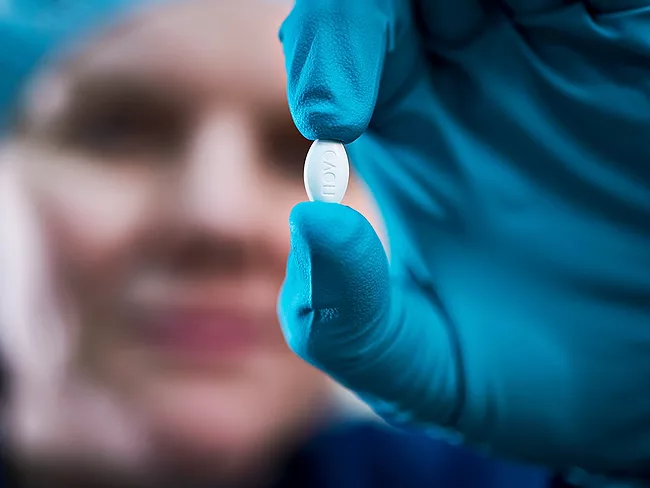
Otsuka Pharmaceutical Co. Ltd. filed an NDA with the U.S. FDA for centanafadine (formerly EB-1020), a new nonstimulant therapy for treating attention-deficit hyperactivity disorder (ADHD) in children, adolescents and adults. Centanafadine is a norepinephrine, dopamine and serotonin reuptake inhibito formulated as a once-daily extended-release capsule.
Researchers at Shanghai Institute of Materia Medica of the Chinese Academy of Sciences and Suzhou Vigonvita Life Sciences Co. Ltd. have described NMDA receptor antagonists and/or monoamine transporter inhibitors reported to be useful for the treatment of neurological disorders.
Captor Therapeutics Inc. has disclosed molecular glue degraders comprising a cereblon (CRBN) binding moiety acting as serine/threonine-protein kinase Nek7 degradation inducers reported to be useful for the treatment of amyotrophic lateral sclerosis, Still’s disease, Behçet’s disease, familial Mediterranean fever, Alzheimer’s disease, pulmonary arterial hypertension and more.
Gemma Biotherapeutics Inc.’s GB-221, a novel gene therapy for spinal muscular atrophy type 1 (SMA1), has received clinical trial clearance from ANVISA, Brazil’s health regulatory agency.
Nervgen Pharma Corp. rolled out expanded findings from the Connect phase Ib/IIa study with NVG-291 in spinal cord injury patients showing that the 35-amino acid peptide derived from the intracellular wedge domain of phosphatase sigma provided durable functional gains that continued at week 16 and after.
Novo Nordisk A/S’ wild card bet that its GLP-1 receptor agonist semaglutide could be used to treat Alzheimer’s disease has not paid off, with the company reporting two phase III trials have shown no effect on slowing disease progression.
Changes to a U.S. CDC website regarding autism and vaccines has sparked a backlash from numerous scientific and other groups, placing HHS Secretary Robert F. Kennedy Jr. (RFK) in the spotlight once again for appearing to break promises made earlier this year to secure his nomination.
At the 2025 annual meeting of the Society for Neuroscience in San Diego this week, Catherine Woolley’s plenary lecture was an unusual combination of debunking and affirming the importance of sex differences in the brain.
Vanderbilt University has divulged muscarinic M1 receptor positive allosteric modulators (PAMs) reported to be useful for the treatment of pain, Alzheimer’s disease, schizophrenia, attention deficit hyperactivity disorder (ADHD), tardive dyskinesia, Tourette syndrome, sleep disorders and cognitive disorders, among others.
CSPC Pharmaceutical Group Ltd. has obtained approval from China’s National Medical Products Administration (NMPA) to initiate clinical trials with the company’s selective 5-HT2A receptor agonist, SYH-2056 tablets, for the treatment of depression.

 RSS
RSS