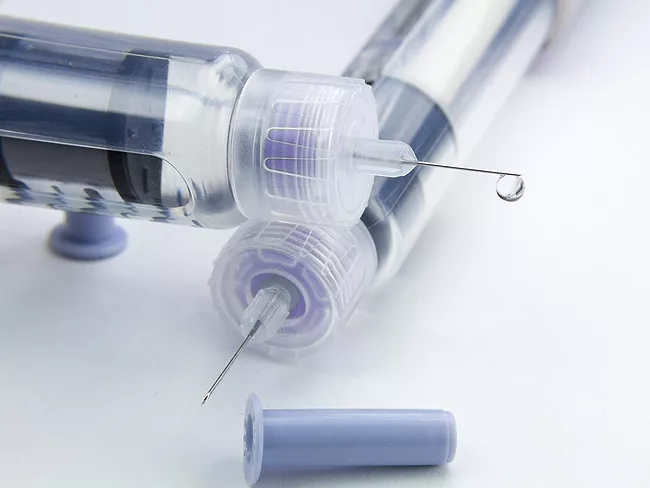
Pfizer Inc. is ending work on oral GLP-1 candidate danuglipron for weight loss following the report of a single potentially drug-induced liver injury, a move that appears to open the door for other firms working on oral therapies in the high-dollar obesity space, even as industry watchers seek further details to determine whether similar safety signals could emerge for those competitors.
A late 2024 CMS proposal to include obesity drugs like Novo Nordisk A/S’ Wegovy (semaglutide) and Eli Lilly and Co.’s Zepbound (tirzepatide) under Medicaid and Medicare didn’t make it far under the new U.S. administration. A final rule, set to be published in the Federal Register April 15, will not include the provision that would have added obesity drugs to Part D coverage beginning in 2026.
Rhythm Pharmaceuticals Inc.’s sales with Imcivree (setmelanotide) in weight management could exceed $1 billion by 2028 if hypothalamic obesity (HO) is added to the label of the drug, Oppenheimer analyst Leland Gershell said in a report. Boston-based Rhythm rolled out positive top-line data from the pivotal phase III study called Transcend with the melanocortin-4 receptor agonist in HO. The global trial met its primary endpoint with a statistically significant and highly clinically meaningful reduction in body mass index in adult and pediatric HO patients vs. placebo.
The latest obesity contender, Antag Therapeutics A/S, has dosed the first participants in a phase I trial of a glucose-dependent insulinotrophic polypeptide (GIP) agonist it said will address key gaps in the current treatment options, not least the gastrointestinal side effects seen with GLP-1 agonists.
Building upon its already impressive obesity drug portfolio, Novo Nordisk A/S has licensed a triple agonist of the receptors for GLP-1, GIP and glucagon from United Biotechnology Co. Ltd. China-based United is getting $200 million up front and the chance to earn up to $1.8 billion in milestone payments. United Biotechnology retains the rights to subcutaneously administered UBT-251, which is in the early stages of development for treating obesity, type 2 diabetes and other diseases, in China, Hong Kong, Macau and Taiwan while Bagsværd, Denmark-headquartered Novo get exclusive rights to develop, manufacture and commercialize the triple agonist receptor across the rest of the world.
In what it says is the biggest obesity deal to date, Zealand Pharma A/S has signed up Roche AG to a potential $5.3 billion global collaboration and license agreement to develop petrelintide, an amylin analog that is currently in phase IIb development. The two companies will co-develop and co-commercialize petrelintide and combination products, including a fixed-dose combination of petrelintide and CT-388, Roche’s dual GLP-1/GIP receptor agonist.
Abbvie Inc. is buying into the obesity fray in a potential $1.875 billion development and commercialization agreement with Danish peptide drug discovery specialist Gubra A/S. In addition, there will be a $350 million up-front payment as Abbvie takes over the reins of GUB-014295 (referred to as Gubamy), a long-acting analog of the satiety hormone amylin, currently in phase I development.
The prospects of an oral obesity candidate used as a monotherapy or combination therapy is in question after Kallyope Inc. posted disappointing phase II data on a government website, indicating that its lead candidate, K-757, failed to meet all endpoints.
Several Asia biotechs this week – including Innocare Pharma Ltd., Akeso Pharmaceuticals Inc., Sanbio Co. Ltd. and Ascletis Pharma Inc. – unveiled the start of new late-stage clinical trials or interim findings from early stage studies.
While first-generation glucagon-like peptide-1 receptor agonists have clearly taken the obesity market by storm, generating billions of dollars for Novo Nordisk A/S and Eli Lilly and Co., several other companies are developing follow-on products that could clean up the tolerability and adherence issues of Wegovy (semaglutide) and Zepbound (tirzepatide).

 RSS
RSS