Obesity specialist Sixpeaks Bio AG emerged from stealth with $110 million in funding and an option to be acquired by Astrazeneca plc within the next two years, subject to filing an IND for the lead product. Of the $110 million, $30 million is a series A round, with the balance to come from Astrazeneca, which will provide nondilutive finance of up to $80 million.
Shares of Structure Therapeutics Inc. (NASDAQ:GPCR) were trading up more than 54%, gaining $18.54 to close June 3 at $52.74, on the back of data for GSBR-1290, an oral, GLP-1 receptor agonist it hopes to position in the highly competitive obesity market. The latest readout sees the company regaining ground lost late in 2023 when earlier phase IIa data prompted unflattering comparisons to more advanced oral GLP-1 candidates.
Obesity specialist Sixpeaks Bio AG emerged from stealth with $110 million in funding and an option to be acquired by Astrazeneca plc within the next two years, subject to filing an IND for the lead product.
As a meeting looms of the U.S. FDA’s Endocrinologic and Metabolic Drugs Advisory Committee to evaluate a similar product from Novo Nordisk A/S, Eli Lilly and Co. made public positive top-line phase III data with its once-weekly insulin, efsitora alfa, in adults with type 2 diabetes using insulin for the first time and in those who require multiple daily injections.
Homerun success of Novo Nordisk A/S’ semaglutide, which recently became the U.S.’s biggest blockbuster drug, is serving as an “inflection point” for obesity therapeutics and fueling the drive for new and improved therapies, speakers said at Bio Korea 2024 on May 8.
Innovent Biologics Inc.’s glucagon-like peptide-1 receptor (GLP-1R) and glucagon receptor dual agonist, mazdutide, met the primary endpoint of superiority in a head-to-head phase III trial in Chinese patients with type 2 diabetes compared to Eli Lilly and Co.’s GLP-1, dulaglutide, for glycemic control.
Innovent Biologics Inc.’s glucagon-like peptide-1 receptor (GLP-1R) and glucagon receptor dual agonist, mazdutide, met the primary endpoint of superiority in a head-to-head phase III trial in Chinese patients with type 2 diabetes compared to Eli Lilly and Co.’s GLP-1, dulaglutide, for glycemic control.
Homerun success of Novo Nordisk A/S’ semaglutide, which recently became the U.S.’s biggest blockbuster drug, is serving as an “inflection point” for obesity therapeutics and fueling the drive for new and improved therapies, speakers said at Bio Korea 2024 on May 8.
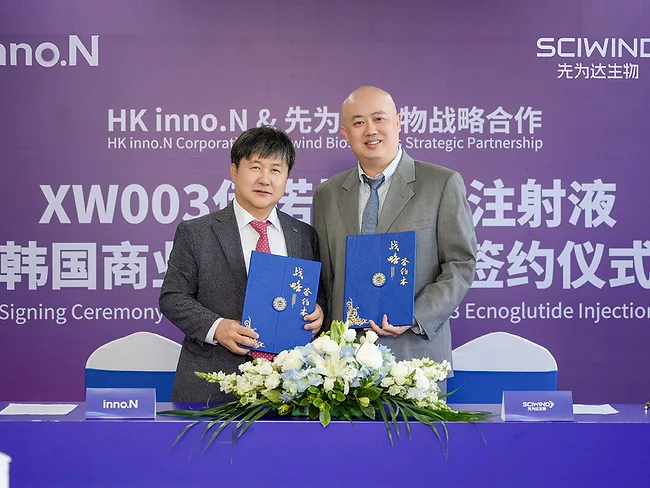
South Korea’s HK Inno.N Corp. said on May 2 that it gained exclusive development and commercial rights to Hangzhou, China-based Sciwind Biosciences Co. Ltd.’s once-weekly, injectable glucagon-like peptide-1 (GLP-1) agonist, XW-003 (ecnoglutide), in South Korea to treat type 2 diabetes and obesity.
In the wake of Novo Nordisk’s semaglutide nabbing the title of the U.S.’s biggest blockbuster drug, it’s little surprise that Amgen Inc.’s obesity candidate, Maritide (maridebart cafraglutide), hogged the stage during the firm’s first-quarter earnings call after market close May 2, with company executives touting promising phase II data and a differentiated profile, sending shares of Thousand Oaks, Calif.-based Amgen (NASDAQ:AMGN) up nearly 12% to close May 3 at $311.29.
 RSS
RSS