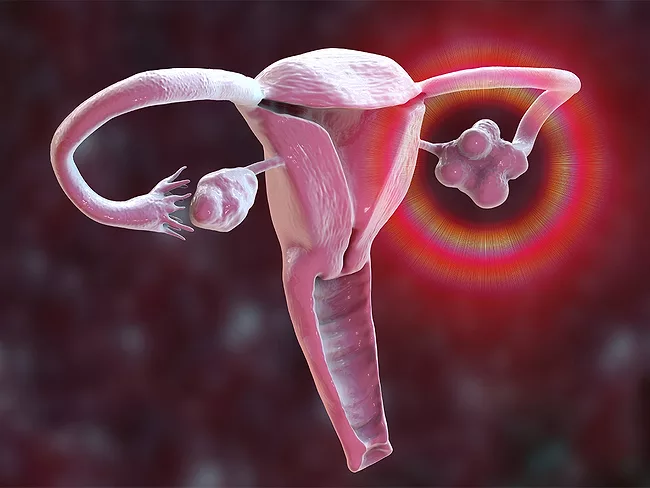
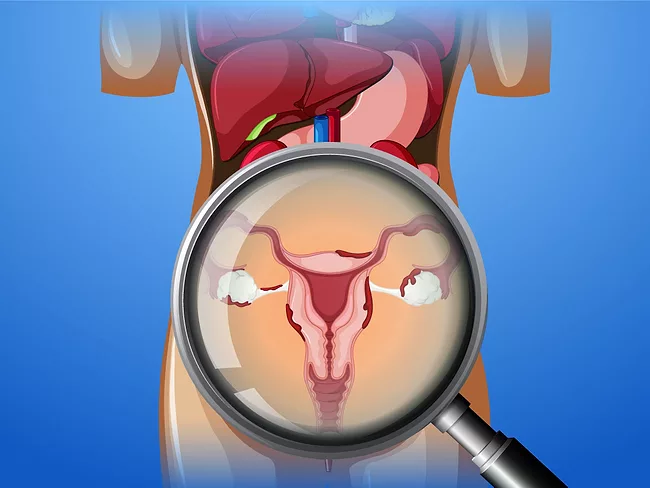
Although the causes of polycystic ovary syndrome (PCOS) are unclear, researchers know this condition leads to endometrial dysfunction in women who have hormonal imbalances, and insulin resistance. Now, a study led by scientists at the Karolinska Institutet in Sweden has revealed the cellular and genetic differences that distinguish this disorder in the first atlas of the human endometrium during the proliferative phase of the menstrual cycle.
In a recently published study, researchers from the International Centre for Genetic Engineering and Biotechnology in Italy used data from a previous high-throughput screening using human miRNA mimics and selected miR-148a-3p as a therapeutic target.
Curently the only available blood test to tell which women are at risk of postpartum depression (PPD) is the one that confirms their pregnancy – and a one in seven chance of developing the condition which can have long-term implications for both mother and child. Research out of the University of Virginia and Weill Cornell Medicine could soon change that by identifying biomarkers in the third trimester of pregnancy that indicate which women have the greatest risk of developing PPD.
A paracrine hormone of skeletal muscle acts as an endocrine signal for the synthesis of a sex hormone. Scientists at McGill University have observed in mice how myostatin, which inhibits the development of muscle mass to control its growth, also stimulated the production of the pituitary follicle-stimulating hormone (FSH), modulating ovarian function. The hypothalamus-pituitary-gonadal axis could include an additional element through a yet unknown role in muscles.
Celmatix Therapeutics (Celmatix Inc.) has announced a new drug program for endometriosis, with the development of a novel Jun-N-terminal kinase (JNK) inhibitor that targets pain and inflammation. The company’s aim to focus on JNK inhibitors with greater specificity for JNK1 and JNK3 than for JNK2 led it to license lead compounds from Baylor College of Medicine.
Around the end of every year, the media reports on pregnancy and women who give birth on the last and first days of the new year. They tell their stories, the names of their babies and the cities where they were born. While 2024 was coming to an end, gynecologists and other researchers finalized their publications to improve the health of women and their babies. The formation of the placenta or the study of preeclampsia are some of the first and last stories that greet and say goodbye to 2024. Those of 2025 will be born soon.
Cyclins regulate steroid receptor action in cyclin-dependent kinase (CDK)-dependent and independent manners. In addition to regulating the cell cycle, cyclin A2 (CCNA2) also mediates female sex steroids 17 β-estradiol and progesterone signaling in vitro, which is essential for fertility.
A gene therapy based on an enhanced lipid nanoparticle (LNP) loaded with vascular endothelial growth factor (VEGF) mRNA could be developed for the treatment of preeclampsia, according to a study in mice in which it alleviated maternal hypertension until the end of gestation and improved fetal health. Preeclampsia is a disease that affects 3% to 5% of pregnant women, who suffer from hypertension and proteinuria, elevated levels of protein in the urine, during pregnancy.
In breast cancer, neoadjuvant chemotherapy reduces the tumor before surgery. However, the response to this treatment does not depend solely on the subtype of malignancies. Other factors could play a key role in its effectiveness, as shown in a study that described how the estrous cycle phases contribute to this variation. The researchers propose adjusting the approach to the most suitable moment for patients.
 RSS
RSS