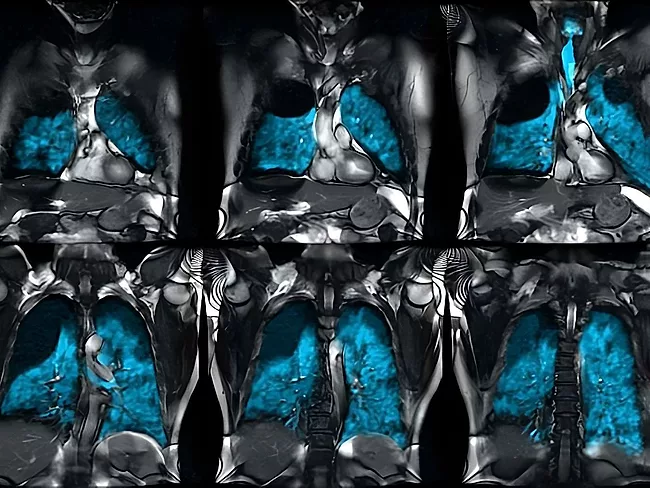
The U.S. FDA has approved Polarean Imaging plc’s drug-device combination product, Xenoview, for use with magnetic resonance imaging (MRI) in evaluating lung ventilation in adults and children aged 12 and older. The hyperpolarized contrast agent, which is prepared from the Xenon Xe 129 gas blend, is expected to be commercially available in the U.S. starting next month.
U.S. federal authorities have made a lot of noise over inappropriate medical testing in the past two years, largely due to the COVID-19 pandemic, but Paul Garcia, a partner in the San Diego office of Hooper, Lundy & Bookman PC, says this trend will not ebb at all in the coming year. Garcia told BioWorld that the lookback period for Medicare testing claims runs several years and that not only will enforcement results continue to surface next year, but also that the associated civil monetary penalties could force a testing lab to shutter its operations permanently.
The U.S. FDA posted an update to the ongoing recall of respirators and positive airway pressure devices by Philips Respironics Inc., a subsidiary of Amsterdam-based Royal Phillips NV, which are associated with more than 21,000 medical device reports (MDRs) between Aug. 1 and Oct. 31, 2022. However, these MDRs are also associated with 91 patient deaths, which while they cannot be attributed directly to these devices, are nonetheless a stain on the reputation of the company’s products going forward.
The FDA granted Adherium Ltd. 510(k) clearance for its next-generation Hailie sensor that connects with Glaxosmithkline plc’s Ellipta inhaler to enable monitoring of medication use for asthma and chronic obstructive pulmonary disorder (COPD).
Investors are backing neurostimulation device company Stimdia Medical Inc. with $16 million, in the first tranche of a series B offering expected to total $30 million. The Minneapolis-based company is developing a device that stimulates the phrenic nerves in a patient’s neck to exercise the diaphragm during mechanical ventilation and minimize ventilation-induced diaphragmatic dysfunction (VIDD).
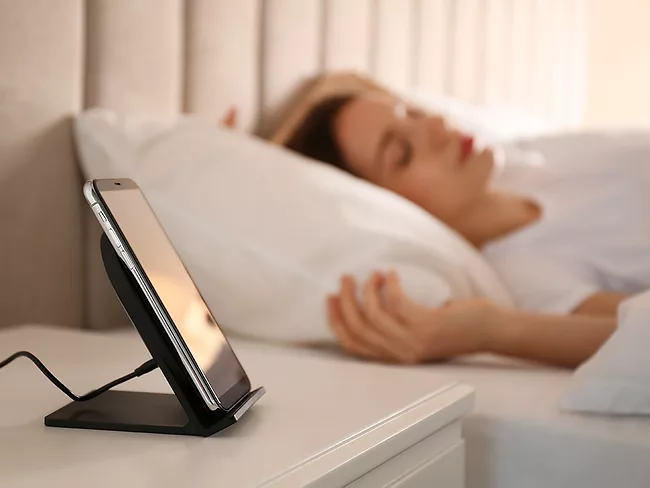
The U.S. FDA has given Resapp Health Ltd. the green light for its 510(k) Sleepcheckrx app to detect moderate to severe sleep apnea in adults as a prescription-only software-as-a-medical device. The FDA cleared the app as a class II medical device. Brisbane, Australia-based Resapp submitted the 510(k) premarket notification to the FDA in November 2021 for Sleepcheckrx for at-home sleep apnea screening.
Israeli startup Synchrony Medical Ltd. is gearing up to begin a U.S. clinical trial testing an airway clearance method developed at Israel’s Sheba Medical Center. The Libairty device is designed to support chronic lung disease patients to clear mucus with a short home-based daily treatment.
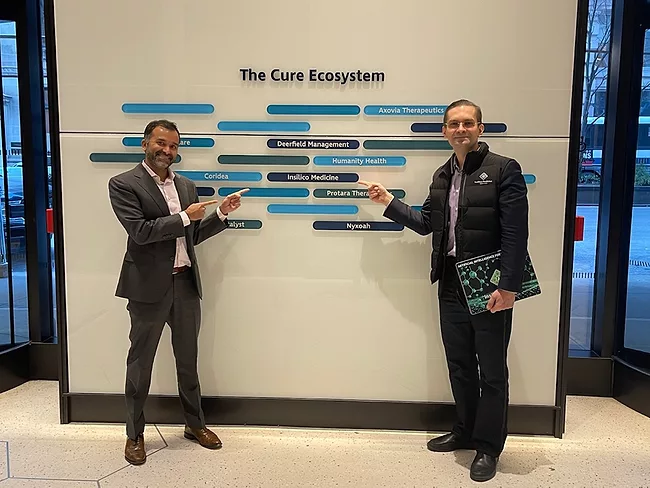
AI-enabled drug discovery company Insilico Medicine Ltd. has raised $60 million in a series D round to support expansion of its pipeline. The Hong Kong and New York-based company will use the proceeds to support clinical testing of its lead asset, a potential treatment for idiopathic pulmonary fibrosis (IPF), as well as the advancement of its Pharma.AI platform.
Pfizer Australia Holdings Pty Ltd. has made an offer to acquire digital health company Resapp Health Ltd. in all cash offer worth AU$100 million (US$74.25 million). The two companies have entered into a binding scheme that is contingent upon shareholder agreement and regulatory clearances in Australia. Shareholders will vote on the proposed acquisition in June, and directors have unanimously recommended that shareholders vote in favor of the acquisition.
Murrysville, Pa.-based Philips Respironics Inc. has had its share of troubles with its devices for respiratory use, including several CPAP machines. The FDA reported March 21 that the company’s V60 and V60 Plus respirators are now the subjects of a class I recall due to the use of an expired adhesive that could ultimately lead to a shut-down of the devices, including instances in which the shut-down would not be accompanied by an alarm.
 RSS
RSS