Integral Molecular Inc. has been awarded funding totaling $896,000 from the National Institutes of Health (NIH), which will support its discovery of antibodies against difficult and conserved protein targets.
Sab Biotherapeutics Inc. has announced a private placement of up to $130 to fund the company’s lead research program, SAB-142, a potential disease-modifying treatment for type 1 diabetes. SAB-142 is expected to advance into clinical trials in the fourth quarter of this year.
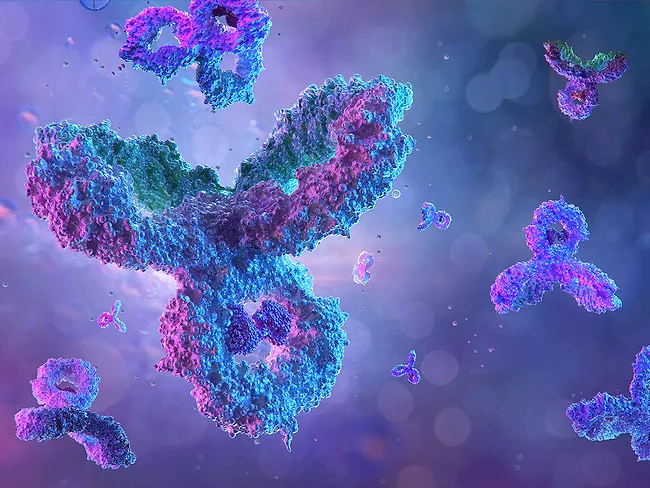
Complementarity-determining regions (CDRs) are relatively short peptide loops in antibodies where they bind to their specific antigens. Bovines, unlike humans and other vertebrates, rely on ultralong CDR H3 antibody knob regions to neutralize cryptic viral epitopes.
Twist Bioscience Corp. and Imidomics Inc. have established a multi-program collaboration whereby Twist will utilize its antigen development capabilities and Library of Libraries to conduct antibody discovery activities against targets identified by Imidomics.
Arialys Therapeutics Inc. launched this month with $58 million in seed funding, an experimental compound it is developing for autoimmune encephalitis and autoimmune psychosis, and high aspirations for its field. “Yes, I want to treat these patients, I want these patients to have a better life. But I also want drug discovery and development folks to think differently about discovering new drugs for the CNS,” Jay Lichter told BioWorld.
Glycotope GmbH and the Max Delbrück Center for Molecular Medicine in the Helmholtz Association have signed an agreement to explore the potential of combining Glycotope’s antibodies against protein/carbohydrate combined glyco-epitopes (Glycotargets) with chimeric antigen receptor (CAR) technology developed by the Max Delbrück Center.
Inmagene Biopharmaceuticals Technology (Shanghai) Co. Ltd. and biotech investment firm Aditum Bio Management Company LLC have announced the formation of Celexor Bio, a new biotech company focused on cell depletion of pathologic cells in autoimmune and inflammatory disorders. Celexor has been formed based on Inmagene’s IMG-018, a plasmacytoid dendritic cell (pDC)-depleting antibody targeting immunoglobulin-like transcript 7 (ILT7).
Scinai Immunotherapeutics Ltd. (formerly Biondvax Pharmaceuticals Ltd.) has released promising results from a preclinical study of Scinai’s anti‑IL‑17 nanosized VHH antibodies (NanoAbs) as a treatment for plaque psoriasis. The alpaca‑derived recombinant variable domain of heavy-chain-only antibodies are designed to be administered locally.
Arialys Therapeutics Inc. has closed $58 million in seed financing. The proceeds of the financing will be used to advance new precision medicines that specifically block pathogenic autoantibodies in the central nervous system (CNS) with the aim of treating neuropsychiatric diseases driven by autoimmunity.

 RSS
RSS