As biotech zombies with failed programs and money in hand go, Galapagos NV is a notable example, with a number of misses in the clinic, $3.1 billion in the bank, and a market capitalization of $2.19 billion.
The news that Vinay Prasad has stepped down as CBER director at the U.S. FDA had some biotech stocks literally jumping in joy as the market opened July 30. Meanwhile, Prasad’s decisions regarding vaccine development, as well as actions by Makary and HHS Secretary Robert Kennedy, are coming under fire.
The complete remission of a testicular cancer patient receiving Mink Therapeutics Inc.’s allogeneic, off-the-shelf invariant natural killer T-cell therapy Agent-797 with nivolumab drove the company’s shares up by 730% July 11. The results, published in Nature’s Oncogene, described the complete, durable remission of a 49-year-old man with a germ cell neoplasm, showing no evidence of disease two years after receiving a single infusion.
Capricor Therapeutics Inc. received a complete response letter (CRL) from the U.S. FDA on the BLA for deramiocel to treat cardiomyopathy in Duchenne muscular dystrophy patients. The company’s CEO said the letter was unexpected.
A mixed bag of top-line phase II data prompted stellar stock results for Prokidney Corp. and its chronic kidney disease (CKD) and diabetes therapy, rilparencel. The results came from two arms of the study, each with its own treatment regime. The market heartily took to the results as the company’s stock (NASDAQ:PROK) closed 515% upward at $3.73 per share after starting the day under $1 each.
The realignment within the U.S. FDA continued with reports of the removal of two high level executives. When asked by BioWorld if the Center for Biologics Evaluation and Research’s (CBER) Office of Therapeutic Products director and deputy director had been forced out and if so, why, an HHS spokesperson responded on background with a single sentence: “Center directors deserve to be supported by managers that are aligned with aggressive goals to expeditiously advance therapeutics for rare diseases using the gold standard of science.”
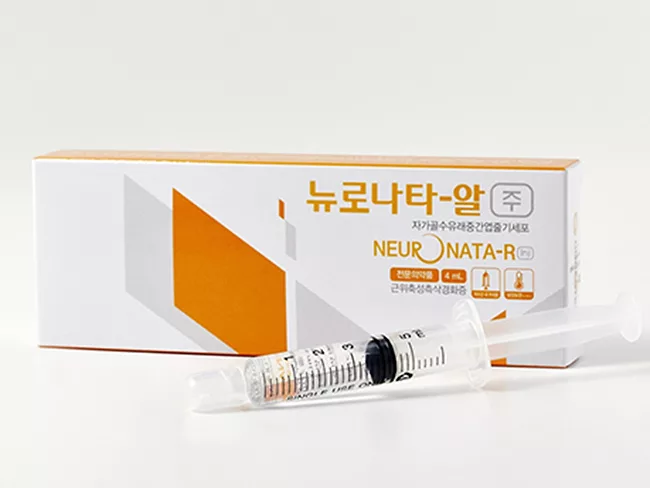
Corestemchemon Inc. is planning to file a BLA for Neuronata-R (lenzumestrocel) by the end of 2025 to gain accelerated approval from the U.S. FDA, company officials confirmed to BioWorld during a June 2 interview. Neuronata-R is an autologous bone marrow-derived mesenchymal stem cell therapy that first gained approval in South Korea in 2014 to delay the progression of amyotrophic lateral sclerosis (ALS), a progressive neurodegenerative disorder also known as Lou Gehrig’s disease.
Children with solid tumors who relapse are being treated with the same chemotherapy they would have been given 40 years ago, as “there have been no major approvals for pediatric solid tumors,” Catherine Bollard, senior vice president and chief research officer at Children’s National Hospital, said at a June 5 FDA roundtable on cell and gene therapies (CGTs). The problem isn’t the science. Bollard said many groups are working on curative CGTs “for these children who have lost all other hope for survival.” The real gap is that “big pharma doesn’t see the business model because it’s a rare disease,” she added.
Anti-aging specialist Juvenescence Ltd. reached the first close of its series B-1 at $76 million and said it is on course to close the round at $150 million in the third quarter of 2025. “The reason for the first close and not waiting for the very end is just so we can start to move the pipeline forward,” said Richard Marshall, CEO. “We’ve got molecules in and waiting to go, so the sooner we can get going on those, the better,” he told BioWorld.
Gene and cell therapies (GCTs) can target the kidney to treat congenital, acute or chronic diseases affecting this organ. However, its complex structure poses a challenge for these technologies. To be precise and effective in the long term, new approaches should circumvent the specificities of renal tissue, with novel methods of delivery and gene transfer to offer new therapeutic options for patients who lack them.
 RSS
RSS