Kiromic Biopharma Inc. and two former senior officials have settled with the U.S. SEC to resolve charges involving nondisclosure of U.S. FDA clinical holds on two cancer candidates before and after a July 2021 follow-on public offering that raised $40 million the company desperately needed.
Our immune cells are not just “defenders” against deadly viruses and pathogens but also a great balancer for tissue homeostasis. For neurological disorders, understanding the neuro-immune axis could be key to treating previously untreatable conditions such as autism spectrum disorder, according to Jun R. Huh, professor of immunology at Harvard Medical School.
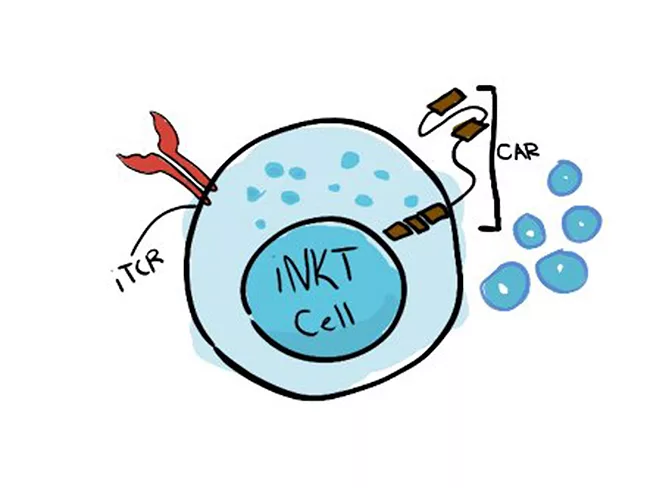
Arovella Therapeutics Ltd. is heading toward the clinic with its lead product, ALA-101, which consists of a chimeric antigen receptor (CAR) targeting CD19 and invariant natural killer T (iNKT) cells.
When it comes to cell therapy, Alloplex Biotherapeutics Inc. CEO Frank Borriello said he believes that autologous, personalized therapy is the only thing that makes sense. “The allure of an off-the-shelf therapy has been such a magnet. It sucked in a lot of companies into that dream, and I'm sorry to say, it hasn't really worked out for them,” he told BioWorld. Instead, Borriello said he envisioned a cell training platform that doesn’t just tweak a single immune pathway but instead harnesses multiple immune pathways to turn the tables on cancer.
On the heels of U.S. FDA approval of its first T-cell therapy, Adaptimmune Therapeutics plc reported positive results from a pivotal study for its second candidate, letetresgene autoleucel, expected to support a rolling BLA submission in 2025 that could bolster the firm’s offerings as it narrows its focus on the rare sarcoma space.
Autolus Therapuetics plc has been granted FDA approval for Aucatzyl (obecabtagene autoleucel) for the treatment of acute lymphoblastic leukemia in adults, becoming the first marketed CAR T therapy that does not have a risk evaluation and mitigation strategy attached to its label. The approval of Aucatzyl was based on results of the Felix clinical trial in relapsing/remitting ALL, which showed a strong safety profile compared to existing CAR T-cell therapies. The conduct of the trial was dogged by the COVID-19 pandemic, but of the 65 patients from an initial dosed cohort of 95 for whom efficacy was evaluated by the FDA, 63% achieved overall complete remission.
Extending its cash runway into 2026, Sana Biotechnology Inc. is prioritizing certain autoimmune assets and punting an oncology program and a central nervous system diseases program to a potential licensing partner or spinout company.
Alongside the release of abstracts related to the American Society of Hematology meeting next month in San Diego, and as part of the firm’s third-quarter update, Beam Therapeutics Inc. disclosed that one patient died in the phase I/II trial testing BEAM-101 in sickle cell disease (SCD).
Cell and gene therapy companies are the beneficiaries of positive changes along the regulatory path that the U.S. FDA is paving for them, according to a panel of executives who spoke at the BioFuture 2024 conference in New York. The agency is trying to set up cell and gene companies for success and that’s a very different agency than what it was years ago, said Paul Bresge, CEO of Ray Therapeutics Inc.
The Japanese government, industry and academia are deliberating health care policies and initiatives to boost Japan’s role in the future of regenerative medicine, experts at Bio Japan 2024 said, as the fruits of cell and gene therapy research come to fruition with new approvals.

 RSS
RSS