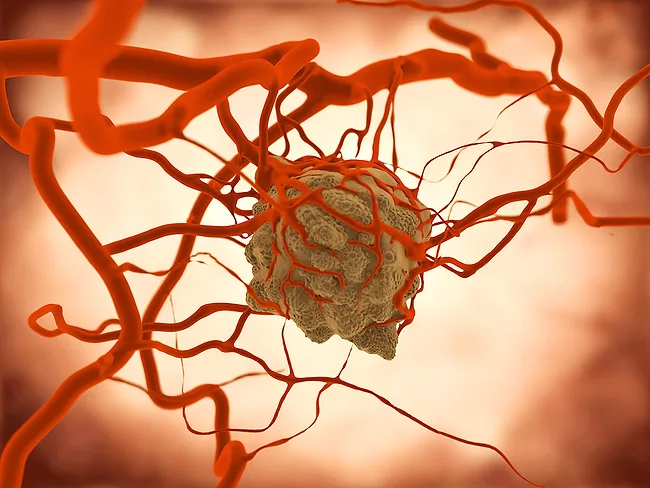
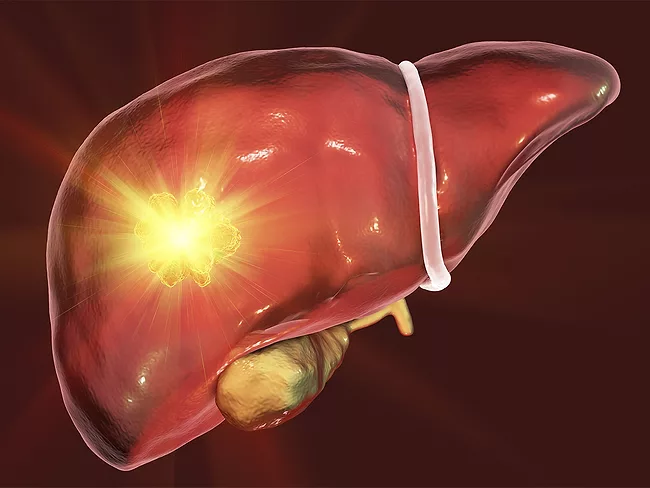
CAR T cells have made headlines for their ability to fight hematological cancers, but they have proven largely ineffective against solid tumors. To fight such tumors, many groups have engineered T cells to carry T-cell receptors (TCRs) that target cancer antigens, but this approach requires using T cells taken from the patient and it is ineffective against parts of the tumor that have lost expression of the target antigen. As an alternative strategy, researchers at Zelluna ASA in Norway have engineered natural killer (NK) cells to express TCRs against solid tumor antigens.
CD276, also known as B7-H3, is an antigen highly expressed in several cancer types, including hepatocellular carcinoma (HCC, 79%-94% expression) and closely tied to aggressiveness and poor survival, but shows very low expression in normal tissues. Increasing evidence exists indicating B7-H3 has immune inhibitory functions, thus reducing interferon levels released by T cells and suppressing cytotoxic activity of natural killer cells, thereby aiding in tumor immune evasion.
Bispecific T-cell engagers (TCEs) aim to combat cancer by simultaneously binding T cells and tumor cells in order to induce the first to kill the second. This approach has failed to work effectively against many solid tumors because the exogenous engager proteins do not penetrate into tumors at sufficiently high concentrations.
Tahoe Therapeutics and Alloy Therapeutics Inc. are forming a jointly seeded new company focused on developing first-in-class antibody-drug conjugates (ADCs) for patients with hard-to-treat cancers. The joint venture will advance two ADC programs directed at novel tumor targets discovered by Tahoe using its proprietary Mosaic platform and large-scale, perturbative single-cell datasets.
Dispatch Biotherapeutics Inc. has obtained IND clearance from the FDA for DISP-10, enabling the initiation of a phase I study in patients with solid tumors. Initial clinical evaluation will begin in gastrointestinal cancers, with plans to expand into multiple additional solid tumor indications following clinical proof of concept.
Antibody-drug conjugates (ADCs) are promising biotherapeutics composed of an antibody plus a cytotoxic payload via a chemical linker, thus allowing the delivery of cytotoxic payload to target cancer cells. Among cancer glycoproteins studied in cancer research, mucin-1 (MUC1) is among the most extensively researched.
A2 Biotherapeutics Inc. has gained IND clearance from the FDA for A2B-543 for the treatment of germline heterozygous HLA-A*02 adults with recurrent unresectable, locally advanced or metastatic solid tumors.
Remegen Ltd. has synthesized antibody-drug conjugates consisting of anti-CDCP1 antibodies covalently linked to cytotoxic drugs through linkers reported to be useful for the treatment of cancer.
Ottimo Pharma Ltd. has obtained IND clearance from the FDA and advanced OTP-01 (jankistomig), an anti-PD-1/VEGFR2 antibody, into phase I for solid tumors. The first patient has been dosed and the study is open at sites in the U.S. and Australia.
 RSS
RSS