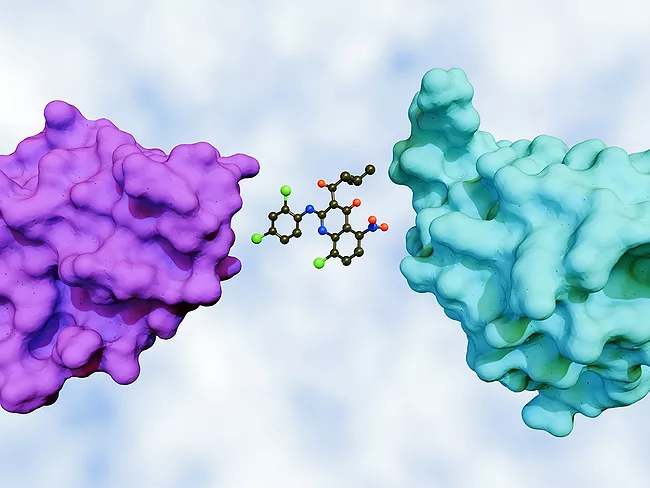
In its second deal with Novartis AG of the past 11 months, Monte Rosa Therapeutics Inc. is getting $120 million up front to collaborate on developing molecular glue degraders to treat immune-mediated diseases. The agreement could swell to $5.7 billion for Monte Rosa.
CSPC Pharmaceutical Group Ltd.’s SYH-2066 tablets has obtained clearance from China’s National Medical Products Administration (NMPA) to enter clinical trials for respiratory infections caused by respiratory syncytial virus (RSV).
Nucleoside reverse transcriptase translocation inhibitors (NRTTIs) are a novel class of antiretroviral agents that inhibit HIV replication by targeting the viral reverse transcriptase enzyme and specifically blocking its translocation step during DNA synthesis, a critical process in the viral replication cycle.
Neurosciences specialist NRG Therapeutics Ltd. is poised to put its new class of small-molecule regulators of the mitochondrial permeability transition pore to the test after closing an oversubscribed £50 million (US$67 million) series B.
Jazz Pharmaceuticals plc and Saniona AB have entered into a global license agreement for Jazz to obtain exclusive worldwide rights to develop and commercialize SAN-2355 for epilepsy and other potential indications.
Vasthera Co. Ltd. has received IND clearance from the U.S. FDA, enabling it to initiate a phase I trial for VTB-10 for pulmonary arterial hypertension (PAH). Vasthera identified a deficiency of the enzyme peroxiredoxin (PRX) in PAH lesions and used its Redoxizyme platform to develop VTB-10, a small-molecule enzyme that precisely replicates PRX function.
Adding another name to an impressive roster of partners assembled over the past few years, Skyhawk Therapeutics Inc. inked a neurology-focused deal with Merck KGaA aimed at discovering small-molecule RNA-targeted drugs that could be worth more than $2 billion.
Researchers from China Pharmaceutical University and collaborators have identified various naphthalene and indane derivatives as selective USP7 inhibitors.
Overexpression of the eukaryotic translation initiation factor 4E (eIF4E) has been observed in a wide range of tumors, where it is associated with malignant transformation, tumor progression, poor prognosis, and resistance to therapy.
Melanoma is one of the most mutation-prone cancers, with 90% of cases involving the V600E mutation in BRAF kinase. Several therapies are available against melanoma, but each one is associated with substantial drawbacks. Researchers at Shanghai Institute of Materia Medica of the Chinese Academy of Sciences and collaborators reasoned that it might be effective to simultaneously inhibit both angiogenesis and immunosuppression in the tumor microenvironment.
 RSS
RSS