With antimicrobial resistance growing to many first-line antibiotics, a key concern in the U.S. FDA’s approving an oral penem like Iterum Therapeutics International Ltd.’s tablet combining sulopenem etzadroxil and probenecid is that it could become a first-line, go-to drug in treating uncomplicated urinary tract infections and, possibly, more serious infections off-label.
With positive first-in-human findings on board, Relay Therapeutics Inc. plans a pivotal study next year to test RLY-2608, an allosteric, pan-mutant and isoform-selective inhibitor of PI3K alpha in breast cancer. During a conference call on the data, TD Cowen analyst Yaron Werber noted that “next year’s going to be a pretty busy year for you. How fast can you start the phase III? Is there any way to pull it into the first half of the year as opposed to the second half?” CEO Sanjiv Patel said the company is “moving as fast as we possibly can,” and an update will be provided once a sit-down with regulators is finished.
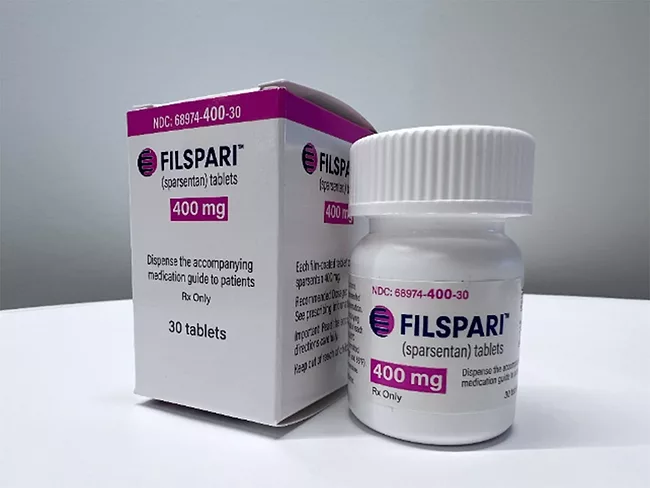
With full approval from the U.S. FDA in hand for Travere Therapeutics Inc.’s Filspari (sparsentan) to slow kidney function decline in adults with primary IgA nephropathy (IgAN) who are at risk of disease progression, eyes turned to future prospects as well as how a revised risk evaluation and mitigation strategies (REMS) program might shake out. During a conference call hosted by Travere, Leerink analyst Joseph Schwartz wanted to know what changes might be made, and if the regulator’s decision might “actually be an entire removal” of the REMS.
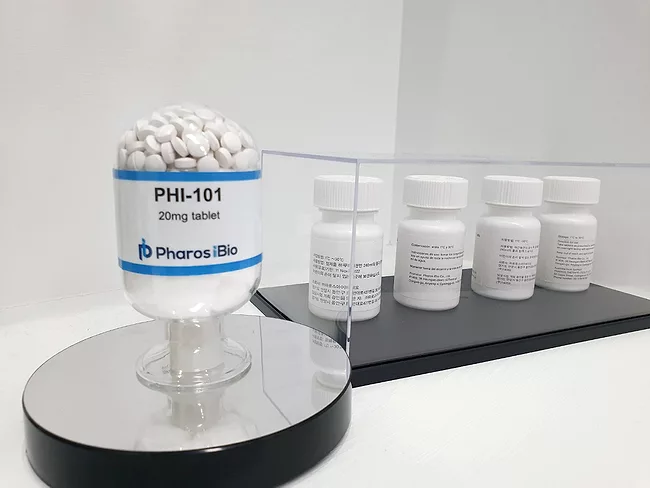
South Korean artificial intelligence-based drug developer Pharos Ibio Co. Ltd. said that the Ministry of Food and Drug Safety (MFDS) granted an orphan drug designation for PHI-101, a second-line therapy for acute myeloid leukemia (AML).
After receiving a complete response letter from the U.S. FDA more than three years ago and conducting another phase III trial, Iterum Therapeutics plc is preparing to make its case before an advisory committee Sept. 9 for sulopenem etzadroxil/probenecid as an oral treatment option for women with uncomplicated urinary tract infections caused by specific microorganisms.
Cytokinetics Inc. CEO Robert Blum said his firm chalked “a watershed moment” during last weekend’s congress of European Society of Cardiology (ESC) in London, where further mid- and late-stage data were disclosed with the heart drug aficamten, a myosin inhibitor. South San Francisco-based Cytokinetics rolled out six presentations, including two late breakers, with four concurrent publications in medical journals.
Advanz Pharma Ltd. has won a stay on the withdrawal of its primary biliary cholangitis (PBC) drug, Ocaliva (obeticholic acid), after the European Commission (EC) said on Sept. 3 that the conditional marketing approval should be revoked. Following that, London-based Advanz launched a legal challenge, announcing on Sept 5 that the General Court of the EU has temporarily suspended the EC’s decision. As a result, the conditional marketing authorization for Ocaliva remains in place until further notice from the court, and the 7,000 existing patients – and new ones – will still have access to the farnesoid X receptor agonist.
Athira CEO Mark Litton said the firm is “evaluating all the options” after disclosing top-line results from its phase II/III Lift-AD clinical trial of fosgonimeton (fosgo), a hepatocyte growth factor-positive modulator, in patients with mild to moderate Alzheimer’s disease (AD). Javier San Martin, chief medical officer, said the company will schedule “a conversation at the right time” with the U.S. FDA.
Jacobio Pharmaceuticals Group Co. Ltd. out-licensed rights for two lung cancer assets in China to Shanghai Allist Pharmaceuticals Co. Ltd. through a potential ¥900 million (US$126.4 million) deal. Beijing-headquartered Jacobio said Aug. 30 that it signed off development, regulatory and commercial milestone rights to both glecirasib, a KRAS G12C inhibitor first targeting non-small-cell lung cancer, and a SHP2 inhibitor called JAB-3312.
George Medicines Ltd. has published positive data from two phase III studies showing GMRx2, a low-dose triple-drug combination treatment for hypertension, is superior to dual combinations of its components.
 RSS
RSS