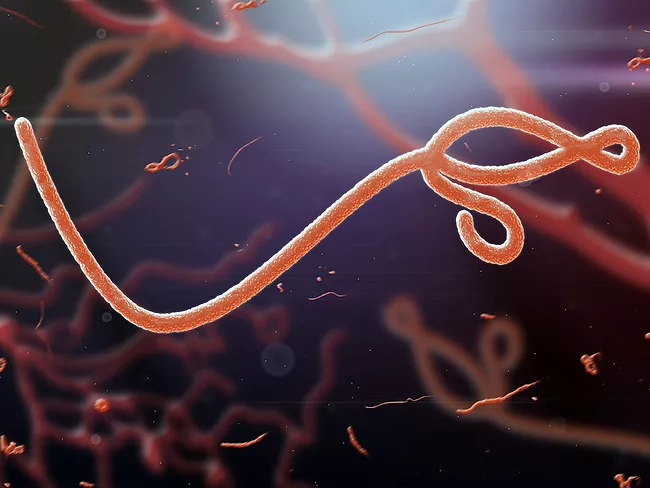
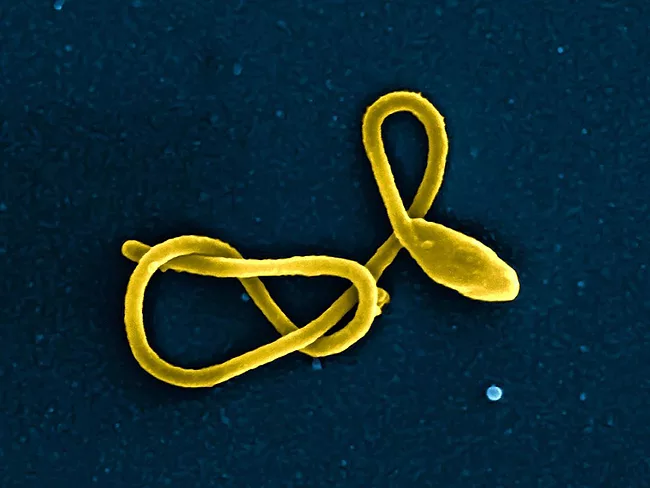
On Sunday, May 17th, 2026, the World Health Organization classified the ongoing Bundibugyo ebolavirus outbreak in the Democratic Republic of Congo (DRC) as a public health emergency of international concern (PHEIC). The rapid escalation to PHEIC is due to several factors. Given the high number of cases, the outbreak has likely been going undetected for some time, and may be a “much larger outbreak than what is currently being detected and reported, with significant local and regional risk of spread,” according to the WHO statement. The outbreak appears to already have crossed the border from the DRC into Uganda at least twice. And all this is happening with a virus for which there are no approved treatments or vaccines.
The threat posed by the Ebola outbreak in the Democratic Republic of Congo has intensified, with the confirmation that it is caused by the Bundibugyo species of the virus, for which there are no approved vaccines or antiviral therapies. At the same time, the high positivity rate, with eight laboratory confirmed cases out of 13 samples collected in various areas, and more reports of suspected cases and clusters of deaths, all point to a potentially much larger outbreak than currently is being detected and reported.
If the recent hantavirus outbreak wasn’t enough to keep public health officials busy, a new Ebola virus disease outbreak has been confirmed by authorities in the Democratic Republic of the Congo. While sequencing is ongoing to identify the Ebola species, experts have noted early results suggesting it appears to be different from the Zaire species that has caused previous outbreaks, including the deadliest outbreak in West Africa a decade ago, meaning existing vaccines and antibody treatments likely will not be effective.
Singapore’s Communicable Diseases Agency on May 7 said that it isolated two residents for hantavirus testing after the individuals disembarked from an Atlantic cruise ship on May 2 and May 6, respectively. The measure comes in response to the cluster of cases from the cruise ship, MV Hondius, that has resulted in three deaths so far.
A designed chimeric virus induced broadly neutralizing antibodies against the macaque equivalent of HIV. The strategy works in two steps: first it uses an envelope protein with a mutation that reduces the glycan shield that makes it invisible to the immune system, and then it exposes the part of the protein most likely to generate these antibodies capable of blocking many variants of the virus. The macaques developed potent and diverse antibodies with this approach, which pave the way for the development of an HIV-1 vaccine.
Singapore’s Communicable Diseases Agency on May 7 said that it isolated two residents for hantavirus testing after the individuals disembarked from an Atlantic cruise ship on May 2 and May 6, respectively. The measure comes in response to the cluster of cases from the cruise ship, MV Hondius, that has resulted in three deaths so far.
News of eight infections and three deaths so far due to an emerging zoonotic virus has brought back unhappy memories of the early days of SARS-CoV-2. At a press conference on Thursday, officials from the WHO did their best to calm the public’s fears that the MV Hondius, the ship currently heading to the Canary Islands with its remaining passengers plus assorted medical, WHO and European Center for Disease Prevention and Control staff, is the 2026 version of the Diamond Princess.
Conventional mouse models are not susceptible to hepatitis A virus (HAV) because murine adaptor protein MAVS is not efficiently cleaved by HAV protease precursors, so intact type I interferon (IFN) signaling blocks productive infection. However, IFN receptor knockout (KO) mice are susceptible to HAV infection and show hallmark features of the infection, having recently been identified as a potential disease model. Researchers from Genematrix Inc. aimed to determine whether nonclinical efficacy studies can be performed in small animal models.
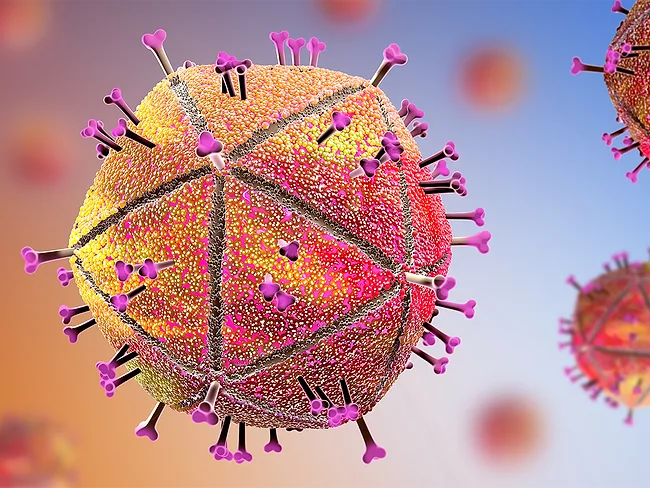
A designed chimeric virus induced broadly neutralizing antibodies (bNAbs) against the macaque equivalent of HIV. The strategy works in two steps: first it uses an envelope protein (Env) with a mutation that reduces the glycan shield that makes it invisible to the immune system, and then it exposes the part of the protein most likely to generate these antibodies capable of blocking many variants of the virus. The macaques developed potent and diverse antibodies with this approach, which pave the way for the development of an HIV-1 vaccine.
Scientists at the La Jolla Institute for Immunology have identified and characterized human antibodies that neutralize the measles virus by blocking its entry into the cell. This is the first time that antibodies have been shown to bind effectively to two essential viral proteins, creating a dual blockade that prevents infection. Unlike the current vaccine, which is based on an attenuated virus and is not recommended for immunocompromised individuals, these monoclonal antibodies could be used both as a new vaccine approach and as a treatment for the entire population.
 RSS
RSS