Mastor SAS secured €3 million (US$3.39 million) in seed investment from Sofinnova Partners' MD Start III Fund and €1.9 million in non-dilutive funding through the i-Nov Innovation Award from BPI France, the French national public investment bank.
LONDON – Owkin Inc. added a further $18 million to its series A, bringing the amount raised in the round to $70 million and equipping the company to push forward with its federated learning approach to applying artificial intelligence (AI) to the analysis of health data.
TORONTO – Industry-led accelerator Next Generation Manufacturing Canada (NGen) has dipped into its CA$50 million (US$37 million) supercluster fund to help three Canadian companies beef up the nation’s supply of COVID-19 equipment and medical devices.
Evidation Health Inc. reported good news this week in the form of the close of $45 million in series D funding, with an eye toward the expansion of its research platform, Achievement, to include virtual health. B Capital Group led the round, with Mckesson Ventures and Section 32 joining, in addition to existing investors Revelation Partners, Rethink Impact and SV Health Investors.
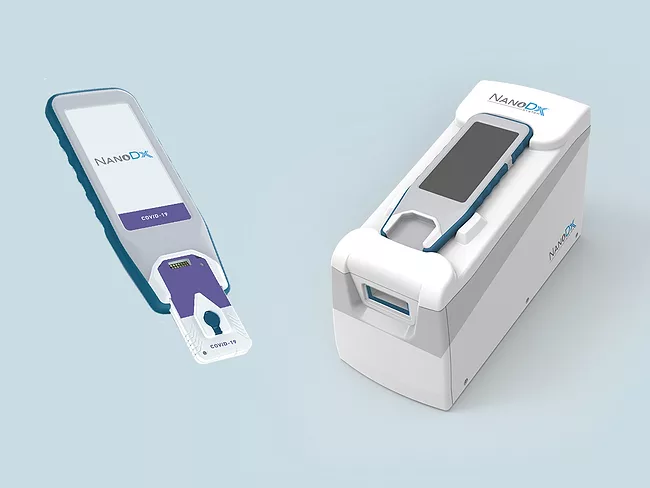
Med-tech firms raising money in public or private financings, including: Adapthealth, Axogen, Biodirection, Genome Medical, Nanodiagnostics, Rewalk Robotics, Tela Bio.
Protaryx Medical has picked up $8.3 million to develop its device for precision transseptal access to the left atrium for use during structural heart and catheter ablation procedures. The funding includes nondilutive grants and a seed round totaling $3.2 million, as well as the recently closed $5.1 million series A financing led by Ajax Health, with participation from returning investor University of Maryland (UM) Ventures.

 RSS
RSS