Keeping you up to date on recent developments in diagnostics, including: A simple point-of-care COVID-19 test; A deep-learning method to predict AMD risk; AP-1 and antidepressant action; Orasure collection device included in Miradx EUA.
The need for self-administered surveillance testing finally has a few candidates, thanks to labs and test developers across the globe, and the U.S. FDA is keen on exploiting the opening. Tim Stenzel, director of the FDA’s Office of In Vitro Diagnostics and Radiological Health, said on the agency’s Sept. 2 testing town hall that the agency is interested in a test intended to be self-administered multiple times compared to a test validated under a single test approach, a flexibility that may prove critical in advancing the U.S. approach to testing for the COVID-19 pandemic.
As the COVID-19 pandemic continues into the fall, Roche Group is planning to launch its latest tool later this month. And while its SARS-CoV-2 Rapid Antigen Test will be available in markets accepting the CE mark, the company is expecting the filing for emergency use authorization (EUA) from the U.S. FDA. Roche’s test is a rapid chromatographic immunoassay intended for the qualitative detection of a specific antigen of SARS-CoV-2 present in human nasopharynx.
Natera Inc.’s personalized, tumor-informed circulating tumor DNA (ctDNA) assay, Signatera, accurately and quickly predicted response to immunotherapy across 25 types of cancer, in a study published in Nature Cancer.
The U.S. FDA has given the green light to Roche Group for its Cobas HIV-1/HIV-2 Qualitative test for use on Cobas 6800 and 8800 systems. The test is the first FDA-approved, fully automated polymerase chain reaction (PCR) test that detects and differentiates between human deficiency virus type 1 (HIV-1) and HIV-2, as well including claims for pregnant women and children.
TORONTO – Its Canadian medical device establishment licence now firmly in hand, Toronto-based Internet of Things Inc. (ITT) is set to launch a fever-detection system for identifying possible COVID-19 carriers at the entrances of airports, long term care facilities, schools and other places where people congregate. The Thermalpass is an AI-enabled, deep learning screening system that got its start as a road-related weather sensing system, today detecting elevated body temperature.
NEW DELHI – A COVID-19 diagnostic test kit developed by the Indian Institute of Technology (IIT) in New Delhi is the latest to join a growing pool of low-cost kits domestically developed in a country where the number of cases topped 2 million in August and continues to rise. The push to develop test kits domestically is part of a national effort to shake off a heavy dependence on imports of medical devices, including diagnostic kits.
Pooled testing was hailed early in the COVID-19 pandemic as a way to quickly and efficiently increase the number of people tested for the virus. But the approach has fallen short of its promise for a variety of reasons, from supply and labor shortages to high community infection rates. Now, a new testing method – recently approved for use by laboratories in Israel – could help chip away at some of those issues.
Foundation Medicine Inc.’s string of 2020 wins continues, with the U.S. FDA giving its thumbs up to Foundationone Liquid CDx, the company’s comprehensive pan-tumor liquid biopsy test.
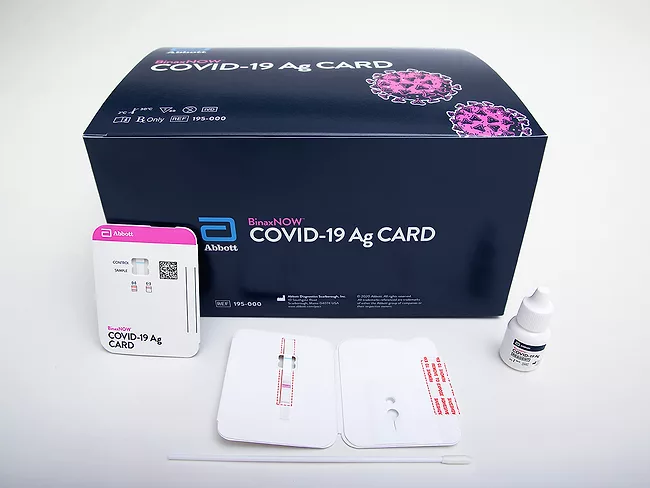
The U.S. FDA has cleared the way for Abbott Laboratories sixth COVID-19 test, a near-patient, point-of-care antigen test that gives results in 15 minutes and can be run without laboratory equipment. The company has priced the Binaxnow COVID-19 Ag Card rapid test at $5 and is offering a complementary mobile app that allows people to display their test results when asked by organizations for verification.

 RSS
RSS