Perkinelmer Inc. agreed to divest three businesses in a sale to private equity firm New Mountain Capital for $2.45 billion in cash to create a “pure-play, high growth, high margin life sciences and diagnostics company with unique scale,” said Perkinelmer president and CEO Prahlad Singh.
Cognetivity Neurosciences Ltd. is making progress in promoting its cognitive assessment tool as the brain health equivalent of a blood pressure check, following feedback from clinicians indicating the test could have broad applicability.
Big pharma is increasingly turning to Taiwan to leverage the power of the country’s data and computing power as precision medicine takes center stage in drug development, speakers said during the recent BIO Asia-Taiwan conference in Taipei.
For companies in the life sciences, patent subject matter eligibility has acquired a bad reputation, but the U.S. Patent and Trademark Office (PTO) has attempted to provide administrative workarounds to the problem. PTO director Kathi Vidal said recently, however, that the agency intends to revisit its guidance, just one of several steps the PTO is taking to eliminate some of the drag on patent applications in the U.S.
The U.S. FDA handed good news to Healthy IO Ltd. (Healthy.io) with 510(k) clearance for its smartphone-based Minuteful Kidney test, making kidney function testing – from sample to result – possible at home. The app calculates the albumin-to-creatinine ratio (ACR), a key indicator of kidney disease. By enabling people to complete the test using their phones, the company says it has increased the rate of testing in high-risk patients by 50%.
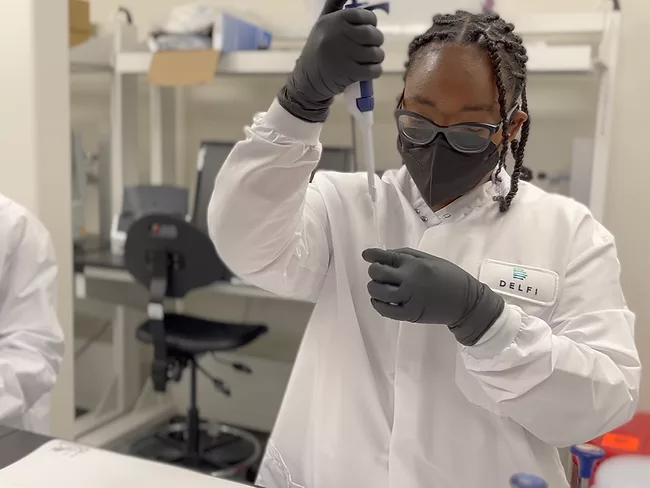
Even without an oracle, it is clear that Delfi Diagnostics Inc.’s $225 million series B fundraising round positions the company well to further develop its liquid biopsy tests for early cancer detection and monitoring. Delfi’s liquid biopsy platform uses a whole genome fragmentation analysis approach for both individual cancer and multicancer detection.
Rapid point-of-care (POC) diagnostics company Lumos Diagnostics Holdings Pty. Ltd. saw its stock plummet 65% on the news that the U.S. FDA rejected its Febridx 510(k) because the device was not substantially equivalent to the predicate device.
Infervision Medical Technology Co. Ltd. received approval from China’s NMPA for its radiological computer-assisted triage and notification software device Inferread CT Stroke. This is the first class III approval that the firm obtained in the cerebro-cardiovascular field. Class III approvals are for high-risk medical devices.
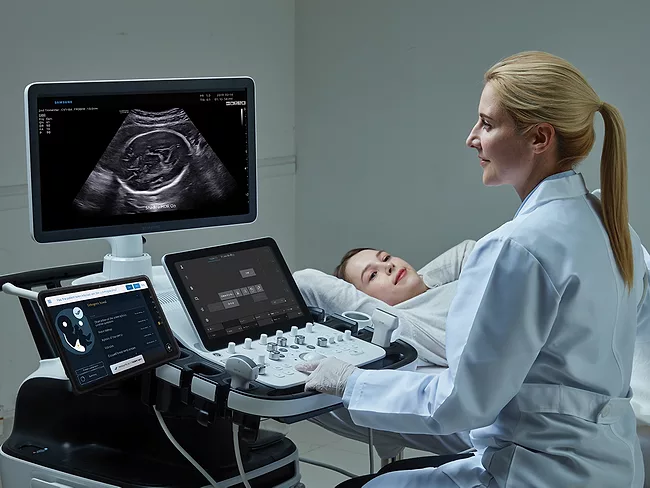
Sonio SAS raised just over $5 million in its seed round to develop artificial intelligence (AI) software allowing health care professionals to determine the most appropriate pregnancy care. Its Sonio Diagnostic software delivers decision support for fetal ultrasound used in antenatal diagnostics.
Clinical analytics company Medial Earlysign Ltd. is expanding an existing partnership with Roche Holding AG to commercialize an artificial intelligence (AI) solution for the early detection of lung cancer. The companies originally signed an agreement in September to develop a personalized health solution for early detection of gastric cancer. The goal of the new collaboration is to develop Earlysign’s Lungflag software, which uses machine learning to identify patients at risk of developing lung cancer.
 RSS
RSS