The June report to Congress by the Medicare Payment Advisory Commission (MedPAC) encodes several suggestions as to how rates would be determined under the Medicare clinical lab fee schedule (CLFS), such as the use of competitive bidding for laboratory tests. That and other policy concepts earned a quick reply by the American Clinical Laboratory Association (ACLA), which said that bidding and other concepts either repeat the mistakes of recent history or fail to account for the prospect that these mechanisms could impose artificially low rates for tests and ultimately hamper patient access.
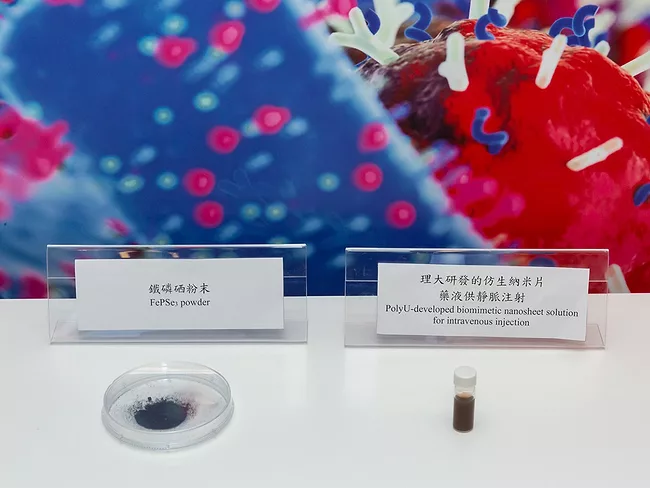
Researchers from The Hong Kong Polytechnic University (PolyU) said they have used two-dimensional nanosheets (FePSe3) to develop a biomimetic nanosheet that can monitor tumor development, treat tumors and monitor the treatment progress in real-time. With positive results from mice, the team hopes to further test it on larger animals, then move on to clinical studies.
PARIS – Gleamer SAS said Radiology published compelling results from a study evaluating the performance of its artificial intelligence (AI) system Boneview, which helps radiologists and emergency doctors detect and localize fractures. This is the first study to evaluate the performance of AI-assisted health care professionals in locating bone fractures on all appendicular X-rays.
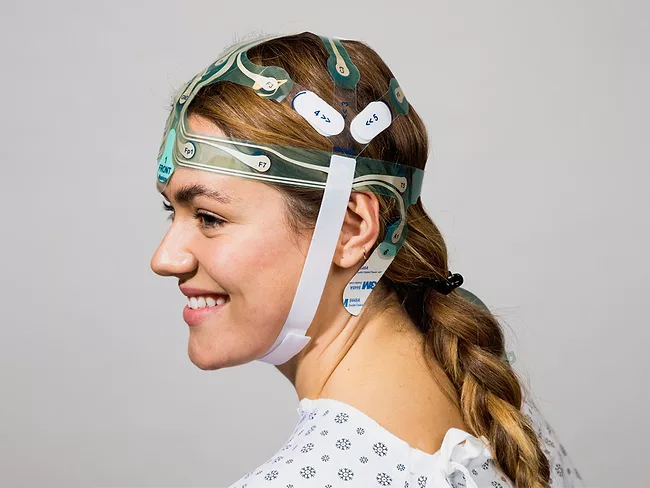
Brain Scientific Inc. plans to acquire Piezo Motion Corp. in an all-stock transaction expected to close in July 2021. The deal depends in part on the successful closing of a $5 million funding round. At closing, Brain Scientific will acquire 100% of Piezo’s outstanding shares along with its assets and liabilities. Piezo Motion’s shareholders will receive the number of shares of Brain Scientific’s common stock equal to 100% of its issued and outstanding shares immediately prior to closing on a fully diluted, as converted basis.
As demand for artificial intelligence (AI)-driven health assessment platforms grows, software developer Ada Health GmbH has signed more than 10 new partnerships with key players across life sciences, insurance and health systems. These include pharmaceutical partners Takeda Pharmaceutical Co., Sanofi SA, Alnylam Pharmaceuticals Inc., as well as Taj Digital Health, Sutter Health, and more.
PERTH, Australia – Digital cognitive assessment technology company Cogstate Ltd. saw its stock skyrocket 60% on the heels of FDA accelerated approval of Biogen Inc./Eisai Co. Ltd.’s Alzheimer’s disease drug Aduhelm (aducanumab). Cogstate and Eisai signed a deal in October 2020 that granted Eisai global development rights and exclusive commercialization rights of all cognitive function tests developed by Cogstate.
Mindup, an Israeli digital health incubator, added Phenofast Ltd. to its portfolio this week, banking on the startup’s ability to resolve a critical, ongoing problem for hospitals and community physicians treating patients with urinary tract infections (UTIs). Phenofast hopes to bring clarity to antimicrobial susceptibility testing (AST) and relief to patients in record time.
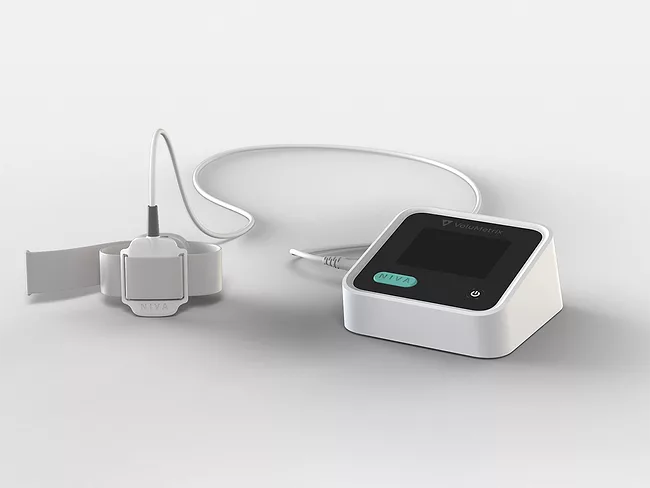
The FDA granted breakthrough device designation to Volumetrix LLC for its NIVAHF monitoring system for heart failure. The device is the first application of the company’s noninvasive venous waveform analysis (NIVA) technology, which captures and analyzes vital information about blood volume to assess patient status.
 RSS
RSS