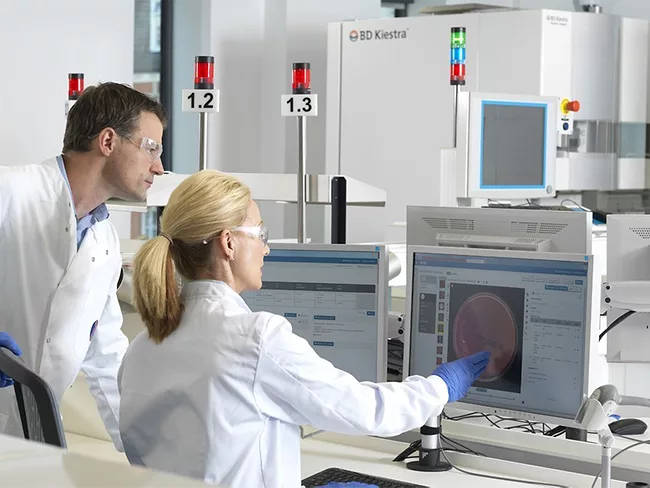
Becton, Dickinson & Co. (BD) is looking to ease the burden on microbiology labs with the U.S. launch of its urine culture analysis imaging application by automating microbiology processes. Powered by artificial intelligence (AI), the app is intended for use on the device manufacturer’s Kiestra lab automation incubation and imaging system.
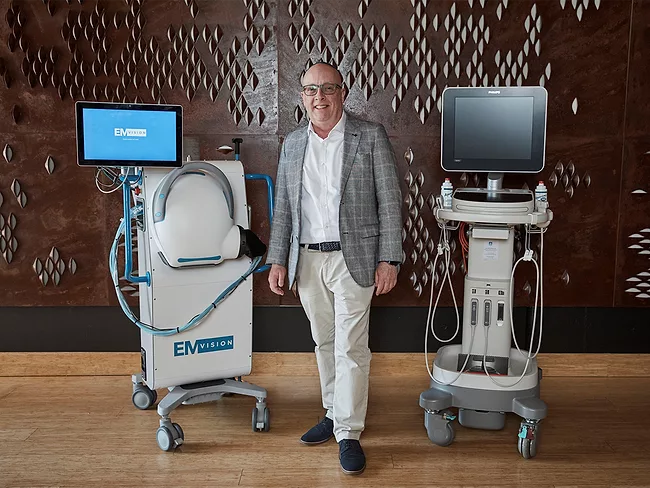
PERTH, Australia – Emvision Medical Devices Ltd.’s stroke helmet could potentially transform care for stroke patients by treating them at the bedside or before they even get to the hospital. The company’s portable, non-ionizing brain scanner is capable of rapidly producing quality images to help paramedics determine if a stroke is ischemic or hemorrhagic.
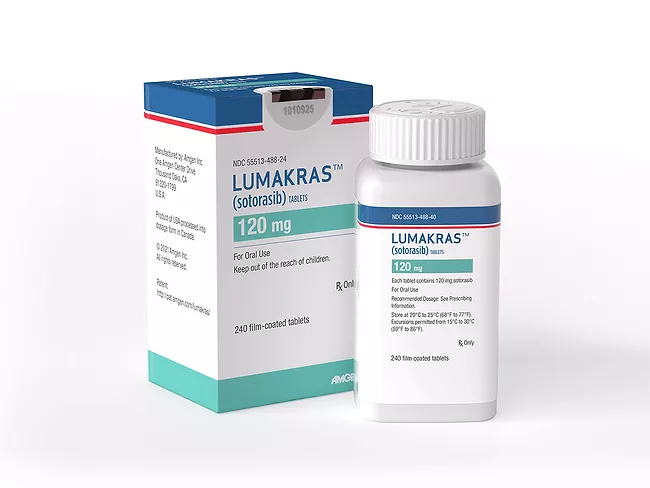
Well ahead of the assigned Aug. 16 PDUFA date, Amgen Inc. bagged accelerated clearance from the FDA for Lumakras (sotorasib), the first targeted therapy for adults with KRAS G12C-mutated locally advanced or metastatic non-small-cell lung cancer (NSCLC), as determined by an FDA-approved test.
Hematologists juggle two competing needs, and often multiple lenses, to really see what’s happening in a blood sample. Essentially, they need to see both the veins on an individual leaf and the forest, but lack a digitized system that can provide images of both. Scopio Labs Ltd.’s recently FDA-approved X100 with Full Field Morphology Peripheral Blood Smear (FFM-PBS) application addresses this need by combining computational photography imaging with artificial intelligence tools.
Lantheus Holdings Inc. has snagged FDA approval for Pylarify (piflufolastat F 18), a PET imaging agent for the identification of suspected metastasis or recurrence of prostate cancer. The company said the product will be available immediately in the mid-Atlantic and southern regions, with availability across the U.S. by the end of 2021.
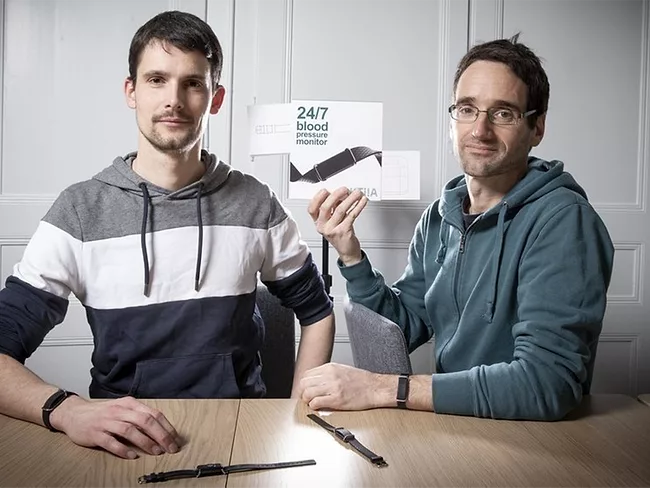
Aktiia SA’s cuff-less blood pressure monitor – a connected optical system for continuous monitoring – has launched in Austria, France, Germany, Ireland, U.K. and Switzerland. Aktiia’s monitor is a bracelet that includes a photoplethysmography sensor with a silicon diode receptor capable of measuring the pulse to within an accuracy of ±5 beats per minute, a communication module and a rechargeable lithium-ion battery.
Startup Aplife Biotech is tapping into the rapidly growing market for biosensors that can expand the capacity of hand-held devices to screen for thousands of pathologies from a single drop of blood. Using technology developed in Argentina to print DNA structures on microchips, the company’s goal is to screen as many as 20 million probes with the potential to convert molecular interactions into electrical signals, opening a path for med-tech developers and manufacturers to explore new solutions for personalized health care.
The official compliance date for the European Union’s Medical Device Regulation (MDR) is now officially in force after a delay of two years. One of a number of unfortunate side effects is that the mutual recognition agreement (MRA) between the EU and the Swiss government has lapsed, and the European Commission has indicated that the two sides have not come to terms over the impasse.
 RSS
RSS