The first patenting from Theta Neurotech Inc. sees the company’s co-founders describe their development of a wearable earpiece that uses an electroencephalography technology and machine learning algorithms to alert epilepsy patients 30 to 60 minutes before they have a seizure.
Harrison.ai raised AU$179 million (US$112 million) in a series C round to expand its radiology and pathology solutions across the U.S., Europe, the Middle East, Africa and Asia Pacific.
Harrison.ai raised AU$179 million (US$112 million) in a series C round to expand its radiology and pathology solutions across the U.S., Europe, the Middle East, Africa and Asia Pacific.
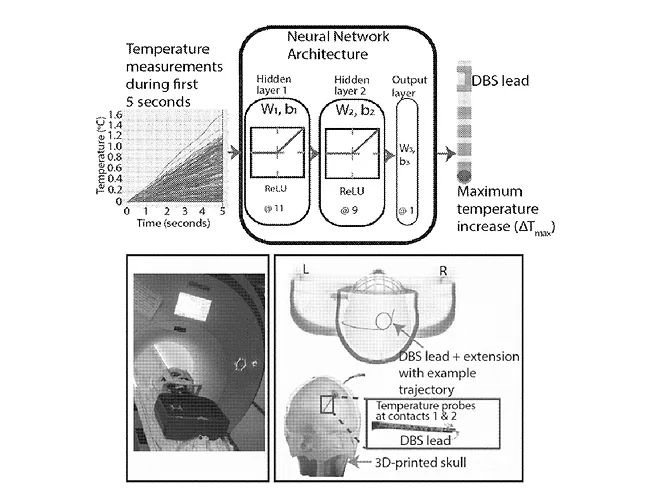
A recent patent application from Laleh Rad, associate professor of Biomedical Engineering and Radiology at Northwestern University, describes the use of machine learning for real-time risk assessment of magnetic resonance imaging in patients with conductive implants for whom tissue heating from radiofrequency excitation fields remains a major concern.
A 1,000-person study using Heartflow Inc. technology demonstrated that findings of coronary plaque on heart CT scans could indicate which patients were at risk of cardiovascular events up to seven years in the future – potentially providing a road map toward screening for heart disease, the leading cause of death for both men and women in the U.S. and worldwide.
Skin Analytics Ltd. received CE mark for its AI-based tool Deep Ensemble for the Recognition of Malignancy (DERM), which can assess images of lesions and detect skin cancer autonomously. The technology has an accuracy rate of 99.8% compared to 98.9% for dermatologists.
The U.K. Medicines and Health Care Products Regulatory Agency has provided guidance on what does and does not constitute a regulated digital mental health technology, but developers should be aware that promotional claims could push a product from the unregulated to the regulated category.
U.S. federal law is still lacking where AI is concerned, but California’s attorney general issued a bulletin that elevates the legal hazards of AI in medical use. The bulletin says that AI tools may not supplant a physician’s decision-making, a provision that would seem to render some FDA-cleared products illegal there.
C the Signs Ltd. recently received a capital injection of $8 million from Khosla Ventures to expand its AI-powered cancer prediction platform to the U.S. market.
The EU has moved aggressively on legislation in recent years, with the AI Liability Directive serving as the latest example of legislation that sparked widespread opposition.
 RSS
RSS