Device makers know all too well the hazards of liability where their products are concerned, but those liabilities may soon balloon dramatically in the EU. Two pieces of EU legislation are in development, including the AI Liability Directive, which may have the effect of forcing the defendant in a liability case to prove that its product was not the cause of the alleged harm.
Researchers from Cornell University are seeking protection for their invention of a low-cost artificial intelligence (AI)-based platform that analyses low resolution electrocardiogram data and/or photoplethysmography data to accurately and objectively assess pain.
The discussion about taxpayer appropriations for CMS has been ongoing for decades, leading to futile speculation regarding user fees for the agency. Louis Jacques, who formerly worked at CMS, told BioWorld that Congress tends to be somewhat reactive when it comes to appropriations for CMS – a dynamic which suggests that appropriations for CMS are not likely to improve significantly in the near term.
An artificial intelligence-based tool developed by researchers in the U.K. is helping doctors identify people at risk of developing atrial fibrillation. Data from the ongoing Find-AF pilot study shows that the algorithm can comb through patients’ electronic health records and detect red flags which could indicate whether they are at risk of developing the heart condition.
Artificial intelligence (AI) is no novelty for medical technology, but 2024 saw an interesting series of events in this area from across the globe. While some of these developments portend immediate regulatory clarity, some are harbingers of continued regulatory flux in 2025 and beyond.
AI pulled in major financings and approvals for Asia med-techs in 2024 as Asia Pacific countries played to individual strengths to maximize AI’s applications in the health care sector. While breakaway AI technologies like OpenAI’s ChatGPT reshaped and boosted many industries, AI also drove major financings for APAC med-techs weathering a wider macroeconomic downturn, with AI-based companies accounting for five out of 11 IPOs tracked on BioWorld’s med-tech IPOs list.
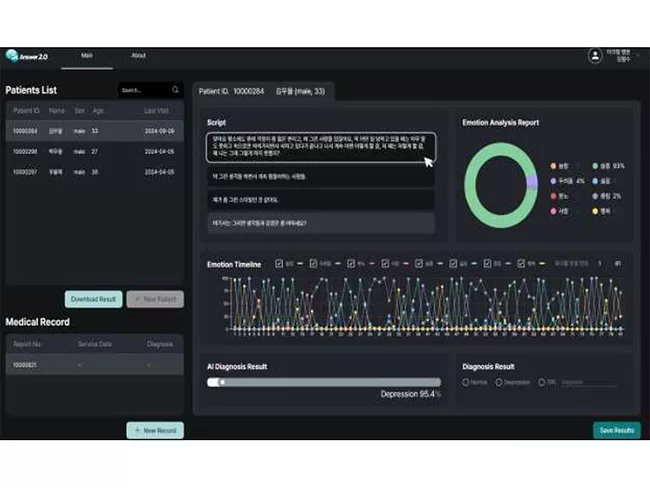
South Korea’s Ministry of Food and Drug Safety cleared Acryl Inc.’s Acryl-D01 as the country’s first AI-based digital therapeutic software solution to aid depression screening and diagnosis on Dec. 20. Approved as a class II software as a medical device, Acryl-D01 utilizes a patient’s medical records to quantify and analyze the individual’s emotional response and assess the probability of having clinical depression based on the data.
The FDA’s final guidance for predetermined change control plans (PCCPs) for AI products contains a number of editorial changes, some more significant than others.
The recent $73 million raised by Cradle NV in a series B financing round will allow the company to build out its operations and improve its artificial intelligence-powered protein engineering platform.
The U.K.'s Medicines and Health Care Products Regulatory Agency chose five technologies for its AI Airlock pilot program as it looks to understand the best way to regulate artificial intelligence-powered medical devices so that they can be safely deployed across the national health service.
 RSS
RSS