Wellcome Leap has launched its first program, dedicating $50 million to help develop human tissues, organoids and full organs. The Human Organs, Physiology and Engineering (HOPE) program is looking to bring biologists and engineers together to develop both therapeutic organs as well as organs that can be used in vitro to help discover and develop new medications.
HONG KONG – Kangstem Biotech Co. Ltd. has completed research on South Korea’s first artificial liver and is taking the next steps towards the device’s clinical trials. The research outcome was published in a paper authored by Kyung-Sun Kang, CEO at Kangstem, and his team titled ‘Development of highly functional bioengineered human liver with perfusable vasculature’ in Biomaterials.
HONG KONG – Kangstem Biotech Co. Ltd. has completed research on South Korea’s first artificial liver and is taking the next steps towards the device’s clinical trials.
The U.S. Centers for Medicare & Medicaid Services (CMS) recently proposed some changes to national coverage policies for left ventricular assist devices (LVADs) and artificial hearts, the latter of which would no longer be covered under a national coverage determination. The proposal to allow Medicare administrative contractors (MAC) to make coverage decisions for artificial hearts on a case-by-case basis clanged across both industry and medical societies, which cited data collection problems and inequalities in access as reasons the existing coverage policy should remain in place.
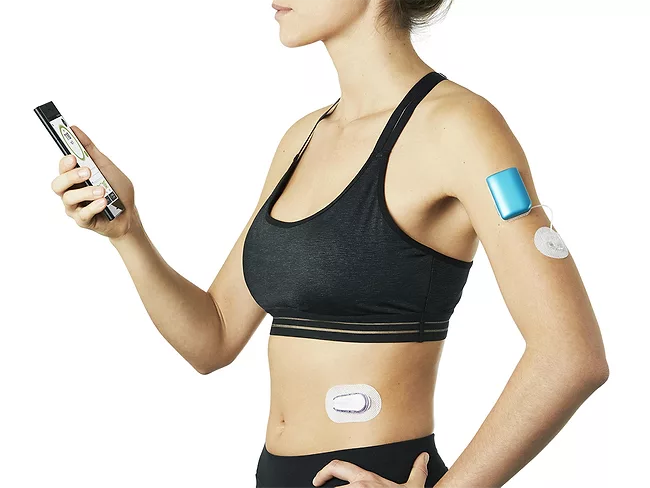
Spanish researchers developed a new artificial pancreas system that maintained blood glucose levels in individuals with type 1 diabetes mellitus (T1D) during and following heavy physical exercise. Results of the small study were published in the Endocrine Society’s Journal of Endocrinology & Metabolism.
In a single draft coverage memo, the U.S. Centers for Medicare and Medicaid Services (CMS) proposed to eliminate national coverage for artificial hearts and to provide coverage of ventricular assist devices (VADs) coverage for those in need of short-term ventricular support. Coverage of artificial hearts would thus revert to Medicare administrative contractors, while the change in VAD coverage would resolve a long-running dispute between cardiologists and the agency.
PARIS – Carmat SA, which is based in Vélizy Villacoublay, France, reported the first implantation of its bioprosthetic artificial heart at the Heart Center of the Rigshospitalet in Copenhagen, Denmark.
Farmington, Conn.-based biotech startup Lambdavision Inc. is preparing to test the benefits of microgravity in producing its protein-based artificial retina, thanks to a $5 million, three-year award from the National Aeronautics and Space Administration (NASA). The first-of-a-kind treatment aims to restore vision to people who have lost all or much of their sight due to advanced retinitis pigmentosa (RP).
PARIS – Diabeloop SAS, of Grenoble, France, has launched a real-world study of its automated insulin delivery DBLG1 system, incorporating the Dana-I pump from Sooil Development Co. Ltd., of Seoul, South Korea.
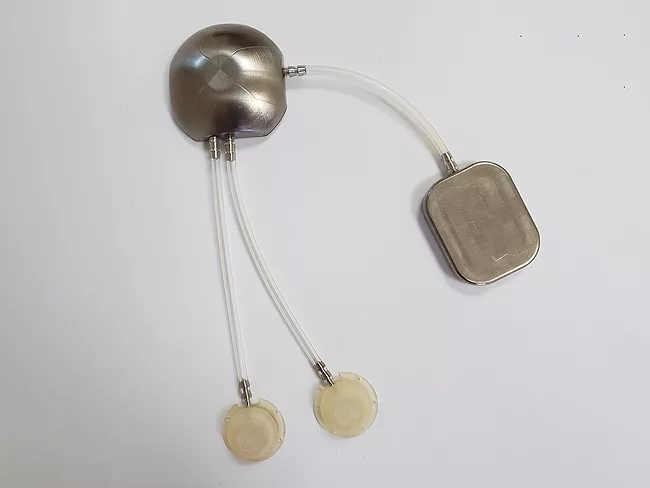
Beta-O2 Technologies Ltd. plans to enroll its first patients in clinical trials for its second-generation bio-artificial pancreas, ßAir, in the coming months. The small, implantable titanium device has separate components that hold pancreatic cells and a rechargeable oxygen tank. Beta-O2 is based in Rosh-Haayin, Israel.
 RSS
RSS