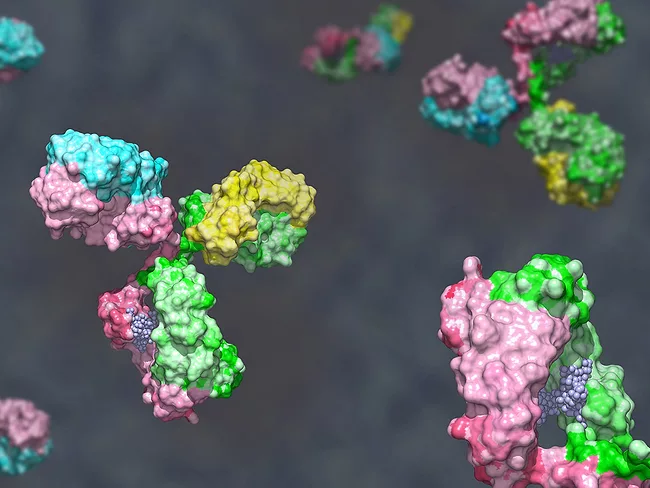
Although HER2-targeted therapies have become a mainstay in cancer treatment, some tumors evade them by stripping away the portion of the HER2 receptor that most therapies are built to recognize and bind to, but Taiwan’s AP Biosciences Inc. is developing bispecific antibody AP-402 to address treatment-resistant HER2+ cancers.
Newco Avidicure NV arrived on the scene with a hefty $50 million in seed funding to advance novel antibody formats the company says will surpass the best qualities of first-generation antibodies, checkpoint inhibitors, T-cell engagers and antibody-drug conjugates.
Named after Swiss mountains, Granite Bio AG emerged from stealth with $70 million in funds through a series B to advance two immunology treatments incubated at Versant Ventures.
Synthetic Design Lab Inc., which emerged from stealth with a $20 million seed round and a platform technology aimed at advancing the antibody-drug conjugate (ADC) space, began with its founders identifying a single clear goal: how to deliver more payload to a target cancer cell.
Newco Brink Therapeutics SAS is poised to work on the next chapter in genome editing after raising €3.5 million (US$4 million) in seed funding to discover and develop programmable recombinase enzymes.
When an autoimmune disease disrupted the life of someone close to scientist Dario Gutierrez, an idea emerged for a new company called Merida Biosciences focused on removing misdirected antibodies and their negative effects using Fc biotherapeutics.
The latest obesity contender, Antag Therapeutics A/S, has dosed the first participants in a phase I trial of a glucose-dependent insulinotrophic polypeptide (GIP) agonist it said will address key gaps in the current treatment options, not least the gastrointestinal side effects seen with GLP-1 agonists.
Hillstar Bio came out of stealth mode, announcing a $67 million series A financing round with investors including Droia Ventures, Frazier Life Sciences, Novo Holdings A/S and Lifearc Ventures.
Eight months after announcing the $18.5 million first tranche of its series A, Augustine Therapeutics has closed the oversubscribed round at $85 million and is now ready to begin clinical development of its novel histone deacetylase-6 (HDAC6) inhibitors.
Japanese-founded Regcell Inc. has raised $45.8 million and is redomiciling to the U.S. to accelerate clinical development of its pioneering regulatory T-cell (Treg) platform for autoimmune diseases and transplantation.
 RSS
RSS