Signet Therapeutics founder Haisheng Zhang is betting on organoids and AI to outsmart diffuse gastric cancer and the limits of traditional “clean” drug design.
Zag Bio Inc. came out of stealth mode with $80 million in funding so far, including a recently closed series A financing, to develop its platform for autoimmune diseases using drugs targeted to the thymus where thymic regulatory cells are produced.
Expedition Medicines, which Flagship Pioneering Inc. has incubated for the past three years, came out of stealth mode with a $50 million commitment from Flagship to support Expedition’s platform technology to discover small molecules that covalently bind to their target.
Expedition Medicines, which Flagship Pioneering Inc. has incubated for the past three years, came out of stealth mode with a $50 million commitment from Flagship to support Expedition’s platform technology to discover small molecules that covalently bind to their target.
Newco Elevara Medicines Ltd. has raised $70 million in a series A to fund a phase IIa/IIb trial of ELV-001, a first-in-class, oral cyclin dependent kinase 4/6 inhibitor, in the treatment of rheumatoid arthritis (RA) patients who do not have an adequate response to methotrexate and anti-TNF biologic therapies.
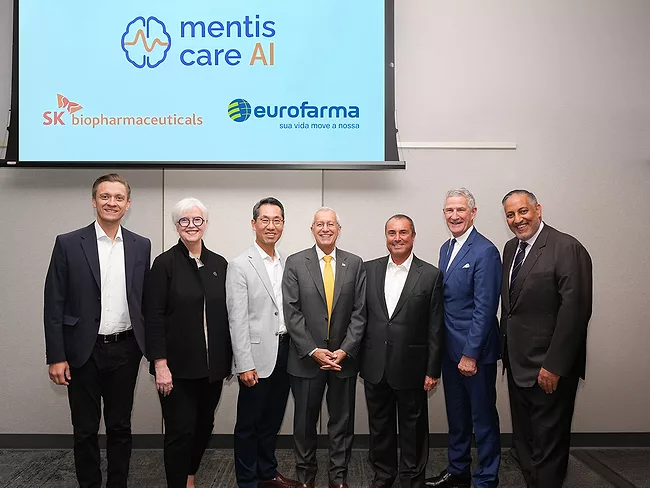
SK Biopharmaceuticals Co. Ltd. and Eurofarma Laboratórios SA launched a new joint venture called Mentis Care Inc. Oct. 21, dedicated to developing an AI-powered platform for epilepsy management.
Touting a science-driven, regenerative medicine-based treatment for hair loss “designed for the 21st century,” Pelage Pharmaceuticals Inc. drew a solid group of investors to the table in an oversubscribed $120 million series B round to fund an upcoming phase III program for PP-405, a topical small molecule targeting hair follicle stem cells.
With $70 million in hand, Excellergy Inc. is ready to advance its lead candidate for allergic diseases into clinical trials. The series A round was led by Samsara Biocapital with co-investments from Red Tree Venture Capital and Decheng Capital.
Newco Trogenix Ltd. has emerged from incubation and raised £70 million (US$94.1 million) in a series A, as it prepares the ground for a U.S/U.K. clinical trial of a novel gene therapy construct in glioblastoma multiforme that is due to start at the beginning of 2026.
Mabwell Bioscience Co. Ltd. and Aditum Bio Management Co. LLC announced, in after-market hours Sept. 17, an agreement to forge a new company called Kalexo Bio Inc. and load the biotech with a preclinical dyslipidemia asset via a potential $1 billion global license deal.
 RSS
RSS