South Korea’s pharmaceutical exports rose nearly 18% year-on-year to reach $2.56 billion in the first quarter (Q1) this year, according to the Korea Health Industry Development Institute. Medical device exports, however, dropped about 5% in Q1 2025 to $1.39 billion, attributed to a drop in trade of implant products to both China and the U.S.
A research team led by consultant and orthopedic surgeon Glen Liau Zi Qiang from Alexandra Hospital in Singapore developed a new AI algorithm to improve the accuracy and efficiency of robotic total knee arthroplasty (rTKA) surgery.
Asian health care-focused private equity firm Quadria Capital announced the final close of its Fund III with $1.07 billion in total commitments to transform health care across Asia, which is expected to drive 40% of global health care growth by 2030.
EBR Systems Inc. raised AU$55.9 million (US$36 million) to commercialize its Wise cardiac resynchronization therapy system following U.S. FDA approval in April of the wireless, endocardial pacing system to stimulate the heart’s left ventricle.
The U.S. FDA issued general correspondence letters to two device testing labs located in China. This is the latest in a series of moves by the agency to crack down on falsified or otherwise invalid device testing data.
GC Genome Corp. priced a Kosdaq offering of 4 million shares at ₩10,500 per share May 27, entailing a gross ₩42 billion (US$30.5 million) raise in early June. The Yongin, South Korea-based genomics subsidiary of GC Biopharma Corp. fixed its shares price to the top of its ₩9,000 to ₩15,000 price band May 27 after conducting demand forecasting on domestic and international institutional investors from May 19 to May 23.
Phase Scientific International Ltd. raised $34 million in a series A round to accelerate research and development of its early disease detection technology for multiple cancers, women's health issues, and infectious diseases.
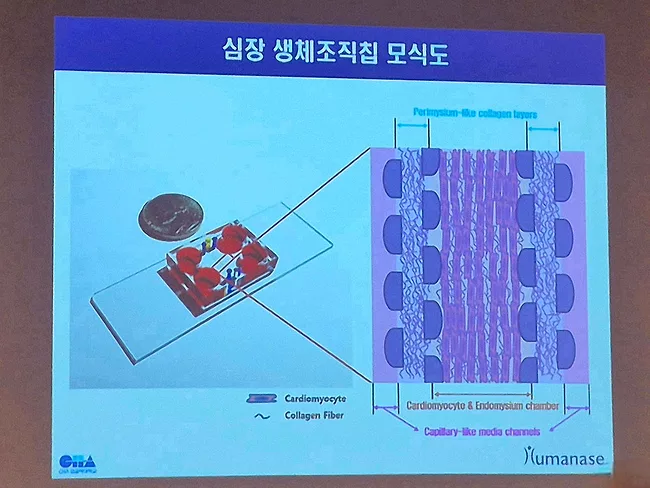
The U.S. FDA’s decision to phase out animal testing for INDs is driving a new market of alternative, nonanimal testing technologies like organoids and organs-on-a-chip, speakers at Bio Korea 2025 said.
Rebrain SAS's Optimmri platform received European Medical Device Regulation CE mark certification to enable surgeons to identify areas of interest in the brain during deep brain stimulation procedures for Parkinson's disease and essential tremor.
Step aside, Marco Polo: Kakao Healthcare Corp. plans to bring PASTA to Japan. PASTA is Kakao's AI-based continuous glucose monitoring (CGM) management mobile application, which will be available in Japan through a new subsidiary as the health care company works to expand its global presence.
 RSS
RSS