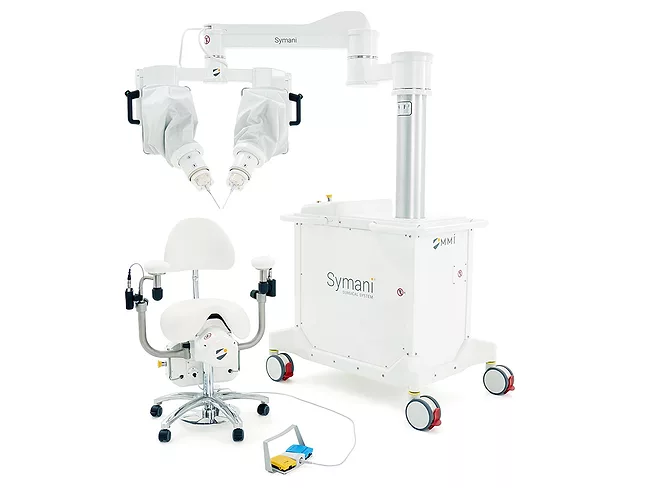
Medical Microinstruments Inc., reported the U.S. FDA approval of an investigational device exemption for a study using its Symani surgical system for treating Alzheimer’s disease, one of its earliest forays into the brain.
The U.K. Medicines and Healthcare Products Regulatory Agency has laid out an approach to medical products for rare diseases, which the agency said afflict 3.5 million U.K. citizens. One of the objectives of this program is to simplify evidence requirements for these therapies with the hope of providing patients with more rapid access to much-needed therapeutic options.
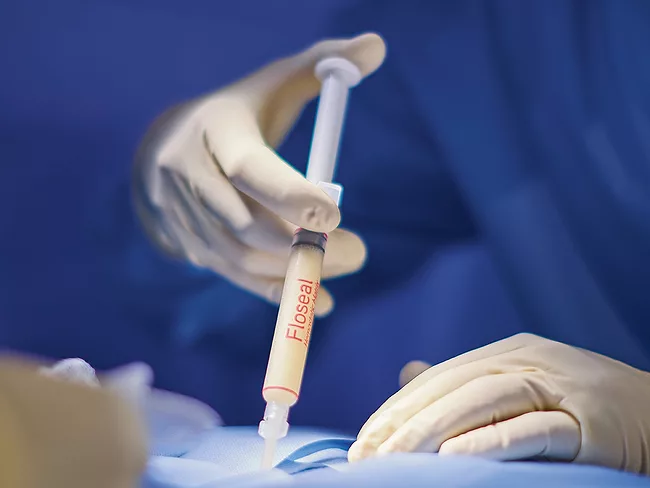
Baxter International Inc. recently received clearance under the Medical Device Regulation for its Floseal Hemostatic Matrix device, a proven adjunct hemostatic agent effective in a wide range of bleeding scenarios. With bleeding control still a critical concern, the device offers health care professionals a reliable solution to enhance patient safety and improve surgical outcomes.
Oxford Nanopore Technologies plc and Biomérieux SA launched Ampore-TB, a research use only test that can rapidly detect mutations linked to antimicrobial resistance in tuberculosis. With multidrug-resistant TB affecting an estimated 400,000 people annually and increasing risks of morbidity and mortality, this assay could help with earlier diagnosis of drug resistance in patients.
The U.S. FDA’s attempts to harmonize with other nations on quality management received a dose of good news recently when the International Organization for Standards decided to stand pat on ISO 13485, which also leaves the FDA’s Quality Management System Regulation intact.
Tulyp Medical Inc. has emerged from stealth mode with a pressure-driven perfusion system designed to improve vascular procedures. The company, born out of Sofinnova Partners' medical device accelerator, has submitted the technology to the U.S. FDA for 510(k) clearance following initial clinical results that demonstrated safety and functionality.
Oversonic Robotics Srl believes that its humanoid robot Robee could transform health care in Europe as it helps address the challenges of an aging population, rising chronic conditions and the shortage of health care workers. Robee has already received CE mark certification as a class I medical device, and plans are underway to achieve class II certification next year as the company looks to make a significant social impact with its humanoid robot.
Scientists in the U.K. are developing glucose-powered bioelectronics to advance the use and capabilities of implantable medical devices. A research team, led by the University of Bath, received £2.1 million (US$3.3 million) in funding from the government to develop miniature, lightweight and long-lasting glucose fuel cells to help address the invasiveness and limitations of current battery-powered implants.
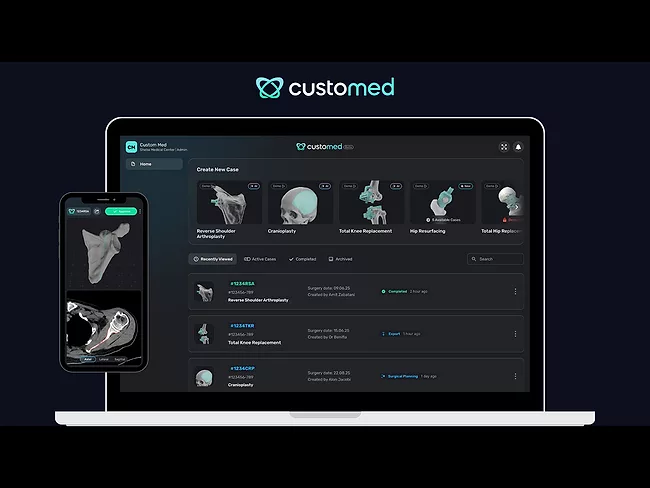
Customed Ltd. has completed its seed funding round, bringing the total capital raised to $6 million. The company has developed a platform which provides orthopedic surgeons with personalized pre-surgical planning and 3D printed surgical tools. The funds will be used to support regulatory approvals in the U.S. and EU, as well as expansion into additional automated orthopedic indications.
Roche Holdings AG received CE mark approval for its Elecsys Dengue Ag test, a fully automated, high-throughput immunoassay to help diagnose acute dengue virus infections. With cases of dengue on the rise worldwide, the test, which delivers results in 18 minutes, offers high sensitivity and specificity across all four dengue virus serotypes, and will help clinicians confidently distinguish dengue from other illnesses causing acute fever.
 RSS
RSS