Medtronic plc posted solid fiscal year second-quarter results led by the cardiovascular business with 9.3% growth. The Affera Sphere-9 pulsed field ablation system tripled the company’s sales in the hot PFA segment and pushed the cardiac ablation solutions unit to 71% growth, a nice uptick from the nearly 50% seen in its Q1.
While Europe’s biotech sector continues to face headwinds, med tech appears to be weathering the storm more effectively. Uncertainty in the U.S., heightened competition from China and a persistent lack of capital are all impacting the investment landscape, delegates heard at the LSX Investival Showcase in London.
A rapid diagnostic test from Ocean Dx SAS delivered gold standard performance in a clinical evaluation that points to a potential shift in how sepsis is identified and treated. The assay, which detects more than 1,000 bacterial species directly from whole blood, returned 100% sensitivity and 100% specificity compared with reference blood cultures, with results reported in five hours. Further, the test tripled the number of infections identified.
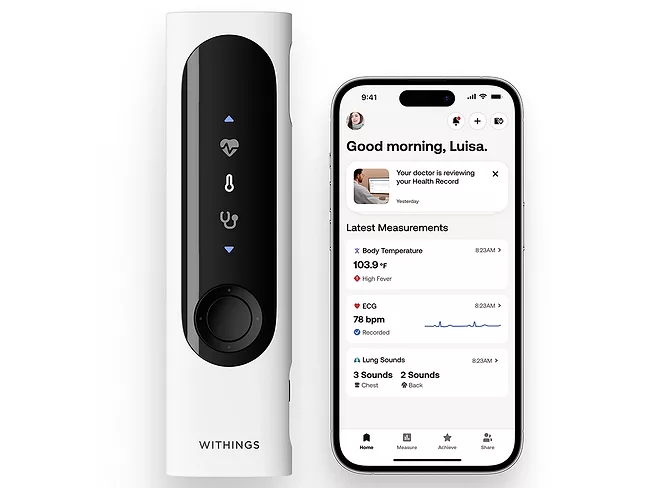
Withings SA received U.S. FDA clearance for Beamo, its health check-up tool designed to monitor heart and lung function. Described as the ‘thermometer of the future’, Beamo combines the sensors of an electrocardiogram, a stethoscope and a thermometer into a hand-held device to allow users to check their body temperature, cardiac and pulmonary health in less than a minute.
Siemens AG will deconsolidate its remaining 67% stake in Siemens Healthineers AG to a significant minority as it looks to have greater flexibility in capital allocation. The company will transfer 30% of Siemens Healthineers shares to Siemens AG shareholders via a spin-off to unlock long-term value and allow both companies to fully realize their growth potential.
Minze Health NV signed a three-year agreement with Medtronic plc to bring its Minze Diary Pod, an app-controlled automated urine collection device, to markets across the EMEA region. The partnership aims to enhance the support services available for patients with overactive bladder receiving sacral neuromodulation therapy with Medtronic’s Interstim system.
One of the problems of doing business in the EU is that each member nation has its own more or less unique requirements for clinical trial registration, but the Medical Device Coordination Group may have a solution in the form of a pilot program for harmonized clinical trial registration.
SPT Labtech Ltd. recently partnered with Alithea Genomics SA to integrate its firefly liquid handling platform with Alithea’s single-cell RNA-sequency technology to create a scalable and reproducible workflow for transcriptomics research.
Med-tech financings with disclosed valuations from January through October 2025 totaled $26.58 billion, nearly matching 2022’s $26.83 billion and marking a continued recovery from the sector’s 2023 low of $15.59 billion. The data suggest renewed investor confidence in med-tech, with capital flows shifting back toward public markets after two years of restrained activity.
Shares of Mountain View, Calif.-based Heartflow Inc. have oscillated significantly over the past three months, but the results of a study of the company’s plaque staging system have breathed new life into the company’s shares, boosting them by 7% in Nov. 10 trading.
 RSS
RSS