Prenaital ApS has filed a patent for technology that may identify risks of spontaneous pre-term birth. Spontaneous preterm birth (sPTB) is usually defined as birth occurring before 37 weeks of gestation. The invention relates to a method for predicting potential preterm birth from medical scan data, which may be used in practice by medical professionals for risk analysis and prognosis of potential pathologies.
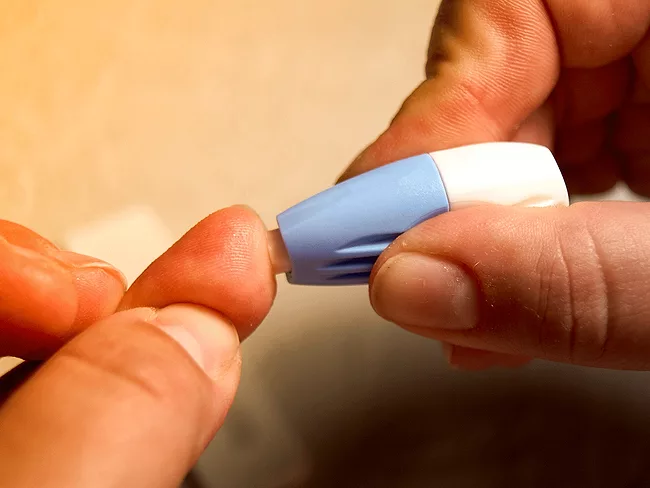
A team of international researchers is investigating whether a finger-prick blood test could be used to help diagnose Alzheimer’s disease before symptoms appear. With current diagnostic methods relying on expensive brain scans and invasive lumbar punctures, the trial is exploring whether the simple test could offer a faster, cheaper, and more accessible route to identifying the disease.
The European Commission recently published the results of a study of the impact of the EU regulatory environment, which confirmed the worst fears of some observers about the situation in the EU. The report said that the associated challenges are prompting small and medium companies to pull at least one product out of inventory for the EU market, with some companies abandoning the EU altogether.
Boston Scientific Corp.’s intent to acquire Penumbra Inc. for $14.5 billion will not only allow it to expand its minimal invasive care portfolio in areas such as embolization and peripheral vascular disease, but to also reenter the neurovascular space, Kathleen Van Vlierberghe, vice president of Peripheral Interventions EMEA, told BioWorld.
The U.K.’s National Institute for Health and Care Excellence is revisiting its policy for osteoporosis and may recommend that clinicians include vertebral fracture assessment with dual energy X-ray absorptiometry procedures.
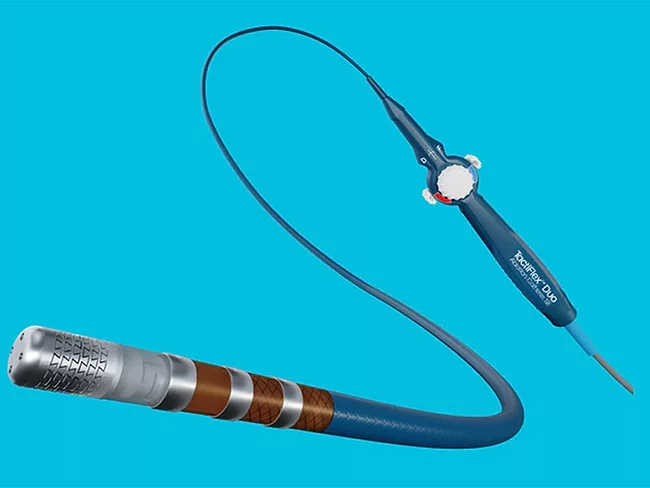
Abbott Laboratories received CE mark in Europe for the Tactiflex Duo ablation catheter to treat patients with atrial fibrillation. The first commercial cases using Tactiflex Duo, a dual energy device, were completed in the EU this week.
Investors continue to pour capital into AI-driven health care technologies, from drug discovery and diagnostics to personalized medicine and clinical decision-support tools. However, there remain issues with the quality and reliability of the data underpinning these systems, as well as the viability of their business model.
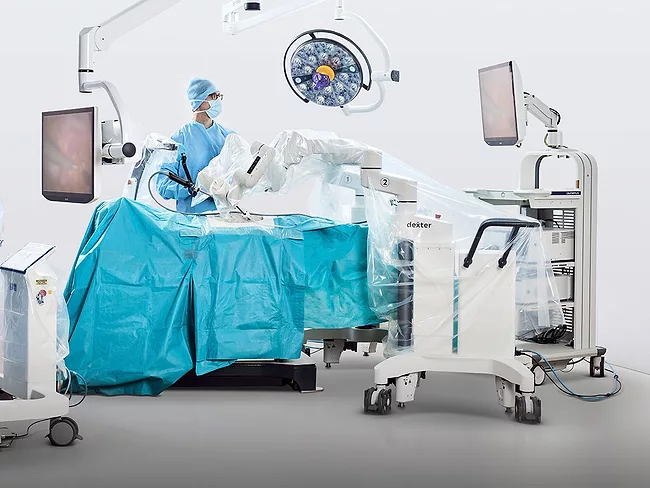
Distalmotion SA recently secured a strategic investment from Johnson & Johnson for its robotic-assisted surgical system Dexter, amid an increase in demand from ambulatory surgery centers for such platforms. The deal follows Distalmotion’s $150 million in a series G financing, and coincides with J&J’s recent submission of its own robotic surgical system, Ottava, to the U.S. FDA., for clearance.
Affluent Medical SAS is becoming Carvolix after it entered into binding agreements to acquire Caranx Medical SAS for €16.6 million (US$19.34 million) and Artedrone SAS for €11.4 million. The aim is to create an integrated med tech company which will focus on revolutionizing cardiac valve replacement and stroke treatment through AI-driven autonomous mini-robots and innovative implants.
Smith+Nephew plc (S+N) has agreed to acquire Integrity Orthopaedics Inc. for up to $450 million in a bid to strengthen its shoulder repair portfolio. The move comes as the company looks to accelerate its growth with strategic investments, with the deal expected to be an important step in its ambition in becoming a global leader in sports medicine.
 RSS
RSS