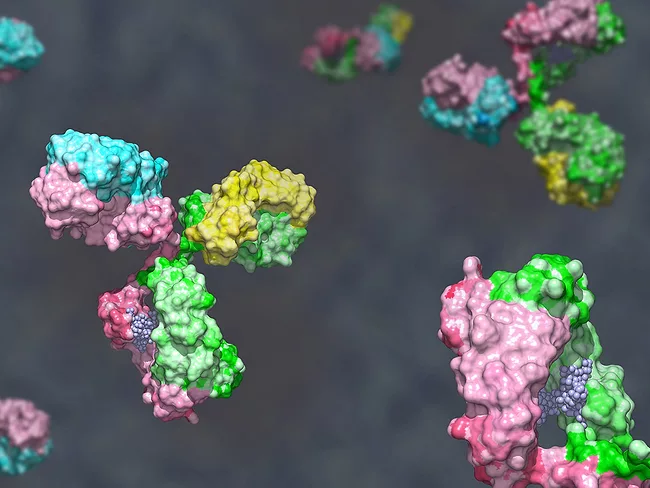
Newco Commit Biologics ApS has arrived on the scene after raising €16 million (US$17.2 million) in a seed round to advance bispecific antibodies that are designed to activate the complement system and direct it to selectively kill cancer cells.
Tiumbio Co. Ltd., of Seongnam-si, Gyeonggi-do, reported positive phase IIa top-line data on May 8 for Merigolix, its lead asset to reduce pain in female patients with moderate to severe endometriosis.
Two-year data from Elixir Medical Corp.’s Bioadaptor randomized controlled trial showed that there is a significant clinical advantage in using its Dynamx coronary drug-eluting bioadaptor system over Medtronic plc’s Resolute Onyx drug-eluting stent in patients with coronary artery disease.
AC Immune SA has landed a potential $2.2 billion deal for its anti-amyloid beta Alzheimer’s disease vaccine, ACI-24.060, with Takeda Pharmaceutical Co. Ltd., under which it will get $100 million up front and is eligible to receive an option exercise fee, plus potential development, commercial and sales-based milestones of up to $2.1 billion.
AC Immune SA has landed a potential $2.2 billion deal for its anti-amyloid beta Alzheimer’s disease vaccine, ACI-24.060, with Takeda Pharmaceutical Co. Ltd., under which it will get $100 million up front and is eligible to receive an option exercise fee, plus potential development, commercial and sales-based milestones of up to $2.1 billion.
The U.K.’s world-first subscription model for antimicrobials is to be expanded following a successful pilot scheme in which companies are being paid a fixed annual fee for their drugs, regardless of the volume dispensed.
Newco Commit Biologics ApS has arrived on the scene after raising €16 million (US$17.2 million) in a seed round to advance bispecific antibodies that are designed to activate the complement system and direct it to selectively kill cancer cells.
Tiumbio Co. Ltd., of Seongnam-si, Gyeonggi-do, reported positive phase IIa top-line data on May 8 for Merigolix, its lead asset to reduce pain in female patients with moderate to severe endometriosis.
Researchers have developed a method to repair nerve connections in patients with spinal cord injuries using red and near-infrared light. The team from the University of Birmingham, U.K., are now planning to develop an implantable device to help surgeons protect and repair the spinal cord.
The EMA’s chief medical officer has expressed disquiet that Europe has fallen behind in the development of psychedelic drugs as approved therapies for mental disorders, saying they should be given “a second chance.”
 RSS
RSS