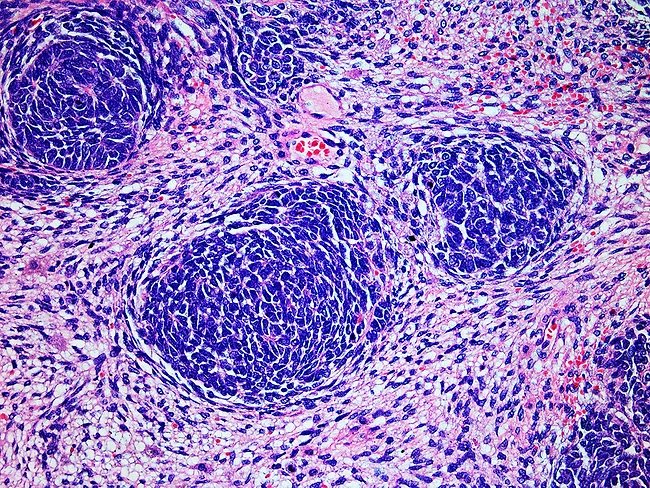
Researchers in the U.K. have overthrown the orthodox view that childhood cancers have a low mutation burden, opening up new drug targets and opportunities for repurposing existing therapies. In particular, a high mutation rate is associated with a response to cancer immunotherapy. But although PD-1 checkpoint inhibitors are approved for treating pediatric cancers with a high level of microsatellite instability mutations, in general it is thought childhood tumors are not amenable to immunotherapy.
Researchers in the U.K. have overthrown the orthodox view that childhood cancers have a low mutation burden, opening up new drug targets and opportunities for repurposing existing therapies. In particular, a high mutation rate is associated with a response to cancer immunotherapy. But although PD-1 checkpoint inhibitors are approved for treating pediatric cancers with a high level of microsatellite instability mutations, in general it is thought childhood tumors are not amenable to immunotherapy.
Glycoengineering specialist Glycoera AG is preparing to take its extracellular protein degrader constructs into the clinic in the treatment of autoimmune diseases, after closing a $130 million series B.
Shockwave Medical Inc. is confident that its intravascular lithotripsy (IVL) system can continue to dominate the market for calcium modification even as other technologies emerge, chief medical officer Nick West told BioWorld.
Glycoengineering specialist Glycoera AG is preparing to take its extracellular protein degrader constructs into the clinic in the treatment of autoimmune diseases, after closing a $130 million series B.
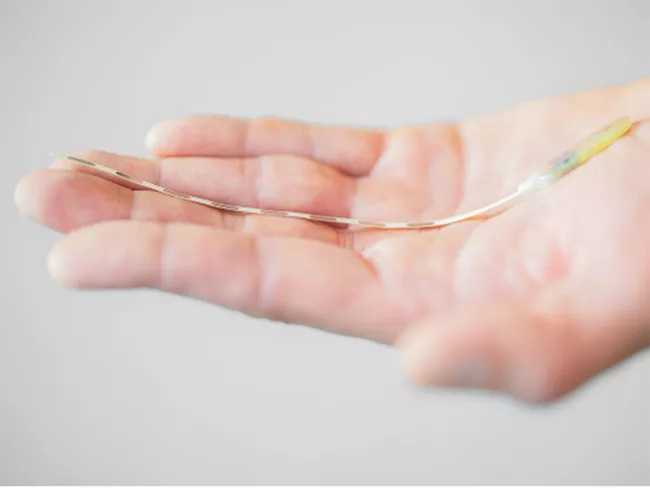
Salvia Bioelectronics BV raised $60 million in a series B financing round for its minimally invasive implantable neuromodulation device, Mysalvia therapy, which treats chronic migraine. The funds will be used for clinical trials and obtaining regulatory approvals in the U.S., Europe and Australia.
History has repeated itself for Prothena Corp. plc, which has reported a second phase III miss for birtamimab in the treatment of light chain amyloidosis. Announcing the trial failure, the Dublin-based company said it is planning “a substantial reduction” of its organization.
GSK plc’s Blenrep (belantamab mafodotin) is heading back to the market three years after being withdrawn, with the EMA’s Committee for Medicinal Products for Human Use recommending approval of the antibody-drug conjugate in combination therapy for the treatment of adults with relapsed or refractory multiple myeloma.
Data from the first-in-human study of Tricares SAS Topaz transcatheter tricuspid valve replacement (TTVR) system, showed it significantly reduced tricuspid regurgitation (TR) in patients treated with the device. The early clinical data at 30 days demonstrated that all patients implanted with Topaz were at a TR grade ‘none’ (0+) or ‘mild’ (1+) following the procedure.
Medtronic plc revealed plans to spin off its underperforming diabetes unit as a separate public company during its fourth quarter 2025 earnings call May 21. The company expects to complete the separation within 18 months.
 RSS
RSS