Sanofi SA is to acquire Blueprint Medicines Inc. in a $9.5 billion deal that will give the French pharma ownership of a marketed rare disease immunotherapy heading toward blockbuster status, a follow-on product in phase II/III, and a phase II clinical program relevant to a number of autoimmune diseases.
Biontech SE and Bristol Myers Squibb Co. are teaming up to develop Biontech’s BNT-327 in a deal possibly worth over $11 billion. BNT-327 is in the hot new class of bispecific antibodies targeting programmed death-1 (PD-1) or its ligand (PD-L1) and vascular endothelial growth factor (VEGF). The bispecifics take advantage of two well established mechanisms of action that help tumors grow; PD-1/PD-L1, which tells immunogenic T cells not to attack the tumor, and VEGF, which tumors excrete to produce new blood vessels to supply oxygen and other nutrients to the tumor.
Abbott Laboratories recently received FDA clearance for Tendyne, its transcatheter mitral valve replacement system. The news comes on the heels of Edwards Lifesciences Corp. securing a CE mark for its Sapien M3 system and is a boon for mitral valve therapies amid ongoing frustrations about the slow adoption of TMVR technologies.
The EU is having another go at improving access to capital for biotechs and science-based startups, in a bid to enable them to remain anchored in Europe. The Startup and Scaleup strategy, announced on May 28, is a response to the long-running problem that although Europe has strong foundations in its academic research, the innovative companies this science spawns often end up being acquired by U.S. companies, or moving to the U.S. to list on Nasdaq or the New York Stock Exchange.
Researchers in the U.K. have overthrown the orthodox view that childhood cancers have a low mutation burden, opening up new drug targets and opportunities for repurposing existing therapies. In particular, a high mutation rate is associated with a response to cancer immunotherapy. But although PD-1 checkpoint inhibitors are approved for treating pediatric cancers with a high level of microsatellite instability mutations, in general it is thought childhood tumors are not amenable to immunotherapy.
Researchers in the U.K. have overthrown the orthodox view that childhood cancers have a low mutation burden, opening up new drug targets and opportunities for repurposing existing therapies. In particular, a high mutation rate is associated with a response to cancer immunotherapy. But although PD-1 checkpoint inhibitors are approved for treating pediatric cancers with a high level of microsatellite instability mutations, in general it is thought childhood tumors are not amenable to immunotherapy.
Glycoengineering specialist Glycoera AG is preparing to take its extracellular protein degrader constructs into the clinic in the treatment of autoimmune diseases, after closing a $130 million series B.
Shockwave Medical Inc. is confident that its intravascular lithotripsy (IVL) system can continue to dominate the market for calcium modification even as other technologies emerge, chief medical officer Nick West told BioWorld.
Glycoengineering specialist Glycoera AG is preparing to take its extracellular protein degrader constructs into the clinic in the treatment of autoimmune diseases, after closing a $130 million series B.
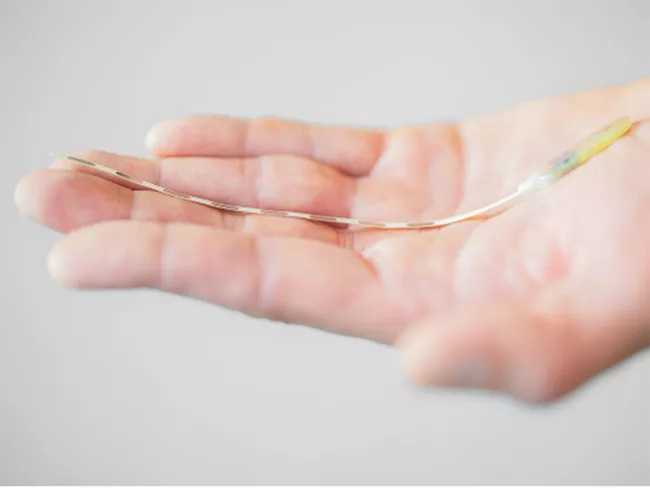
Salvia Bioelectronics BV raised $60 million in a series B financing round for its minimally invasive implantable neuromodulation device, Mysalvia therapy, which treats chronic migraine. The funds will be used for clinical trials and obtaining regulatory approvals in the U.S., Europe and Australia.
 RSS
RSS