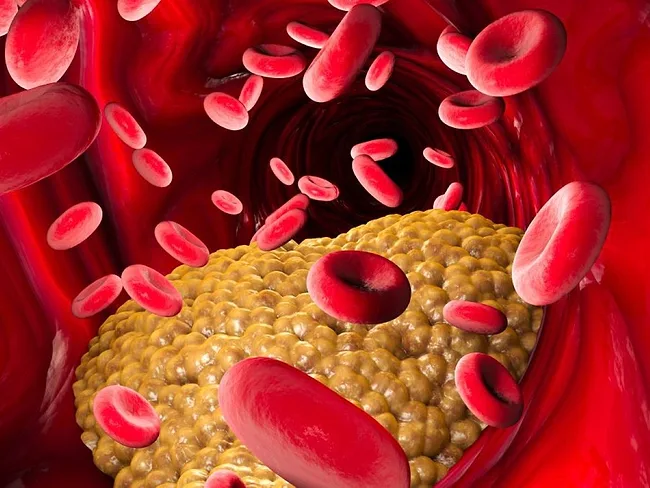
Once again, Arrowhead Pharmaceuticals Inc.’s Redemplo (plozasiran) is hot on the heels of Ionis Pharmaceuticals Inc.’s Tryngolza (olezarsen). Less than a month after the latter gained U.S. FDA approval for use in severe hypertriglyceridemia (sHTG), Arrowhead reported positive top-line results from its phase III studies in sHTG, with findings described by one analyst as “best-case scenario,” setting the stage for a supplemental NDA filing with the FDA before year-end.
Kolon Tissuegene Inc.’s TG-C, an allogeneic cell and gene therapy candidate for knee osteoarthritis (OA), missed both co-primary endpoints and all key secondary endpoints in a highly anticipated top-line phase III clinical trial readout.
While the pace of executive orders (EOs) coming out of the White House continues to decline, the impact of new EOs on U.S. health agencies, life sciences industries and the practice of medicine remains just as disconcerting as a year ago.
In a rapid-fire voting session, the U.S. House suspended the rules July 20 to pass, by voice vote, a slate of bipartisan health bills ranging from reducing animal testing in drug development to clarifying Medicare coverage of wheelchairs.
Axiom Biosciences, rebranded from Cytonus Therapeutics Inc. in June 2026, plans to be one of the first U.S. biotechs to IPO on the main board of The Stock Exchange of Hong Kong. The San Diego-based company is preparing audits as the first step to a potential IPO in 2027.
Scientists in Europe have added their voices to the many thousands of objections made against proposed changes to the oversight of U.S. federal research grants, under which political appointees and not peer review experts would have the final say on who and what gets funding. The concern is that awarding grants, based on the principle that research proposals must be in keeping with President Donald Trump’s policy priorities, poses a threat to open scientific inquiry and academic freedom, and also will undermine international research collaboration.
Immix Biopharma Inc.’s shares (NASDAQ:IMMX) sank 14% to $8.80 on July 20 after investors learned that a man named Richard Graydon, who served as its chief medical officer, was in fact a 20-year fugitive from Rhode Island for sexual assault charges.
U.K. biotech has recorded the strongest quarter for venture capital raised in five years, with companies attracting £2.05 billion (US$3.36 billion) in the second quarter (Q2) of 2026. While that figure is dominated by the £1.56 billion series B round raised by Google Deepmind’s AI drug discovery spin-off Isomorphic Labs Ltd, the remaining £498 million is a significant increase to the £279 million raised in Q2 of 2025.
Rinascera Therapeutics Inc. has secured enough initial funding to acquire two drugs for rare genetic skin diseases, despite stalled development with their previous owners. The company, whose name comes from the Latin root renasci – to be born again, was incubated by Olive Tree Capital, which led the seed round with participation from Civilization Ventures and Toba Capital.
On the tail of rumors that Merck & Co. Inc. and others holding stakes in Personalis Inc. might take over the firm, Chicago-based Tempus AI Inc. ended speculation by disclosing its plan to buy the company for $16.25 per share, which amounts to an enterprise value of $1.5 billion net of Tempus’ existing ownership interest.
 RSS
RSS