The Centers for Medicare & Medicaid Services has cracked open its coverage policy for transcatheter aortic valve replacement devices a second time, and a wide range of stakeholders are providing feedback. Where the agency will land on questions such as the need for continued evidence development is difficult to predict, however, given that the agency is hearing anything but unanimity on the question.
The U.S. FDA has endorsed ISO 14971 for risk management for medical device manufacturers, but there’s nothing compulsory about industry’s use of this standard. Nonetheless, Sarah Moore, principal program lead at NSF, told BioWorld that adoption of 14971 is still the most seamless way to demonstrate proper risk management practices to FDA field investigators, given that the alternative is almost always more work for both sides during facility inspections.
Boston Scientific Corp. looked ready to keep steamrolling down the acquisition path, carrying the momentum from last year, with the news that it is acquiring Penumbra Inc., a company that makes devices for interventional therapies to treat vascular conditions such as stroke and aneurysm, for a whopping $14.5 billion.
The U.S. FDA’s Jan. 14 webinar for the new Quality Management System Regulation included some fairly predictable content, but one member of the FDA staff mentioned that the agency now expects corporate management to demonstrate the correct “attitude” with regard to product quality, suggesting that agency staff will be more keen to crack down on firms that dispute the agency’s perspectives on quality management.
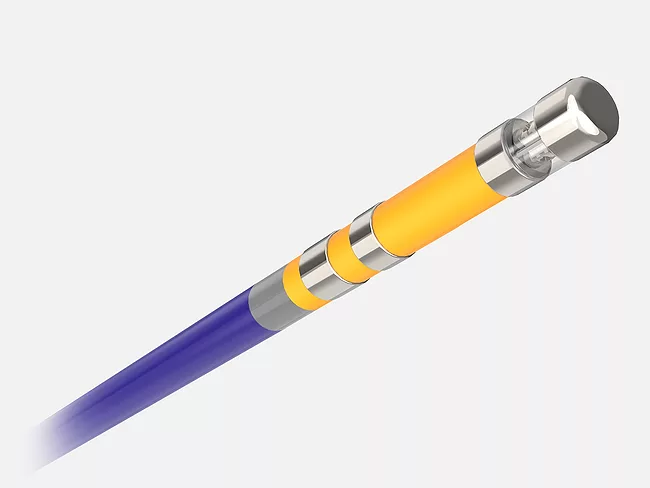
Boston Scientific Corp.'s Farapoint, its latest pulsed field ablation catheter, received U.S. FDA approval for use as an adjunctive device when treating persistent atrial fibrillation that requires cavotricuspid isthmus ablation, CEO Mike Mahoney reported at the J.P. Morgan Healthcare Conference in San Francisco. The newest member of the popular Farapulse family of PFA catheters provides a focal point option for creation of straight line or focal lesions, complementing the larger, single-shot Farawave catheter that has dominated the PFA market since its U.S. approval in early 2024.
The FDA’s Center for Devices and Radiological Health has withdrawn its December 2017 final guidance for clinical evaluation of software as a medical device, a development that seems to align with recent relaxation of digital health product regulation, but which might also be seen as the consequence of an ill-advised case of regulatory copy and paste.
Boston Scientific Corp. plans to acquire Valencia Technologies Corp. in the first half of 2026 in a move that will expand its urology portfolio. Valencia makes the Ecoin system, an implantable tibial nerve stimulator (ITNS) designed to treat urge urinary incontinence (UUI). The companies did not disclose terms of the deal, which is not expected to have a material impact on 2026 earnings per share.
Illumina Inc. presented at the J.P. Morgan 2026 Healthcare Conference on Jan. 13 and introduced what it said is the world's largest genome-wide genetic perturbation dataset, being built to accelerate drug discovery through AI across the pharmaceutical ecosystem. This is a move away from its core focus on DNA sequencing technology.
For individuals with major depressive disorder (MDD) that does not respond to pharmacotherapy, recent decisions by the U.S. FDA enabling at-home use of neuromodulation devices may provide a bright spot in dark days. Neurolief Ltd. received FDA premarket approval for Proliv Rx, a physician-directed, brain neuromodulation therapy indicated for use as an at-home adjunctive treatment for adults with MDD who failed to respond adequately to at least one previous antidepressant on Jan. 7. That decision follows the December 510(k) clearance for at-home use of the Flow brain-stimulation device by Flow Neuroscience AB as either a monotherapy or as an adjunctive treatment.
Edwards Lifesciences Corp. said it is scrapping plans to acquire Jenavalve Technology Inc. for $945 million after a federal court ruled against the company in a case brought by the U.S. Federal Trade Commission (FTC) to block the deal.
 RSS
RSS