The U.S. FDA released an early alert March 10 regarding the rupturing or bursting of certain Erbe USA Cryoprobes when they’re activated. Meanwhile, the company is voluntarily recalling the affected Erbe Flexible Cryoprobes, which use extreme cold and cryoadhesion for procedures such as the removal of blood clots, necrotic tissue, and tissue tumors and biopsies.
Agilent Technologies Inc. has agreed to buy Biocare Medical LLC for $950 million in cash in a bid to strengthen its pathology portfolio. The deal adds Biocare’s complementary immunohistochemistry antibodies, reagents and instruments portfolio to Agilent’s existing offerings, and expands its ability to serve a wider range of pathology laboratories across clinical and research settings.
Patrick Cassells, of Fulshear, Texas, was sentenced March 6 to more than seven years in prison and ordered to pay more than $25 million in restitution and forfeiture after he pleaded guilty nearly two years ago to one count of health care fraud that involved the three durable medical equipment companies he owned and operated.
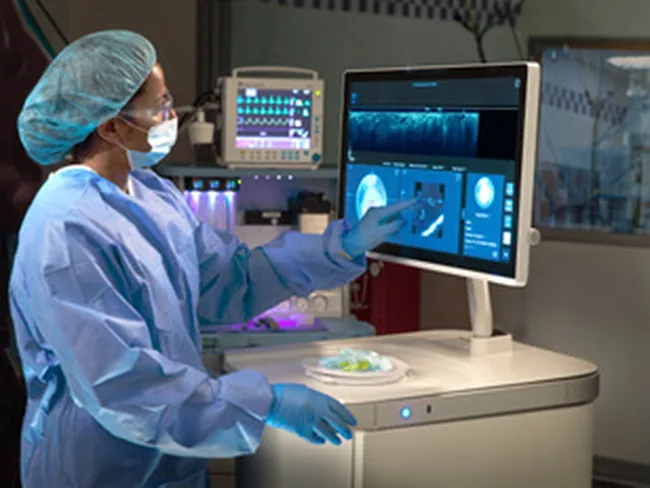
Perimeter Medical Imaging AI Inc. secured FDA premarket approval for Claire, its AI-powered imaging device which detects difficult-to-see cancer during breast-conserving surgery. Claire combines AI with wide-field optical coherence tomography to provide surgeons with high-resolution, real-time views of excised tumor margins, to reduce the need for re-operations.
Pricing shares at $20 each, below the intended price range, insulin delivery company Minimed Group Inc. debuted with an IPO on Nasdaq March 6, raising $560 million. The company offered a total of 28 million shares, which would have brought the Northridge, Calif.-based company $742 million in gross proceeds if the IPO had priced at the midpoint of the $25-to-$28 price range disclosed in February.
Radnet Inc. acquired Gleamer SAS for up to €230 million (US$267 million) as it continues to expand its position across imaging and acute diagnostic care, while accelerating its move toward AI-powered automated diagnostics. Gleamer will be integrated into Radnet’s subsidiary, Deephealth Inc., strengthening its imaging portfolio, and positioning the company as the world’s largest provider of radiology clinical AI solutions.
U.S. med-tech companies are optimistic about the year ahead and believe that they are well positioned to navigate geopolitical headwinds and the uncertainty that they bring. Their technologies, which span neurosurgery and tissue reconstruction to cardiology and radiation protection, address important clinical needs. With the major U.S. corporates accelerating dealmaking and acquisitions, these companies see strong momentum building for the year ahead.
The U.S. FDA approved Allurion Technologies Inc.’s premarket application for its swallowable gastric balloon system, which features its Smart Capsule, for weight loss. The clearance is boon for the company as GLP-1 agonists gets increasingly adopted to treat obesity. The approval also brings to the market a new non-invasive option to patients looking for alternative ways to lose weight.
Minimed Group Inc., Medtronic plc’s diabetes business, is looking to raise up to $784 million in its IPO. Medronic last May revealed plans to spin off the unit as an independent public company and expected to complete the separation within 18 months.
Neurosoft Bioelectronics SA has signed an agreement with Science Corp. to gain access to its full stack of clinical-grade neural recording tools as it looks to advance its brain-computer interface (BCI) system.

 RSS
RSS