The U.S. FDA has issued yet another complete response letter (CRL) for dasiglucagon, a glucagon receptor agonist, being developed by Zealand Pharma A/S for treating congenital hyperinsulinism, an ultra-rare disease that is also being targeted by at least two other companies. This CRL is pegged to the timing of a third-party manufacturing facility reinspection that was done in August and September. The agency also wants some additional clinical analysis from the phase III study.
Shiratronics Inc. raised $66 million in an oversubscribed series B financing round to support completion of its recently launched clinical trial to evaluate the safety and efficacy of its neuromodulation device in patients with treatment-resistant chronic migraine.
Rhythm AI Ltd recently became the latest company to receive U.S. FDA clearance for its artificial intelligenc-based software for optimizing Atrial Fibrillation procedures.
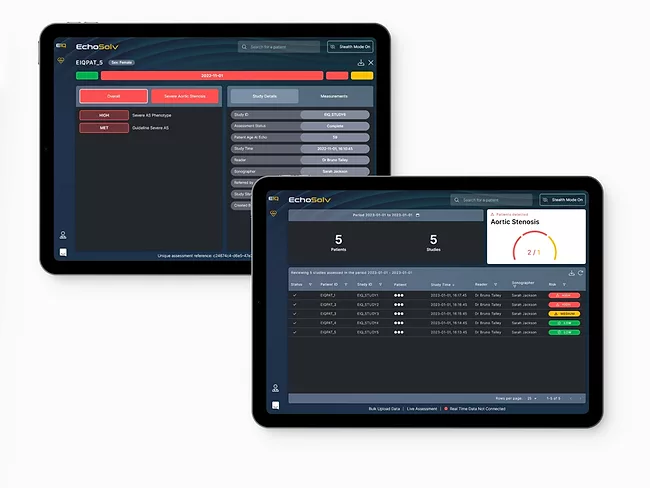
The U.S. FDA gave the 510(k) green light to Echo IQ Ltd.’s Echosolv AS for its AI-enabled software as a medical device to be used as a decision support aid in detecting severe aortic stenosis.
It’s hard to know where to start in describing the biopharma applications of the 2024 Nobel Prize in Physics. It was awarded to John Hopfield and Geoffrey Hinton “for foundational discoveries and inventions that enable machine learning with artificial neural networks.”
It’s hard to know where to start in describing the biopharma applications of the 2024 Nobel Prize in Physics. It was awarded to John Hopfield and Geoffrey Hinton “for foundational discoveries and inventions that enable machine learning with artificial neural networks.”
Stealth Biotherapeutics Inc. had hoped the U.S. FDA would have approved its lead candidate, elamipretide, as the first treatment for Barth syndrome by now. Instead, it’s headed to a meet-up with the agency’s Cardiovascular and Renal Drugs Advisory Committee (CRDAC) Oct. 10. The discussion and vote at that meeting could be make-or-break for patients with the ultra-rare debilitating mitochondrial disease that has no approved therapies. “Barring support from CRDAC, the future of elamipretide for Barth syndrome in the U.S. is tenuous," Stealth CEO Reenie McCarthy told BioWorld.
Bad news has buffeted Sage Therapeutics Inc. twice in the past few months. Now its placebo-controlled phase II Lightwave study of dalzanemdor in Alzheimer's disease has missed the primary outcome measure, prompting the company to stop development of the NMDA receptor positive allosteric modulator in the indication.
Gene and cell therapies will drive innovation for the next 10 years, Claus Zieler, the chief commercial officer at Astellas Pharma Inc., said in the newest episode of the BioWorld Insider podcast. Developers are on the cusp of breakthroughs because a gene can now be replaced “and that means we can potentially cure a disease rather than intervening in a disease.”
A digital cognitive assessment developed by Braincheck Inc., Braincheck Assess, proved comparable to the gold-standard Montreal Cognitive Assessment in identifying patients with cognitive impairment in a study published in Frontiers in Psychology.

 RSS
RSS