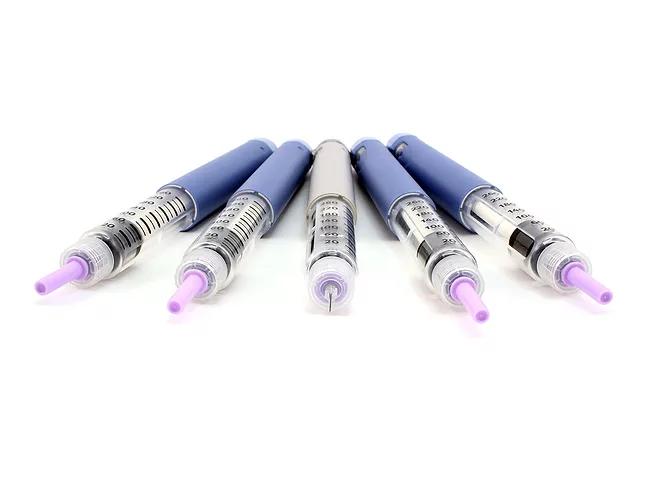
One of the companies wanting to be part of the upcoming U.S. launch of Humira biosimilars is instead exploring options to raise additional capital so it can continue advancing its biosimilar pipeline in the near term. Alvotech Holdings SA, a pure-play biosimilars company based in Iceland, initially had hoped for FDA approval June 28 for AVT-02, developed as both an interchangeable and biosimilar to the high-concentration formulation (HCF) of Abbvie Inc.’s blockbuster autoimmune drug, Humira (adalimumab).
Sometimes a merger or acquisition brings a device that has a set of indications for use that cannot be practicably expanded, but Nathan Downing of Gardner Law of Stillwater, Minn., said this is not always the case. Downing said that preliminary conversations between the two parties to mergers and acquisitions can clarify a lot about whether a particular device has ample room to grow.
Two companies presented highlights of studies that demonstrated outstanding results for novel devices at last weekend’s American Diabetes Association’s (ADA) 83rd Scientific Sessions, while Embecta Corp. and Senseonics Holdings Inc. provided updates that position them well for long-term performance. Glyconics Ltd. revealed a fingernail scanning device that simplifies screening for diabetes and Fractyl Health Inc. showed that its Revita procedure reduced blood glucose levels and promoted weight loss.
Makers of dental equipment don’t typically show up on the U.S. FDA enforcement radar screen, but the introduction of biologics and software into routine dental practice has upped the regulatory stakes. This can be seen in the June 20, 2023, warning to Vitang Technology LLC, of Tustin, Calif., which cited the company for failure to validate a change of software used in orthodontic treatment planning systems, but the FDA reinforced the notion that claiming that the agency approved or cleared the device is also a violation of the Code of Federal Regulations.
Despite imperfect data and the use of post hoc analyses to overcome a failed endpoint, the U.S. FDA’s Endocrinologic and Metabolic Drugs Advisory Committee voted 10-4 June 28 that Ipsen SA’s ultra-rare bone disease drug, palovarotene, demonstrated efficacy in treating patients with fibrodysplasia ossificans progressiva (FOP).
Opko Health Inc. stands to receive a $90 million milestone payment from partner Pfizer Inc. on the U.S. FDA approval of once-weekly human growth hormone analogue Ngenla (somatrogon) for pediatric patients with growth hormone deficiency. Pfizer expects to make the drug available to patients starting in August 2023.
With the biggest biosimilar launch in the U.S. just days away, Humira’s (adalimumab) record-breaking ride is quickly slowing down, but the Abbvie Inc. mega-blockbuster immunology drug is nowhere near the end of its road. Meanwhile, the U.S. journey is just beginning for the eight adalimumab biosimilars that could come to market as early as July 1 through licensing agreements with Abbvie. Besides revving their engines against Humira, the new launches will be looking to overtake Amgen Inc.’s biosimilar, Amjevita, which got a five-month headstart in the U.S., thanks to the first-mover status Amgen earned for being the first to sign a licensing agreement with Abbvie.
The U.S. Office of Inspector General might not be the source of routine rules of the road for information blocking for electronic health records (EHRs), but the agency is tasked with some of the enforcement load. OIG just announced that $1 million fines for violations of information blocking rules will go into force in late August, a penalty that can accrue astonishingly quickly as it may apply per violation rather than per a series of related violations.
The recently concluded American Diabetes Association’s (ADA) 83rd Scientific Sessions continued to build powerful use cases for continuous glucose monitors in an ever-wider population and to highlight the value of automated insulin delivery (AID) systems that are getting ever-closer to duplicating the function of a natural pancreas. In addition to the news from Medtronic plc and Dexcom Inc. BioWorld covered earlier this week, Abbott Laboratories, Tandem Diabetes Care Inc. and Insulet Corp. also presented bright projections for future performance.
After nearly 10 years in clinical development and just a few months after an EMA rejection, Ipsen SA will be making its case June 28 before a U.S. FDA advisory committee for its ultra-rare bone disease drug, palovarotene.

 RSS
RSS