Two weeks ahead of its Jan. 6, 2023, PDUFA date, the U.S. FDA has approved the bispecific Lunsumio (mosunetuzumab) to treat adults with relapsed or refractory follicular lymphoma (FL) after two or more lines of systemic therapy. It’s the first bispecific antibody approved for treating any type of non-Hodgkin lymphoma (NHL). FL is the most common slow-growing form of NHL.
Topping biopharma regulatory news in 2022 was the signing of the Inflation Reduction Act (IRA), as its provisions requiring Medicare to directly negotiate certain prescription drug prices will open the door for the first time to a degree of government price controls in the U.S., affecting the bottom line of drug companies around the world.
The U.S. False Claims Act (FCA) provides one of the more potent legal weapons in the federal government’s enforcement arsenal and three companies felt the sting of the FCA in the closing weeks of December 2022. Advanced Bionics LLC fell under the sway of the FCA related to allegations that it misused a performance standard in its premarket filing for cochlear implants, while Biotelemetry Inc. and its Cardionet LLC subsidiary will fork over more than $44 million for improper claims filed with the Medicare program.
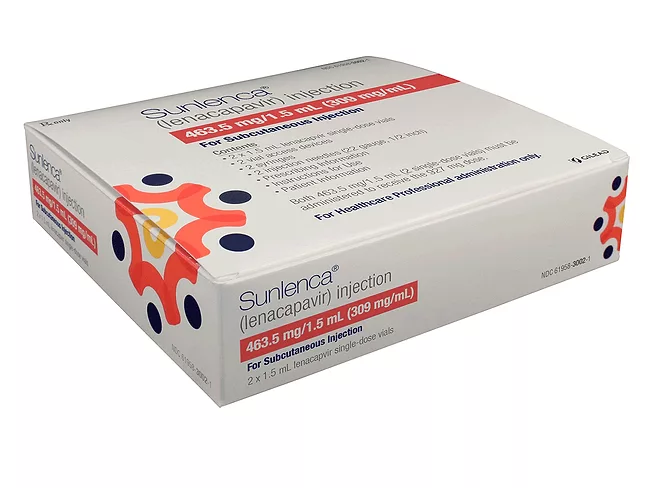
Viral specialist Gilead Sciences Inc.’s U.S. FDA clearance for twice-yearly Sunlenca (lenacapavir) in combination with other antiretroviral therapies for HIV-1 infection provides heavily treatment-experienced patients a new option, and gives the company room to flex with new add-ons.
Seven new U.S. medtechs are poised to make a splash in the diagnosis and treatment of nervous system disorders thanks to funding under a new program within the National Institutes of Health (NIH) Blueprint for Neuroscience Research called Blueprint Medtech.
With yet another deadline looming for passage of spending bills for the U.S. federal budget, Congress has drafted an omnibus spending bill that would extend coverage of Medicare telehealth services. The problem with the legislation in the eyes of many stakeholders is that the Verifying Accurate Leading-edge IVCT Development (VALID) Act is not part of the package that must be passed by Dec. 23, an omission that leaves lab-developed tests (LDTs) in a nether world of regulatory ambiguity.
The U.S. FDA has had a long-standing guidance dealing with drug manufacturing facilities that delay or deny FDA investigators’ attempts to inspect a manufacturing facility, but that policy was exclusive of device manufacturing facilities up until passage of the FDA Reauthorization Act (FDARA) of 2017. FDARA’s expansion of the policy to include device manufacturing facilities has prompted a rewrite of an existing 2014 guidance.
The FDA posted a recall announcement for two catheter kits made by Arrow International LLC, a subsidiary of Wayne, Pa.-based Teleflex Inc., due to problems with the connectors used in the kits. While no injuries or deaths have been reported, the problem could lead to embolism and/or delayed delivery of needed therapeutic fluids to patients, making this a class I recall due to the risk of injury and death.
U.S. federal authorities have made a lot of noise over inappropriate medical testing in the past two years, largely due to the COVID-19 pandemic, but Paul Garcia, a partner in the San Diego office of Hooper, Lundy & Bookman PC, says this trend will not ebb at all in the coming year. Garcia told BioWorld that the lookback period for Medicare testing claims runs several years and that not only will enforcement results continue to surface next year, but also that the associated civil monetary penalties could force a testing lab to shutter its operations permanently.
Ferring Pharmaceuticals A/S has notched another U.S. FDA approval, this time for a bladder cancer treatment, Adstiladrin (nadofaragene firadenovec). The non-replicating adenovirus vector-based gene therapy’s approval comes only weeks after the FDA’s Nov. 30 approval of the privately held company’s Rebyota (fecal microbiota, live), the first fecal microbiota treatment in the U.S. Adstiladrin is another landmark, as the first FDA-approved gene therapy to treat high-risk, non-muscle-invasive bladder cancer. Saint-Prex, Switzerland-based Ferring said it anticipates the product becoming commercially available in the U.S. in the second half of 2023.
 RSS
RSS