The U.S. FDA posted notice recently regarding a vulnerability seen in the Minimed 600 series of insulin pumps made by Dublin-based Medtronic plc, which exposes the user to the risk of unauthorized access to the pump’s software. The vulnerability could be exploited to interfere with the system’s ability to deliver only the desired amount of insulin, although the FDA acknowledged that no adverse events or complaints have been reported.
A subcommittee of the Senate Judiciary Committee met recently to review the current state of antitrust enforcement in the U.S., and heard from both the Department of Justice (DOJ) and the Federal Trade Commission (FTC) about their enforcement activities. FTC chairwoman Lina Khan acknowledged that the agency had coordinated with the European Commission about the transaction between Illumina Inc., and Grail Inc., activities which she claimed were nothing more than an attempt to promote regulatory efficiency.
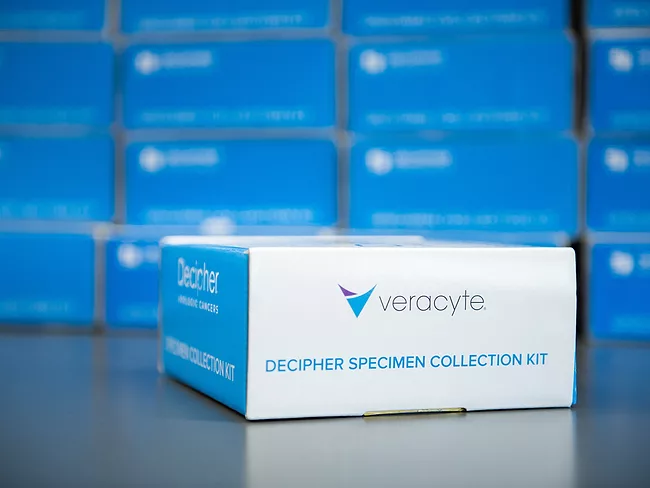
Aggressive prostate cancer disproportionately affects—and kills—African American men, but identifying which men are at highest-risk has proved challenging, particularly in younger patients. Veracyte Inc.’s Decipher prostate genomic classifier could help identify these men with early, localized prostate cancer at the greatest risk of aggressive disease, a new study published in the Journal of the National Cancer Institute found.
Although it wasn’t a shutout, Spectrum Pharmaceuticals Inc. didn’t get the support it needed from a U.S. FDA advisory committee Sept. 22 for its non-small-cell lung cancer candidate, poziotinib, which it has proposed marketing as Pozenveo.
Inspectors from the U.S. Public Company Accounting Oversight Board (PCAOB) have reportedly arrived in Hong Kong to inspect audit records for the Chinese companies listed by the U.S. SEC as being noncompliant with U.S. accounting standards.
It took resolving issues from two complete response letters for Fennec Pharmaceuticals Inc. to finally land U.S. FDA approval of Pedmark. The injectable formulation of sodium thiosulfate is for reducing the risk of platinum-induced ototoxicity associated with cisplatin in pediatric patients 1 month and older with localized, non-metastatic solid tumors. Approval of the NDA arrived Sept. 20, three days before its Sept. 23 PDUFA date.
The U.S. response to the emergence of the COVID-19 pandemic may by now be the stuff of public health policy lore, with both the FDA and the CDC contributing to the chaos in the first months of the pandemic. The Office of Inspector General has issued an analysis of the situation, and while OIG revisited some of the known miscues, the report also made the case that a national strategy for pandemic response will be needed if federal government efforts in the future are to be less a hazard to the lives of American citizens than those seen in the first half of 2020.
The fate of three cancer drugs, and possibly the future financial health of their sponsors, could be on the line Sept. 22 and 23 as the U.S. FDA’s Oncologic Drugs Advisory Committee (ODAC) takes a hard look at the safety-efficacy data for Spectrum Pharmaceuticals Inc.’s Pozenveo, Oncopeptides AB’s Pepaxto and Secura Bio Inc.’s Copiktra. First up in the triple-header is Pozenveo (poziotinib), which is seeking accelerated approval as a second-line treatment for patients with locally advanced or metastatic non-small-cell lung cancer harboring HER2 exon 20 insertion mutations confirmed by an FDA-approved test.
The U.S. NIH is not generally regarded as a wellspring of concepts and policies in the world of artificial intelligence (AI), but that perception may change soon thanks to the agency’s Bridge2AI program. The agency announced recently that it will drop $130 million into this program over four years in an effort to develop standards for data used in AI research, a key development for device makers seeking to sell products that use these complex algorithms.
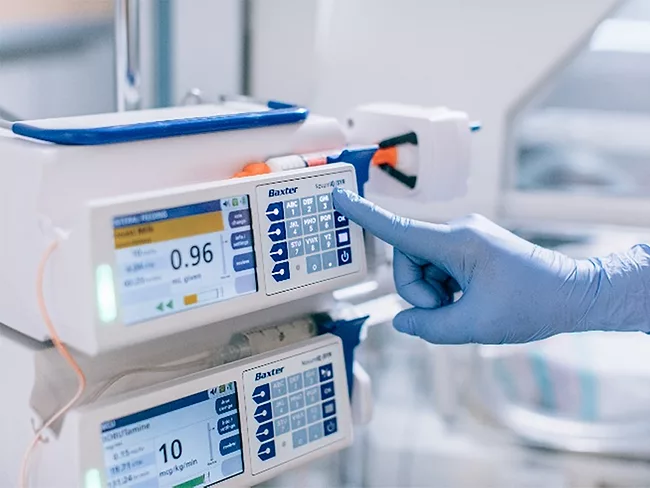
Baxter International Inc. has scored FDA clearance for an infusion pump used to deliver small amounts of fluid at low rates, often in pediatric, neonatal and anesthesia care settings. The Novum Iq syringe infusion pump also features Dose Iq Safety Software, a web-based, customizable drug library that incorporates titration technology to reduce dosage errors during patient treatment.
 RSS
RSS