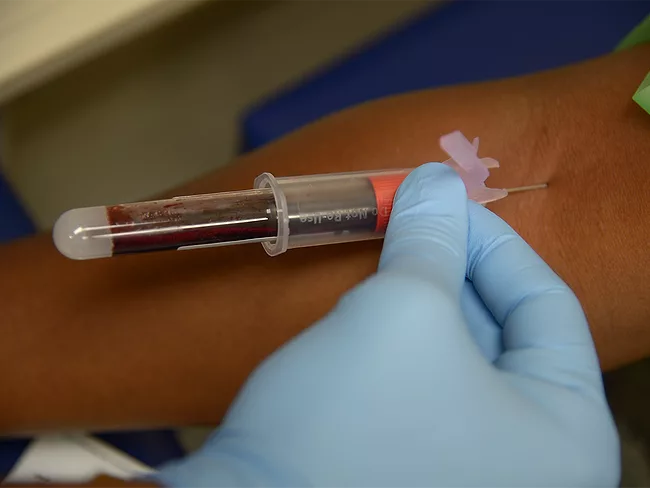
In recent years, ethicists have executed a 180-degree shift on including children in clinical trials testing drugs, biologics and medical devices, moving from the idea that it was unethical to include youngsters in trials to an understanding that such inclusion may be the best way of protecting them.
The race to become the first microbiome-based therapy to reach the market continues between two companies. A positive view by the U.S. FDA’s Vaccines and Related Biological Products Advisory Committee on Sept. 22 for RBX-2660 in preventing recurrent Clostridium difficile infection kept Ferring Pharmaceuticals Inc.’s microbiota-based live biotherapeutic moving forward.
As doctors and public health officials brace for a possible fall coronavirus surge, one of the challenges continues to be predicting who will have a mild, moderate or severe case of COVID-19.
With FDA 510(k) clearance of its Kinguide robotic-assisted surgical system, Point Robotics Medtech Inc became the first robotics company in Taiwan to gain U.S. clearance for an orthopedic surgical robot.
Colorectal cancer (CRC) is expected to increase steadily through the decade to reach more than 2.2 million cases and 1.1 million deaths by 2030 as two concurrent trends tick up—an aging population, that typically has higher rates of the disease, and an alarming increase in cases in younger people. Iterative Scopes Inc. hopes to help gastroenterologists find precancerous lesions before they progress with its Skout device, which received U.S. FDA 510(k) clearance this week.
The U.S. FDA’s Oncologic Drugs Advisory Committee (ODAC) took up the matter of Oncopeptides AB’s long-storied multiple myeloma (MM) drug, Pepaxto (melphalan flufenamide), and briefing documents ahead of the meeting – which provided little cause for optimism – proved predictive of ODAC’s vote. Shares of Oncopeptides (Stockholm:ONCO) have dropped more than 64% over the past five days as investor jitters worsened.
Emphasizing April’s vote of concern about the safety of PI3K inhibitors, the U.S. FDA’s Oncologic Drugs Advisory Committee said privately held Secura Bio Inc.’s Copiktra (duvelisib) is more of a hindrance than a help. The adcom voted 8-4 on Sept. 23 that it sees a detriment in overall survival (OS) and some other safety issues that were revealed in newly updated data for the cancer treatment. Approved in 2018 for treating adults with relapsed or refractory chronic lymphocytic leukemia or small lymphocytic lymphoma after at least two prior therapies, Secura argued that its data continue to show a statistically significant and clinically meaningful benefit in OS and also in progression-free survival.
The U.S. FDA posted notice recently regarding a vulnerability seen in the Minimed 600 series of insulin pumps made by Dublin-based Medtronic plc, which exposes the user to the risk of unauthorized access to the pump’s software. The vulnerability could be exploited to interfere with the system’s ability to deliver only the desired amount of insulin, although the FDA acknowledged that no adverse events or complaints have been reported.
A subcommittee of the Senate Judiciary Committee met recently to review the current state of antitrust enforcement in the U.S., and heard from both the Department of Justice (DOJ) and the Federal Trade Commission (FTC) about their enforcement activities. FTC chairwoman Lina Khan acknowledged that the agency had coordinated with the European Commission about the transaction between Illumina Inc., and Grail Inc., activities which she claimed were nothing more than an attempt to promote regulatory efficiency.
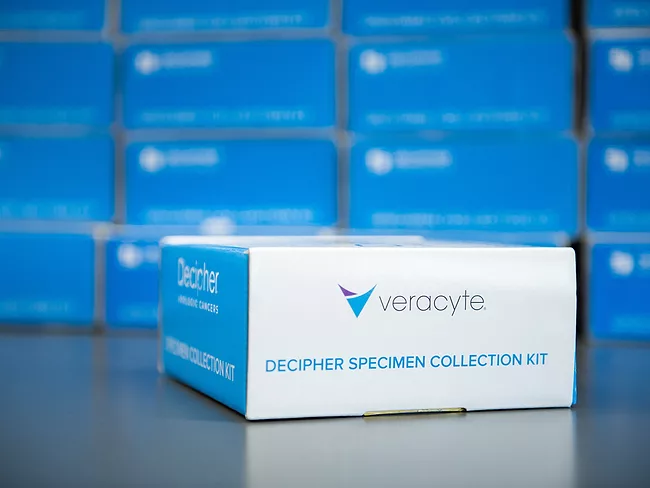
Aggressive prostate cancer disproportionately affects—and kills—African American men, but identifying which men are at highest-risk has proved challenging, particularly in younger patients. Veracyte Inc.’s Decipher prostate genomic classifier could help identify these men with early, localized prostate cancer at the greatest risk of aggressive disease, a new study published in the Journal of the National Cancer Institute found.

 RSS
RSS