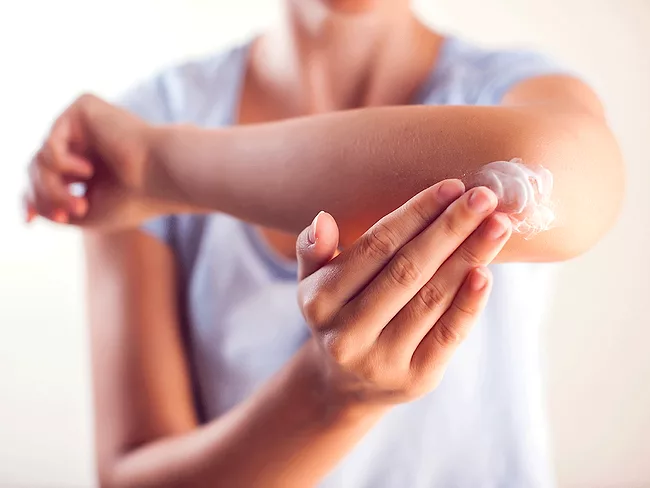
Since its launch in the U.S. in April, Biolab Sciences Inc.’s Dermistat has facilitated the healing of 80 wounds using its unusual gel-graft formula. The product transforms a patient’s skin cells into a partial thickness skin graft in 48 hours and a full-thickness graft in five to seven days. The autologous graft material speeds recovery following surgery or burns and helps to resolve non-healing wounds.
Irked by what state officials described as "bureaucratic roadblocks" to Florida's proposal for importing cheaper prescription drugs from Canada, Florida Gov. Ron DeSantis on Aug. 31 announced a state lawsuit against the U.S. FDA.
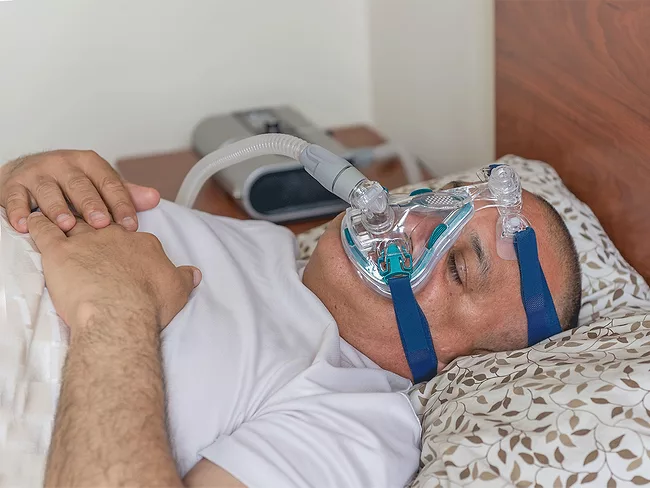
A variety of positive airway pressure (PAP) devices made by Philips Respironics Inc. have been subject to a lengthy and expensive recall due to the use of a problematic material in acoustic insulation foam, but now the company has a new headache in connection with its offerings. The FDA said this latest safety notification is due to the possible presence of a plastic that is contaminated with a non-compatible material, although this recall affects fewer than 400 units.
Researchers at Massachusetts General Hospital (MGH) and the Massachusetts Institute of Technology (MIT) have developed a deep learning computer model that expands on the ability to identify discrete data contained in breast imaging to better predict a woman’s chances of developing breast cancer.
Five months after winning its first approval in Japan, Sanofi SA’s enzyme replacement therapy, Xenpozyme (olipudase alfa), earned a U.S. FDA nod for use in pediatric and adult patients with acid sphingomyelinase deficiency (ASMD), becoming the first medication designed to treat symptoms not related to the central nervous system.
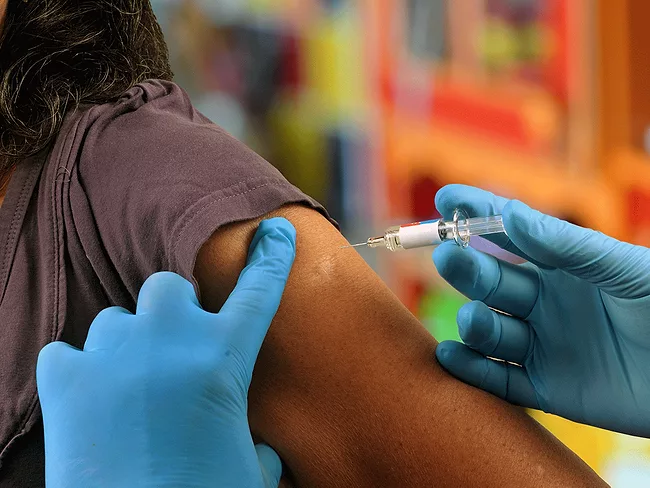
Right on cue, the U.S. FDA authorized bivalent COVID-19 vaccines from Moderna Inc. and Pfizer Inc.-Biontech SE to be given as boosters at least two months following a primary vaccine series or a previous booster. “These updated boosters present us with an opportunity to get ahead of the next wave of COVID-19,” FDA Commissioner Robert Califf said, following the Aug. 31 announcement.
It’s not always obvious whether a claim found in a patent is obvious to a “person having ordinary skill” while the patent is still in prosecution, but that lack of clarity came back to bite Best Medical International Inc., of Springfield, Va. The U.S. Court of Appeals for the Federal Circuit has ruled that a patent for conformal radiotherapy held by Best included three claims that would have been obvious to this mythical person of ordinary skill, handing a win to Stockholm-based Elekta AB, maker of the Gamma Knife radiotherapy system.
For the first time since they’ve had access to U.S. capital, biopharma and med-tech companies based in China and Hong Kong are having to comply with the same accountability standards companies in the U.S. and other countries must follow as a condition of trading on U.S. markets.
If the U.S. Supreme Court agrees to hear Teva Pharmaceuticals USA Inc. vs. Glaxosmithkline LLC, it could be one of the biggest biopharma cases on the court’s calendar in the coming year. But that’s still an if. Whether the patent infringement case involving a so-called “skinny label” makes it to the high court’s docket depends on which interpretation of the underlying question the court accepts.
 RSS
RSS