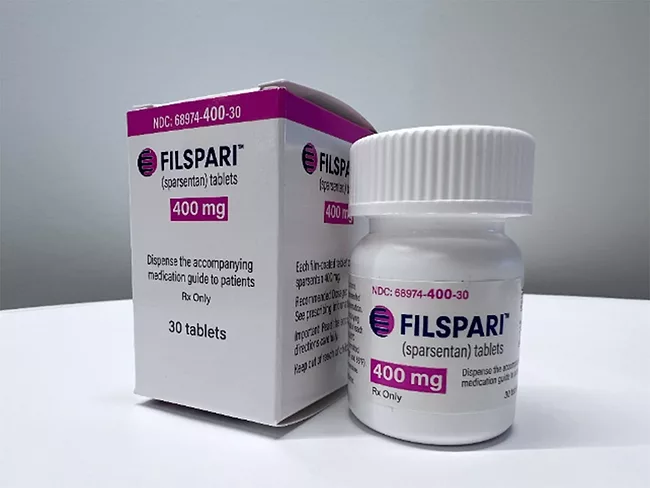
With full approval from the U.S. FDA in hand for Travere Therapeutics Inc.’s Filspari (sparsentan) to slow kidney function decline in adults with primary IgA nephropathy (IgAN) who are at risk of disease progression, eyes turned to future prospects as well as how a revised risk evaluation and mitigation strategies (REMS) program might shake out. During a conference call hosted by Travere, Leerink analyst Joseph Schwartz wanted to know what changes might be made, and if the regulator’s decision might “actually be an entire removal” of the REMS.
Glenmark Pharmaceuticals Inc. USA agreed Sept. 4 to pay $25 million, based on its ability to pay, to resolve the Department of Justice’s civil allegations that it conspired to fix the U.S. price of pravastatin, a generic drug used to treat high cholesterol.
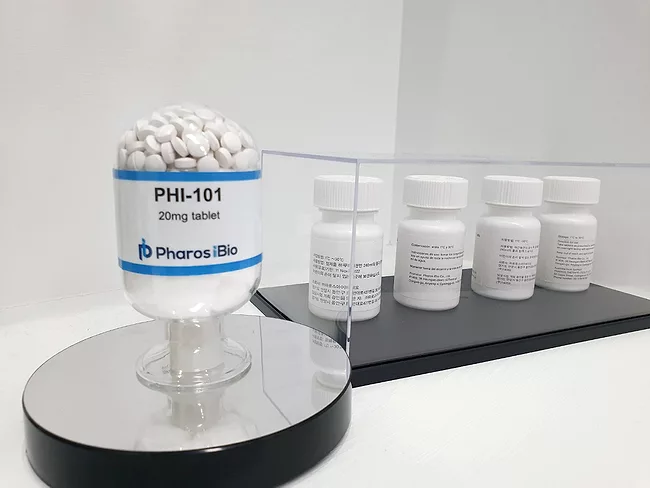
South Korean artificial intelligence-based drug developer Pharos Ibio Co. Ltd. said that the Ministry of Food and Drug Safety (MFDS) granted an orphan drug designation for PHI-101, a second-line therapy for acute myeloid leukemia (AML).
After receiving a complete response letter from the U.S. FDA more than three years ago and conducting another phase III trial, Iterum Therapeutics plc is preparing to make its case before an advisory committee Sept. 9 for sulopenem etzadroxil/probenecid as an oral treatment option for women with uncomplicated urinary tract infections caused by specific microorganisms.
Advanz Pharma Ltd. has won a stay on the withdrawal of its primary biliary cholangitis (PBC) drug, Ocaliva (obeticholic acid), after the European Commission (EC) said on Sept. 3 that the conditional marketing approval should be revoked. Following that, London-based Advanz launched a legal challenge, announcing on Sept 5 that the General Court of the EU has temporarily suspended the EC’s decision. As a result, the conditional marketing authorization for Ocaliva remains in place until further notice from the court, and the 7,000 existing patients – and new ones – will still have access to the farnesoid X receptor agonist.
Following a bioresearch monitoring inspection, the U.S. FDA slapped Julio Flamini, a clinical investigator at the Research Center of Atlanta, with a warning letter citing a “significant” protocol violation in which a 15-year-old girl was given 10 times the maximum daily dose of an unnamed study drug for a week.
Distinguishing between contract law and patent law, the U.S. Court of Appeals for the Third Circuit ruled against a Merck KGaA subsidiary, saying Ares Trading SA is still on the hook for paying royalties to a research partner through 2027 on sales of its cancer drug Bavencio (avelumab), a PD-L1 inhibitor granted accelerated approval in 2017 as a treatment for metastatic Merkel cell carcinoma.
Technological breakthroughs are changing the biopharmaceutical landscape and forcing regulators to think on their feet and facilitate (not impede) innovation, experts said at the Global Bio Conference (GBC) 2024. “Regulatory speed and agility are necessary amid emergencies to cater to unmet medical needs,” Choong May Ling, CEO of Singapore’s Health Sciences Authority, told audience members in Seoul, South Korea.
Although last year’s massive U.S. launch of Humira biosimilars captured headlines, the market adoption of those competitors has been nothing to write home about, even with discounts as low as 85% off the innovator price.
During a webinar arranged by Demy-Colton, panelists discussed a wide range of potential outcomes that might occur depending on which political party ends up in power next year. From tweaks to the Inflation Reduction Act to new laws to the Federal Trade Commission's regulation of M&As, there’s potential for the government to have substantial effects on the drug development industry.
 RSS
RSS