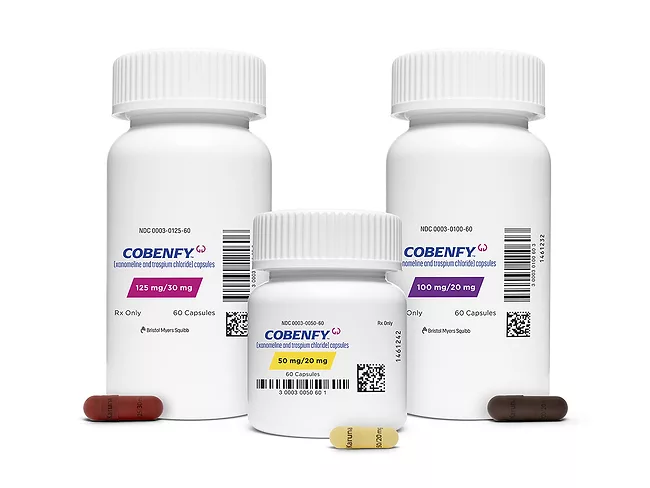
The FDA has approved Cobenfy, a dual M1/M4 muscarinic agonist that offers a fundamentally different approach to treating schizophrenia. The fixed dose combination of xanomeline-trospium is the first to act via a novel mechanism for the serious psychiatric disorder in over 50 years, finally expanding the treatment options beyond dopamine-targeted therapies. Bristol Myers Squibb Co., which acquired Cobenfy developer Karuna Therapeutics Inc. for $14 billion in a deal that closed in March 2024, said the drug will be available in the U.S. from late October.
Both chambers of the U.S. Congress put aside their election year politicking Sept. 25 long enough to pass a continuing resolution that will keep the government running at its current funding level through Dec. 20. The spending bill is now awaiting President Joe Biden’s signature.
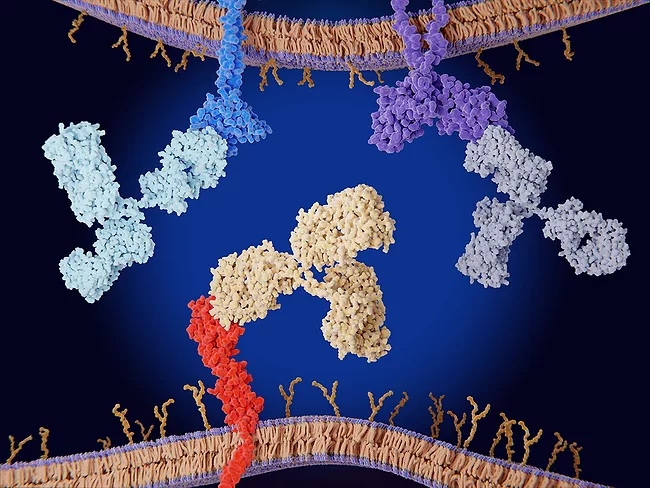
The FDA’s Oncologic Drugs Advisory Committee (ODAC) met for what chairperson Christopher Lieu called, at the end, “an incredibly long day” to decide whether approval of immune checkpoint inhibitors should be restricted in accordance with expression levels of PD-L1.
The risk and benefit of Pfizer Inc.’s oral sickle cell disease drug Oxbryta (voxelotor) has flipped, prompted by what the company called new clinical data indicating “an imbalance in vaso-occlusive crises and fatal events” that need more study. Based on an EMA recommendation, Pfizer said it is voluntarily recalling all lots of Oxbryta from wherever it’s approved worldwide. Pfizer also is shuttering its Oxbryta clinical studies and expanded access programs.
Nine years on from securing $3.84 million for a phase I clinical trial to test the formulation, with results showing it overcame side effects that had confounded its forerunner, the schizophrenia treatment Karxt met its PDUFA date Sept. 26 with no decision by midday. If approved, the fixed combination of xanomeline-trospium will be the first in a new drug class, and as a dual M1/M4 muscarinic agonist, the first new therapy to act via a novel mechanism for the serious psychiatric disorder in over 50 years.
China’s National Medical Products Administration has approved Sino Biopharmaceutical Ltd.’s rivastigmine transdermal patch to treat mild to moderate Alzheimer’s disease. Developed by Sino Biopharm, the patch is the first domestically produced rivastigmine transdermal patch approved for marketing. Rivastigmine is a cholinesterase inhibitor used for the treatment of Alzheimer’s disease.
Japan’s Ministry of Health, Labour and Welfare granted new drug approvals and expanded indications for conditions like cancer, insomnia and Alzheimer’s disease (AD) Sept. 24, including Eli Lilly and Co.’s Kisunla (donanemab) for early symptomatic AD.
With two drugs cleared by the U.S. FDA for Niemann-Pick disease type C (NPC) in less than seven days, Wall Street was pondering the differences between the compounds, given what’s known so far about each. Most recently, the FDA approved Intrabio Inc.’s Aqneursa (levacetylleucine) on its PDUFA date for the treatment of neurological manifestations of NPC in adults and pediatric patients weighing at least 15 kg, making Aqneursa the only approved stand-alone therapy indicated for NPC. On Sept. 20, Zevra Therapeutics Inc. won FDA clearance for Miplyffa (arimoclomol) as the first treatment for NPC.
The U.S. FDA’s Oncologic Drugs Advisory Committee (ODAC) on Sept. 26 will take up a controversy that’s hardly new: whether approval of immune checkpoint inhibitor drugs should be restricted in accordance with PD-L1 expression.
While in the hot seat at a Sept. 24 U.S. Senate Health, Education, Labor and Pensions (HELP) Committee hearing, Novo Nordisk A/S President and CEO Lars Fruergaard Jørgensen said he would sit down with Sen. Bernie Sanders (I-Vt.) and the three largest pharmacy benefit managers to discuss lowering the list prices for the company’s popular diabetes and weight-loss drugs, Ozempic and Wegovy.
 RSS
RSS