Partners Daiichi Sankyo Co. Ltd. and Merck & Co. Inc. received a complete response letter (CRL) from the U.S. FDA for their first-in-class HER3-directed antibody-drug conjugate HER3-DXd (patritumab deruxtecan) to treat patients with locally advanced or metastatic EGFR-mutated non-small-cell lung cancer.
In reviving another case involving drug label carveouts, the U.S. Court of Appeals for the Federal Circuit insisted that its June 25 decision in Amarin Pharma Inc. v. Hikma Pharmaceuticals plc will not kill so-called skinny labels that allow generics to come to market when some of the brand’s indications still have patent protection.
The industry is again raising concerns that new EU health technology assessment rules coming into force on Jan. 12, 2025, will have the opposite of the desired effect and slow down access to innovative therapies.
Novo Nordisk A/S’ CEO Lars Jørgensen is set to be the next executive in the U.S. Senate Health, Education, Labor and Pensions (HELP) Committee’s pharma parade of shame. HELP Chair Bernie Sanders (I-Vt.) announced June 24 that Jørgensen will testify before the committee Sept. 24 about his company’s U.S. pricing of its blockbuster semaglutide drugs, Ozempic and Wegovy.
After receiving a complete response letter (CRL) in 2023 related to device issues, North Chicago-based Abbvie Inc. received another CRL for ABBV-951 (foscarbidopa/foslevodopa) for treating motor fluctuations in advanced Parkinson’s disease, this time for issues at a third-party manufacturer.
The U.S. FDA has approved the NDA for Sofdra (sofpironium) for treating excessive underarm sweating from Botanix Pharmaceuticals Ltd. The approval was based on two pivotal phase III studies and is approved for those ages 9 and older.
Roche Holding AG’s Genentech Inc. unit received U.S. FDA approval on June 20 of Piasky (crovalimab) to treat adults and children 13 and older with paroxysmal nocturnal hemoglobinuria and a body weight of at least 40 kg (88 pounds).
Even though the U.S. FTC recently claimed a court victory in its campaign to shut down the listing of device patents for drugs in the FDA’s Orange Book, 80% of the listings targeted in the commission’s first round of warning letters remain in place more than seven months later.
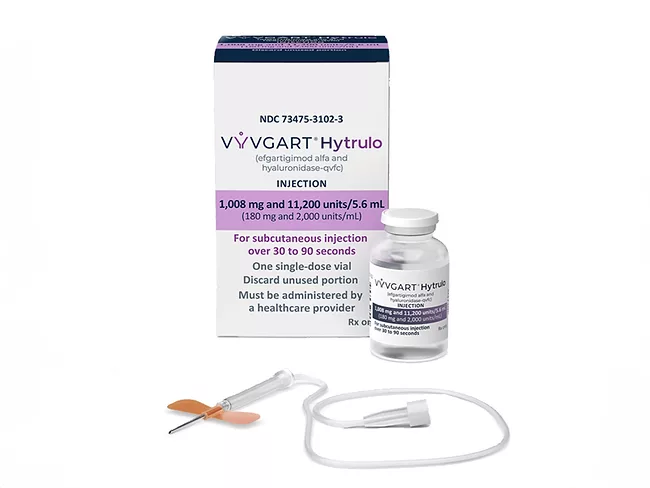
Argenx SE gained U.S. FDA approval of subcutaneously given Vyvgart Hytrulo (efgartigimod alfa and hyaluronidase-qvfc) for adult patients with chronic inflammatory demyelinating polyneuropathy (CIDP). The company’s stock (NASDAQ:ARGX) was up 11.7% to $440.59 at the close of trading June 24. About 24,000 people in the U.S. are being treated for CIDP, and patients are generally diagnosed between 40 and 60 years of age.
In May, the U.S. FDA approved 11 new drugs, a significant drop from the 26 approvals in April, which was the sixth-highest monthly total since 2016. This also falls short of March’s record-setting 30 approvals, the highest number recorded by BioWorld.

 RSS
RSS