PERTH, Australia – Six classes of medical devices listed on Australia’s Register of Therapeutic Goods (ARTG) will fall under new classification requirements on Aug. 25, 2020, following numerous consultations with industry. The consultations were part of the Australian government’s plans to overhaul its medical device regulations to be more in line with the European Medical Device Regulation (MDR).
BEIJING – One day after the U.S. began the first human trial of an mRNA vaccine candidate for COVID-19 on March 16, China said Tuesday evening that it had approved the first clinical trial of a vaccine candidate developed by domestic researchers.
LONDON – The World Health Organization (WHO) has officially declared COVID-19 a pandemic, but is pushing back strongly against countries giving up on stringent control measures.
HONG KONG – South Korea’s Ministry of Food and Drug Safety (MFDS) recently granted the first urgent-use licenses to four COVID-19 novel coronavirus diagnostic kits to battle the pandemic in the country, which is home to one of the largest outbreaks in the world outside of China.
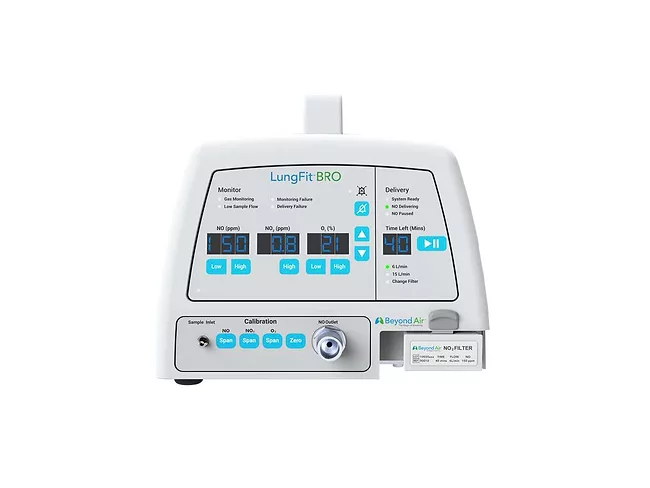
As companies scramble to develop diagnostic tests and vaccines for COVID-19, there is a need for effective treatments for patients suffering severe respiratory effects from the novel coronavirus. To that end, Beyond Air Inc., of Garden City, N.Y., and Rehovot, Israel, has applied to the U.S. FDA to conduct an IDE trial of its inhaled nitric oxide (NO) system, Lungfit Bro, in COVID-19 patients.
LONDON – Behold.ai Ltd. has secured U.S. FDA 510(k) approval for use of its Red Dot image recognition algorithm in the automatic diagnosis of life-threatening pneumothorax (collapsed lung). The product completes the analysis immediately, sending an alert to the radiologist as soon as an X-ray is taken. “It does in 30 seconds what would normally take up to 30 minutes,” said Simon Rasalingham, CEO of London-based Behold.ai.
DBV Technologies SA officials took pains to reassure investors that data wanted by the FDA with regard to the BLA for Viaskin Peanut allergy therapy are already in hand and need only be turned over to the agency, but that didn’t stop shares (NASDAQ:DBVT) from sliding 55.7%, or $2.93, to close March 17 at $2.33.

 RSS
RSS